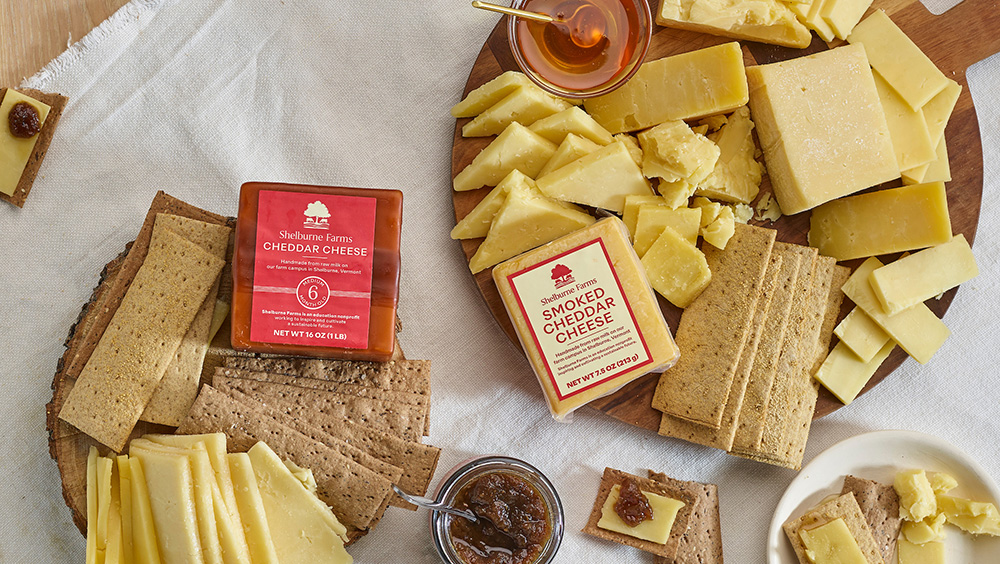
You’ve taken a beautiful block of Shelburne Farms’ cheddar home (or received some as a gift) and you can’t wait to savor or serve it. But how do you care for it? Here are some ways to help protect a cheddar’s flavor and quality so that you can get the most enjoyment out of your block.
Where should you store your cheese?
Aged cheeses like Shelburne Farms Cheddars will last a lot longer on your counter than fresh and soft-ripened cheeses, but it is still best to keep cheddar in your refrigerator, preferably in a vegetable or dedicated cheese drawer. (The main part of the refrigerator is dry and can dehydrate your cheese.) Putting it in a drawer will also protect the cheese from being cross-contaminated with other high-flavor and high-aroma foods.
How should you store your cheese?
The first thing to remember is that your cheese is a living food and needs to breathe. Its freshness and flavor quality depends on some air exposure. Typically, cheddar will get enough air exposure each time you take it out to eat some! However, it’s important to rewrap it in fresh paper or plastic each time, or its surface will get sweaty and then dry out. (Fresh wrapping is especially important for fresher cheeses like brie.) Wax or parchment paper are the best home options for rewrapping your cheese. You can put plastic over that. Plastic wrap or plastic bags will work alone, too, but try to change the wrapping each time you eat. Avoid using foil, which can trap too much moisture in with your cheese. Is your cheddar waxed? Cut the wax off as you go, but don’t try to rewrap the cheese with it, because that can trap moisture as well. Put the whole, partially waxed piece in fresh paper or plastic.
How long can you keep eating your cheese?
Fresh cheeses or younger cheeses like mozzarella or brie should be consumed in about a week or so. If you see mold spots on those types of cheeses, it’s a sign that they are past their prime. You should toss them. Aged cheeses like cheddars have a long shelf life; you can enjoy eating them for about a month or even longer after you open them. Did you forget to keep checking on your block and rewrapping it? If you see a blue or green surface mold, you can scrape that off and continue to enjoy your cheese. The fresh surface under that spot is totally safe to eat (and its flavor will be unaffected). If your cheese gets a little dried out as it ages and isn’t ideal for snacking anymore, no need to waste it. It's still great for cooking and grating. Time to make some mac n’ cheese (or mac n' trees)!
With these few tips, I hope you will enjoy our cheddars all season long!