
Silvopasture Update

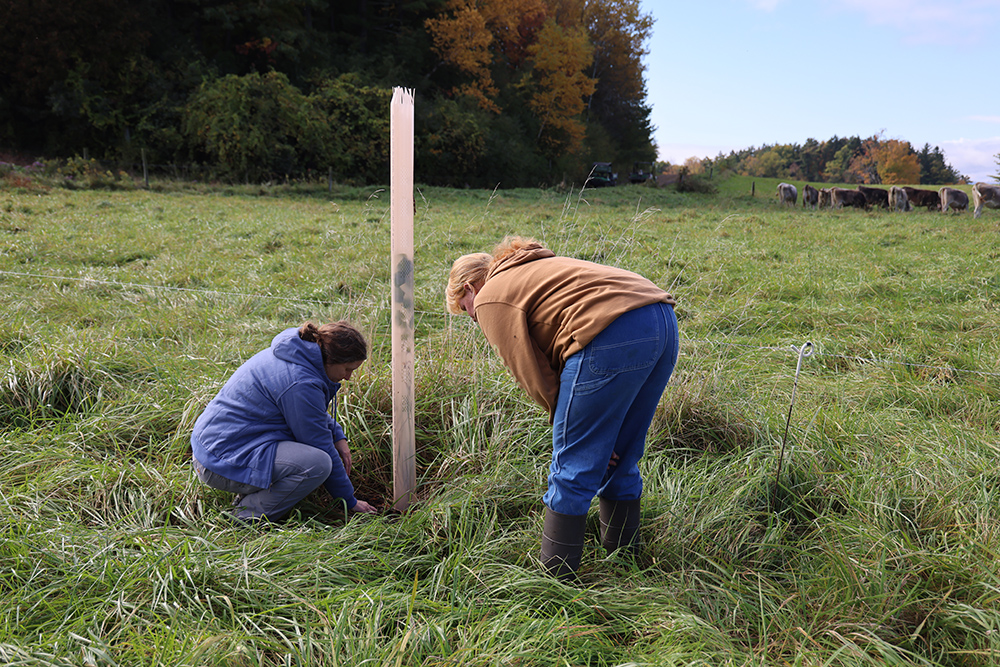
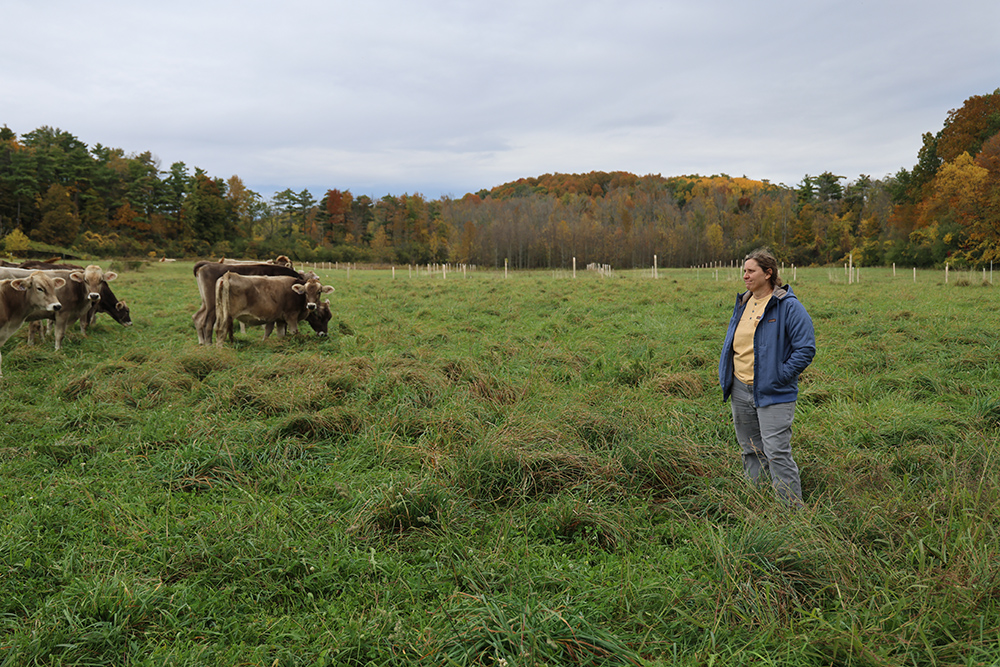
In the middle of a fall pasture, Meghan Giroux of Interlace Commons brushes grass away from the base of a protected birch sapling to reveal a mulch. “It’s called a coir mat, made of organic coconut fiber,” she says. “A tree doesn't want to compete with grass while it's getting established,” she explains.
Then why is the tree in a field?
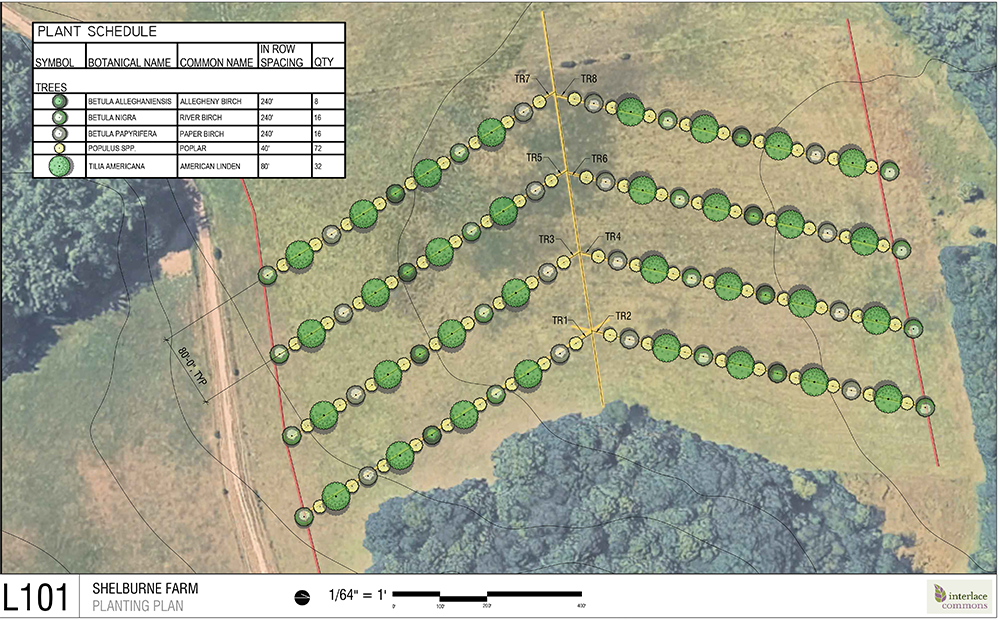
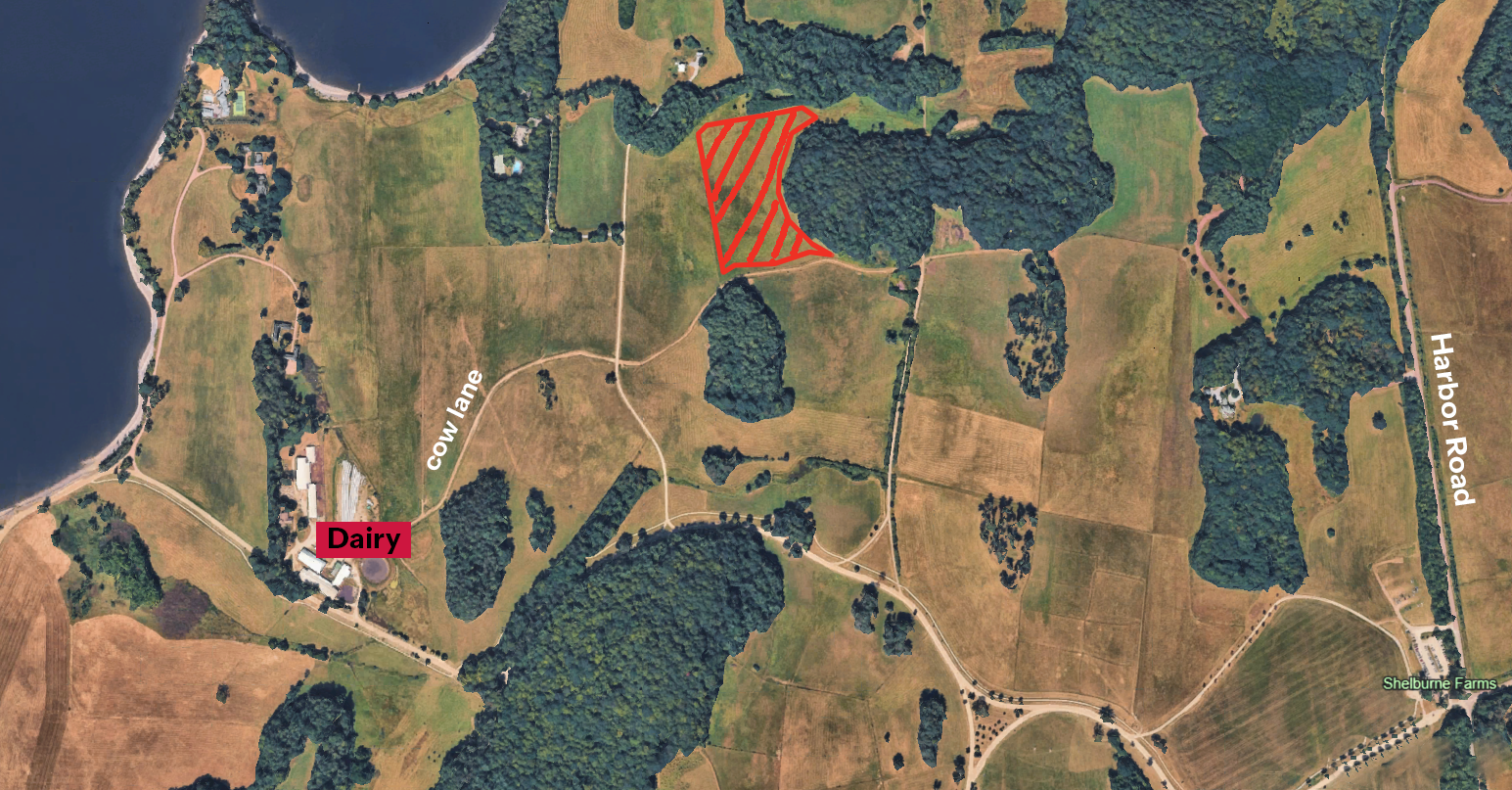
The young birch is one of about 160 trees planted this spring in a 5-acre field at Shelburne Farms, as part of a federally funded silvopasture project in partnership with Interlace Commons and others.
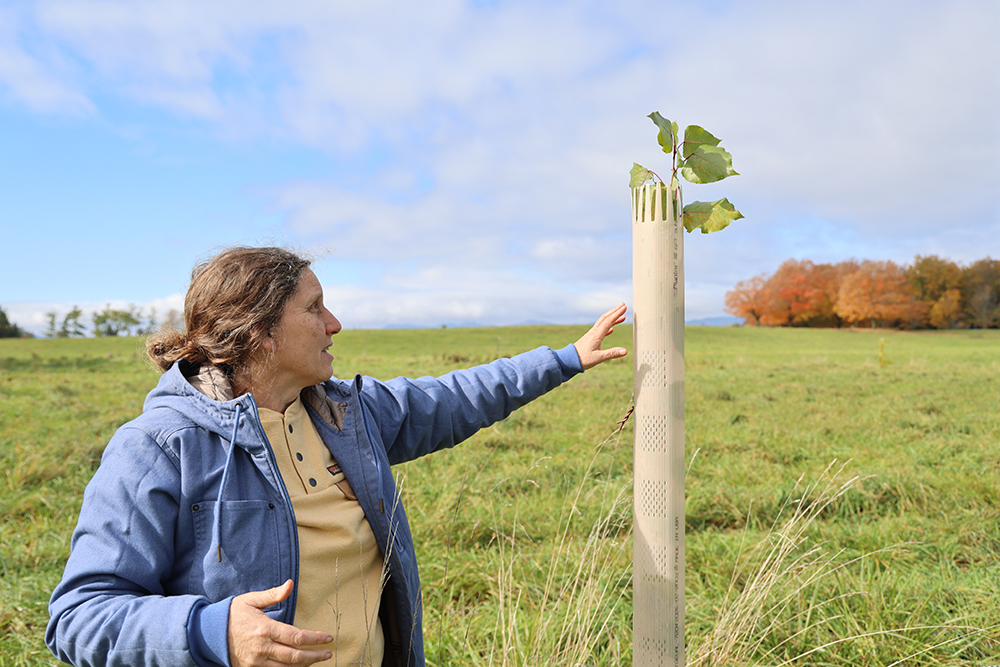
Silvopasture is the intentional integration of trees with livestock for the benefit of the forages, the trees, and the animals. “If you don't have those three components, it's not silvopasture,” Meghan says. As temperatures warm, silvopasture can offer comfortable shade to grazing cows, boost pasture productivity, and secure more carbon in the land.
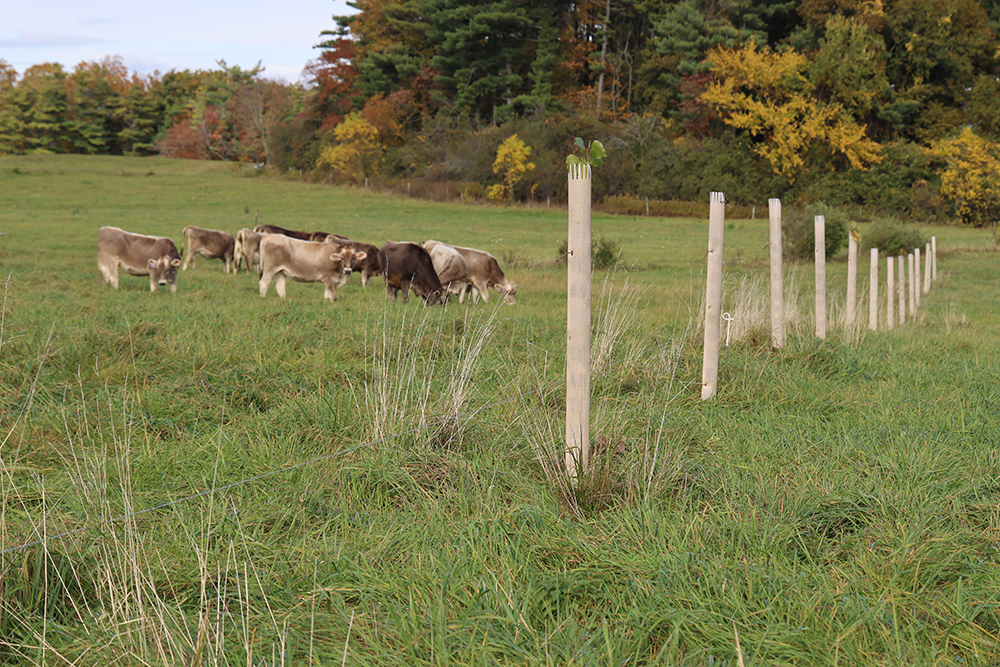
This spring, Meghan and her team planted and staked American Linden, birches, and poplar, all native to the surrounding forest and tolerant of this typically wet pasture. Four rows of trees (82 feet between each row) form a V that mimics the shape of the field edge.
Meghan returns periodically to check on the site because, as she says, “We can't just put trees in the ground and walk away.” In their first 3–5 years, the young trees need adequate water and fertilizer, and protection from predation and competition. Fortunately, precipitation was pretty consistent this season, and as for fertilizer, well, it’s a cow field.
She slips a plastic tube off a birch tree. The tubes help protect the young trees from deer, moles, voles, and rabbits, who all nibble on the bark, cambium, and roots—especially in winter. The tubes also train the stem to grow straight. “We usually spot check some trees to make sure there's no insects living in here…” Bloop! A little spider jumps out. She then inspects a leaf, “There’s a bit of Japanese beetle predation, but all of the buds are nice. It looks like it's in good shape,” she assesses.
Meghan points to a white stake further away. “Those are trees that didn’t make it.” Overall, the survival rate of the new pasture trees after one growing season is about 85%, which is pretty typical.
To manage plant competition (and limit vole habitat) around the base of the trees, enter the grazing cows. Herdsman Renee Lacoss has set up a paddock for a small herd of heifers with wire fencing that runs beside, but excludes the trees. “I'm hoping the cows will stick their heads under the wire and eat around the trees, but not touch them,” says Meghan. “I'll be super psyched if they do.”
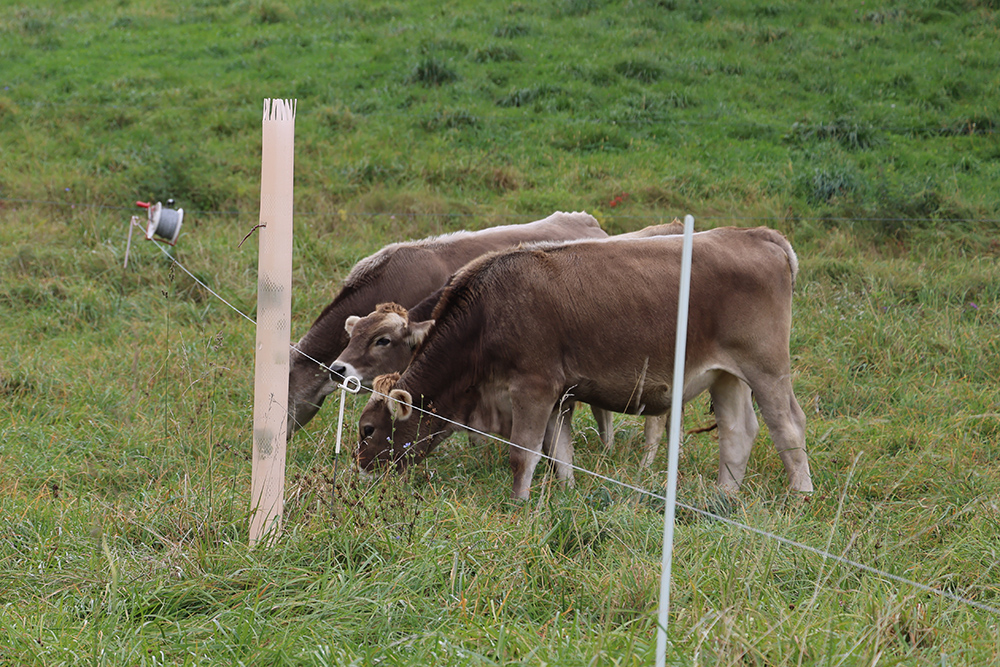
The test will need monitoring to be sure. “We’ll have to spend a little time watching how the animals behave,” says Meghan. “These are 1,200 pound cows coming through here and we don't want them to break these fiberglass stakes. But,” she goes on, “I suspect it’ll be fine. Brown Swiss cows are pretty laid back.”
“These aren’t innovative practices,” Meghan contextualizes. “Agroforestry is the second oldest land use, second only to shifting cultivation,” she says. “Indigenous and agrarian communities have been working with nature for thousands of years. Now people are starting to understand the benefits of these ancient practices.”
But that doesn’t mean agroforestry is easy. “Most farms don't grow trees in their pastures,” says Meghan. A lot of education goes into designing these practices, based on a farm’s paddock plans, haying and machinery systems, even their cow breed. “We can't just put trees in the ground and walk away and expect farmers to know how to manage them,” she says.
But even with a clear goal, strong plan, and careful tree care, “It's still an added complexity to any farming system,” she acknowledges. “We have to be really intentional and careful.”
The complexities can compound. How do we want to manage developing tree canopies? Might established trees be trimmed to create woody fodder? Can air pass between the trees to dry out the forage for haying, which might be done on a year-to-year rotation with grazing? Some of our historic spruce/pine plantations are being managed for silvopasture, but what will replace the aging spruce? Will we expand silvopasturing? (“It can be really beautiful in patterns that are just stunning,” says Meghan.) Can additional wooded pasture edges be reclaimed for silvopasture? The questions are dizzying. But exciting. “We think of every site as this learning opportunity.” says Meghan. We do, too.
The work here is also particularly meaningful for Meghan. “I am a product of this farm,” she says. “As a kid I learned to track animals here, make candles, milk a cow…all the things students still do!” She goes on, “It was really impactful. It feels a bit like coming home for me.”
Meanwhile, with attention and monitoring over the next 3–5 years (and a return next spring to replant where trees didn't survive), the pasture trees should “do their tree thing” — and grow. “It’s a long process, but it’s worth it,” says Meghan. Once their bark has hardened and the tubes are removed, “There won’t be much to do except enjoy the view.”
Interlace Commons’ mission is to promote ancient and modern forms of agroforestry that foster resilient, biodiverse landscapes and enhance livelihoods. We achieve our mission through farmer-driven field projects, education, and research initiatives throughout the Northeastern United States. www.interlacecommons.org