
Locally (bioregionally) powered, locally fed, locally governed and lovingly supported regeneratively from local resources.
For Educators
Education Impact
Describing a Sustainable Future

Inside one of this summer's Education for Sustainability programs
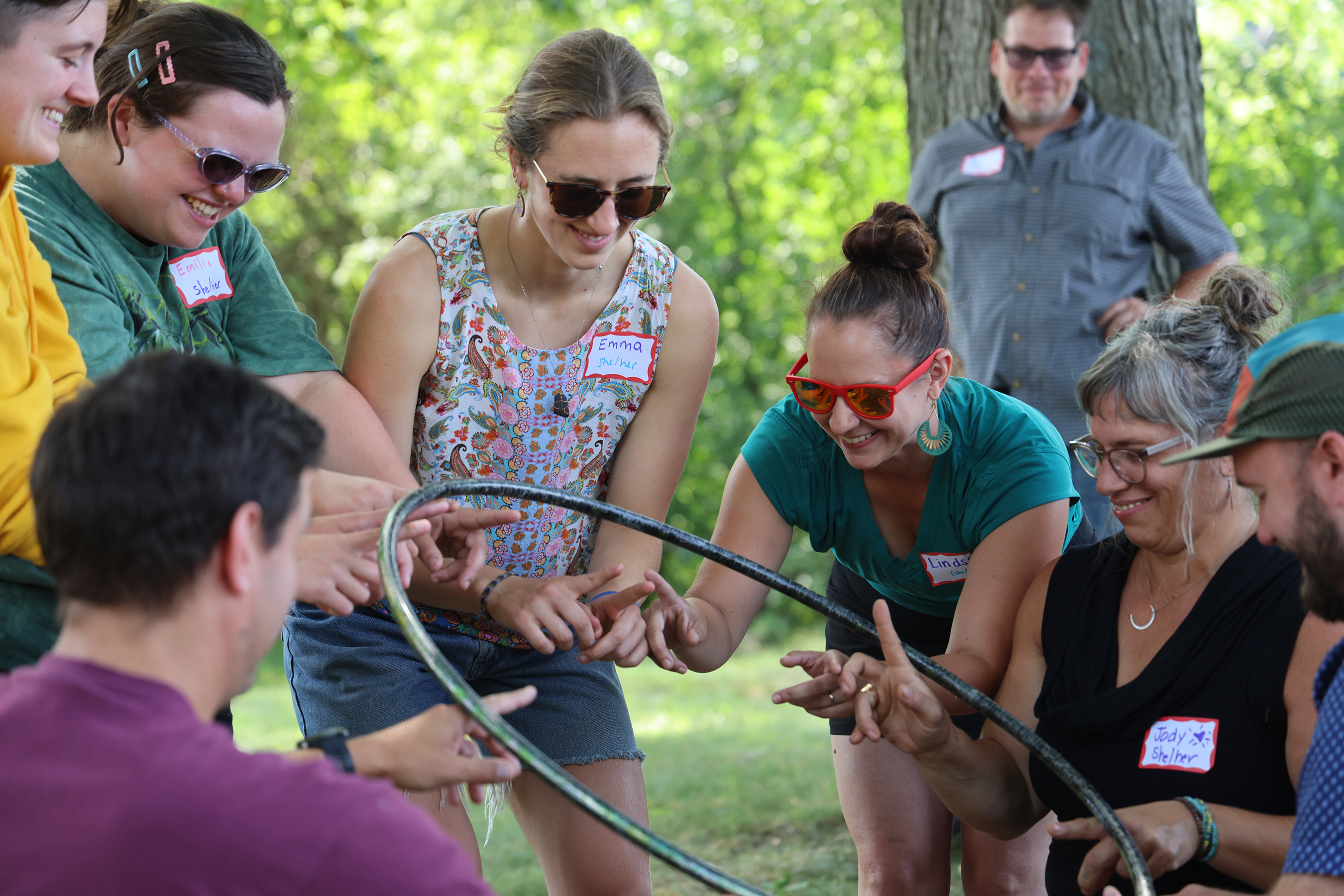
In the cozy living room of Shelburne Farms’ Orchard Cove house, a dozen educators sit in a circle with pens and notebooks at the ready. Just outside the windows, seagulls and Lake Champlain’s waves provide a soundtrack. It’s the second day of the year-long Education for Sustainability Leadership Academy program, and it feels spacious, like a true retreat from the outside world.
To kick the day’s proceedings off, Shelburne Farms’ Director of Professional Learning Jen Cirillo lobs a big question into the middle of the room: In three words, how would you describe your vision for a just, sustainable future? Here’s how the group answered.
All life thriving.
Equitable. Regenerative. Self-stable.
Ethical leadership. Responsible stewardship. Universal active citizenship.
Loving. Joyful. Creative.
Relational. Free. In balance.
Equitable. Diverse. Love.
Unabashedly brilliant and expansively loving.
Loving. Dynamic. Regeneration.
Abundant. Loving. Celebratory.
Joyful. Intergenerational. Ever-changing.
Loving. Reciprocal. Balanced.
Fed. Housed. Loved.
Basic needs. Good health. Love.
Joyful. Abundant. Affirming.
Equitable. Healthy. Thriving.
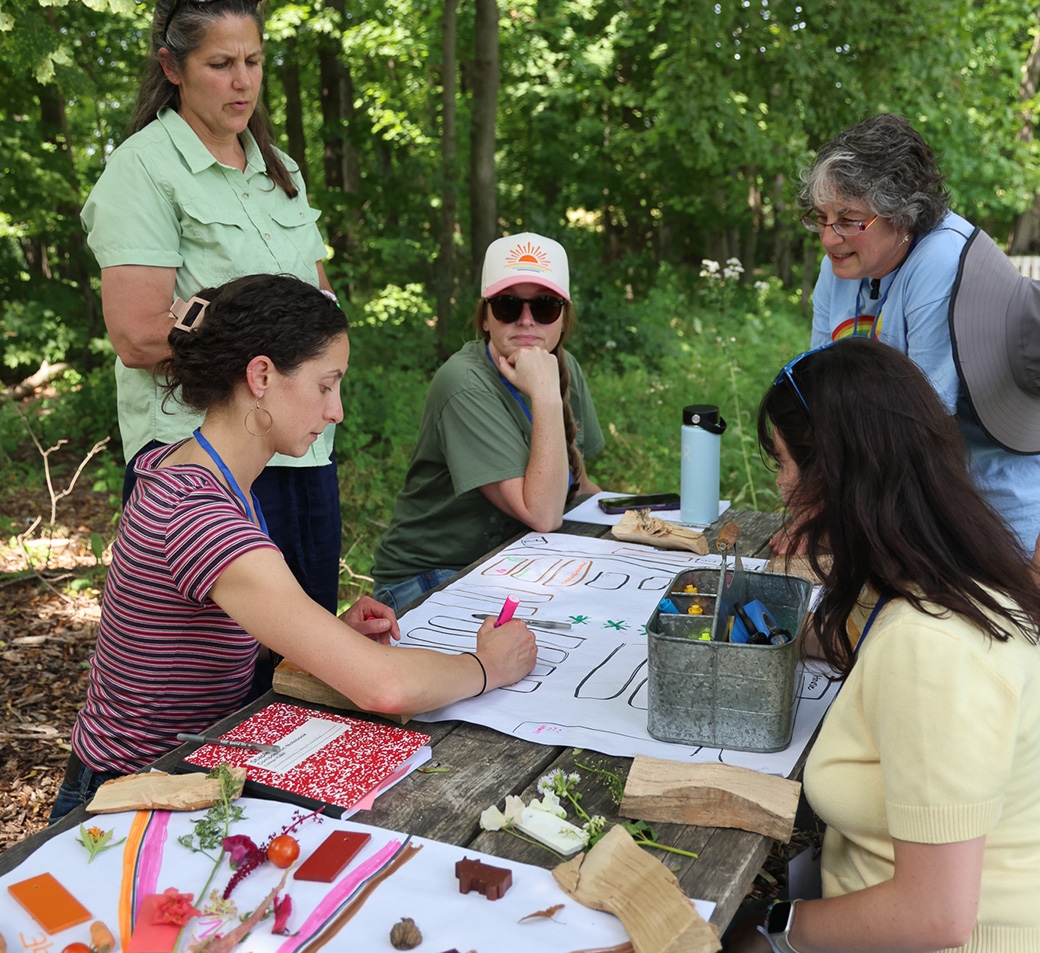
Throughout the school year, this Leadership Academy group will come back together to learn new tools, build community, and create projects that, ultimately, advance these visions of sustainability through education. At this first gathering, the group focused on systems thinking, or considering interconnections in our world rather than isolated parts, an essential piece of sustainable leadership. As a form of practice, teachers slowed down to investigate who and what’s alive on the land at Shelburne Farms.
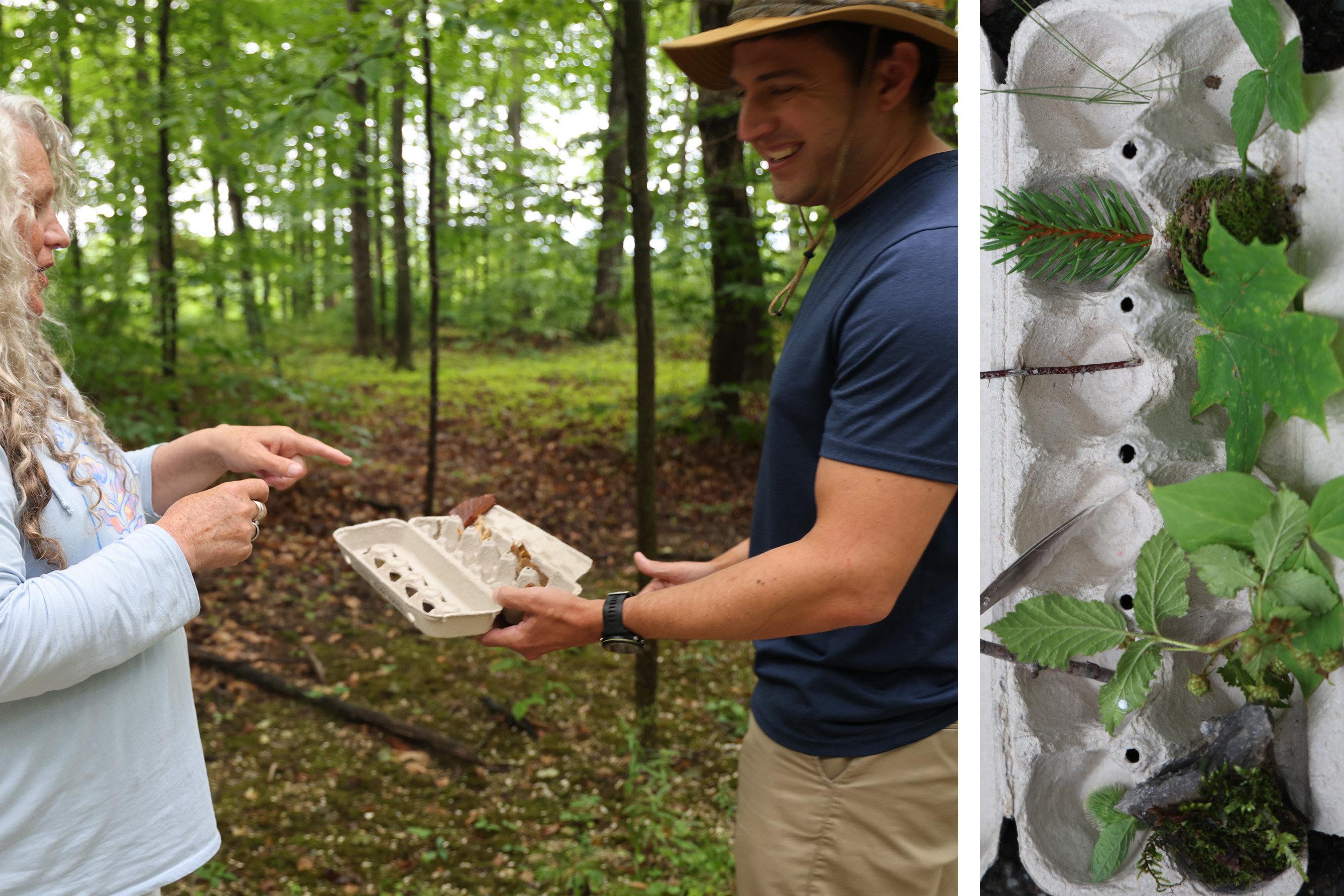
Participants cultivate relationships with the land and with each other, foundational work for future sessions in which they’ll share project ideas and exchange feedback in order to implement what they’ve learned. To describe the Leadership Academy experience, one educator quoted Britt Yamamoto’s book, “The Soil of Leadership.” “‘When soil is too compacted, you have to give it space.’ When I came to the farm, I felt I had the support, time, and space to process what I needed to do next. Now, I know where I want to go, and I’m able to think of the future. My work is not in a box anymore.”
More than 180 educators joined Shelburne Farms Institute for Sustainable Schools for programs this summer. And although the season has drawn to an end, a new school year means new opportunities for teachers and students to shape a healthier tomorrow for all.
Tell us in the comments: In three words, how would you describe your vision for a just, sustainable future?
Join us!
Educators, save the date for upcoming programs, including Summer 2027 offerings.