Getting to Net Zero: Update

Getting to Net Zero (capturing more greenhouse gasses than we produce onsite), involves shifts in the whole system of Shelburne Farms – forests and grasslands, dairy, cheesemaking, other farm/forest products, historic buildings, trails and community activities and, at our core: education programs that serve thousands of teachers and students each year, and a public space that draws thousands more.
To date, within this beautiful complexity, we have…
- Planted more than a hundred trees in Marshall Woods (more to come in spring 2026)
- Updated our forest management plan to address a changing climate for the first time.
- Installed ground source heat pumps in several buildings, including the historic Coach Barn
- Begun using biochar in the dairy to reduce methane emissions, odors, and other environmental impacts, and convened with the University of Vermont to explore the potential for using biochar in agriculture regionally.
- Purchased new electric mowers and trialed electric tractors.
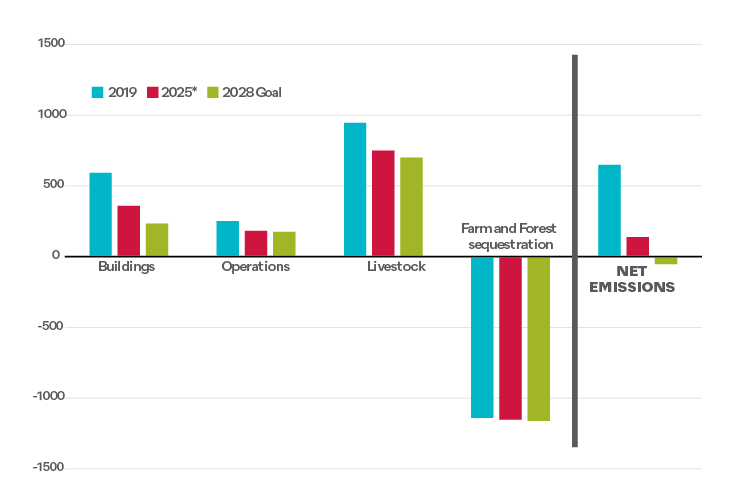
With these efforts, we have reduced over 400 tCO2e since 2019, leaving us less than 200 tCO2e away from our 2028 goal. Where will an additional reduction of 200 tCO2e come from?
What is “tCO2e”?
BUILDINGS
We are targeting another 120+ tCO2e reduction
Our historic buildings, part of our National Historic Landmark designation, present one of the biggest challenges for our goal. They require efficiency improvements, retrofitting, and electrification. To date, we’ve reduced emissions in our campus facilities by over 100 tCO2e, including switching to heat pumps in some of our residential buildings.
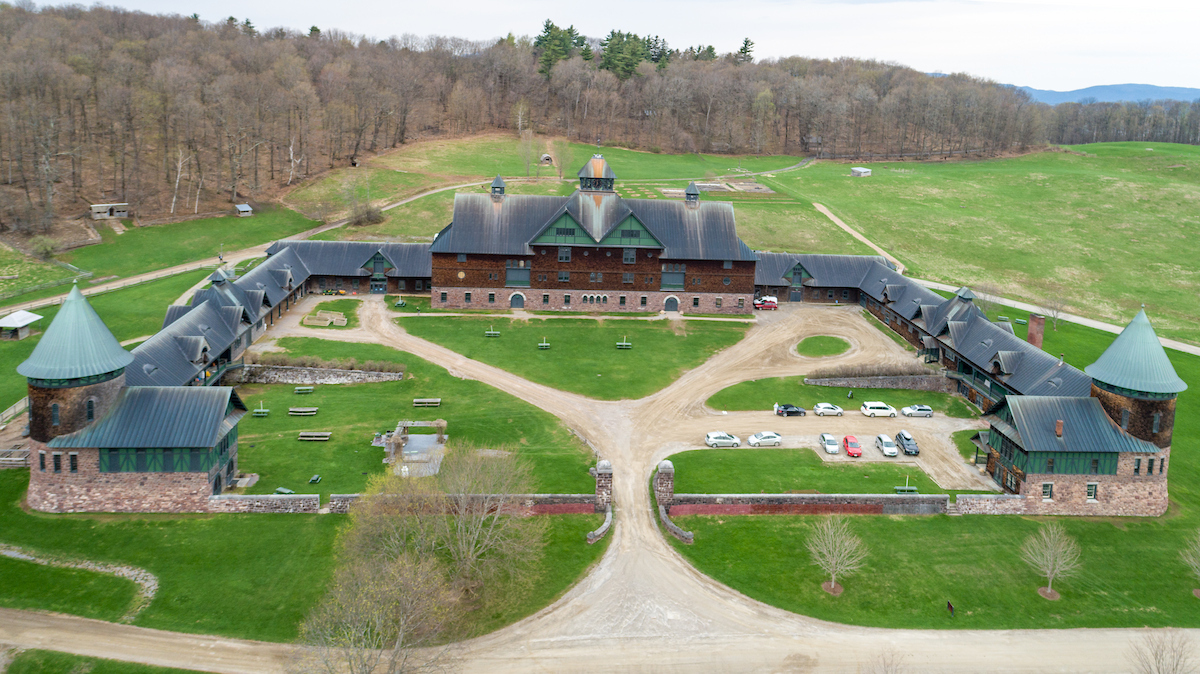
The most visible building retrofit so far has been the Coach Barn, which opened in September 2025 with a new geothermal ground source heat pump system and a fully electric kitchen. This allows the building to operate year-round without burning fossil fuels, though it does increase the electricity needs of the building.
That’s still a good choice to lower carbon, though, because Vermont electricity is (contractually) very “clean” and renewable, and the wider region is investing to move our electricity system toward more renewable or carbon free electricity.
Shelburne Farms Greenhouse Gas Emissions since 2019 (in tCO2e)
The Farm Barn presents different challenges. Unlike the Coach Barn, it operates extensively year-round as the organization’s administrative and educational hub, and as home to cheesemaking and other land-based partner enterprises (a bakery and wood shop). Designing a specific new decarbonization pathway hinges on our ongoing master planning and some big decisions to be made about the future use of this massive building.
Even with this uncertainty, we are starting to explore both short- and long-term options.
For over 30 years, we have heated the Farm Barn primarily with wood chips. Energy from wood can be carbon neutral because trees are renewable, and their carbon is part of the natural carbon cycle. (Burning fossil fuels, of course, permanently releases carbon to the atmosphere.) Also, supporting a viable forestry industry in Vermont–the fourth most forested state in the country–is important.
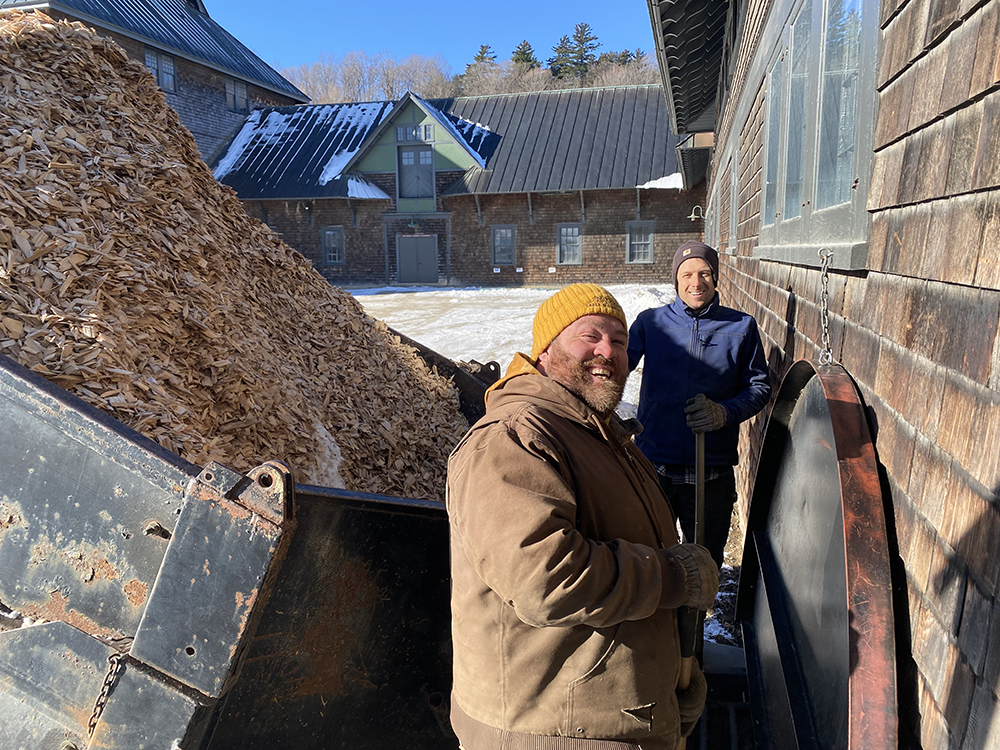
The issues surrounding heating with wood as a net zero solution, however, are complex, based on where the trees come from, what trees (or parts of trees) are harvested, how they're harvested and processed, what the final product is, how far it travels, how it’s burned, and the continued economics of the industries that do it all. Whew!
We've had extensive discussions with experts, policy makers, engineers, and our board and community about energy solutions for the Farm Barn. As we evaluate, we are considering every angle–operations, emissions, safety, capital and operating costs, regional and state policies on energy and forestry, educational value, and the state of the Vermont forestry economy. We will be gathering more information and talking to more people in 2026 to better understand the trade-offs of any decision.
DAIRY OPERATIONS
We are targeting another 70 tCO2e reduction
Can livestock farming be part of a sustainable future? That's a big question to consider and debate. Dairy farming has been an integral part of Shelburne Farms for decades, and we believe that animals play an essential role in sustainable farming systems and cycles. Ruminants generate food from land that can’t viably grow vegetable or grain crops and from grass that humans can’t eat, and much of the world still relies on animals for essential nutrition.
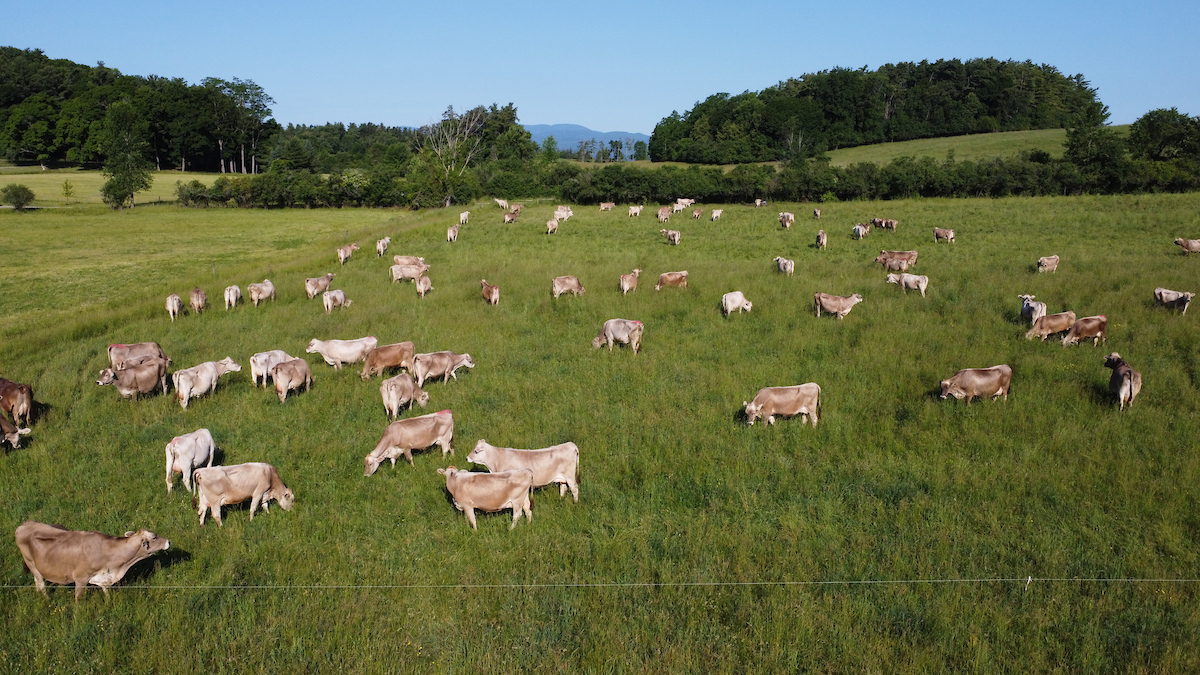
We hope our net zero journey can be part of a global effort to improve dairy stewardship and we will continue to engage with experts and networks beyond the farm to get there.
The digestion of their feed and the manure from our dairy herd (113 milking cows + 103 young stock) produces methane–the most difficult area to tackle. We’ve been experimenting with biochar, and are partnering with UVM extension to develop better ways to measure biochar’s impact on greenhouse gas emissions from the manure and fields. We hope in 2026 to convene again (as we have twice since 2023) with biochar researchers, producers and farmers using different products, and have our own field trial results to guide future decisions.
LAND-BASED OPERATIONS
We are targeting another 10 tCO2e
A smaller portion of our footprint is operations, including tractors and transport. We’ve already switched to some electrified transport and are evaluating the costs and benefits of further vehicle electrification.
Our journey is an educational opportunity
Ultimately, Shelburne Farms is a blip in the global effort to curb climate change. The remaining carbon reduction we need to meet our Net Zero goal amounts to the annual emissions of 30-40 average cars.
The mix of solutions we’re deploying is important. And every action matters. But our greatest impact won’t only be from hitting our target, it will be—it is—by integrating the complexity of our net zero journey into all our education for sustainability programs.
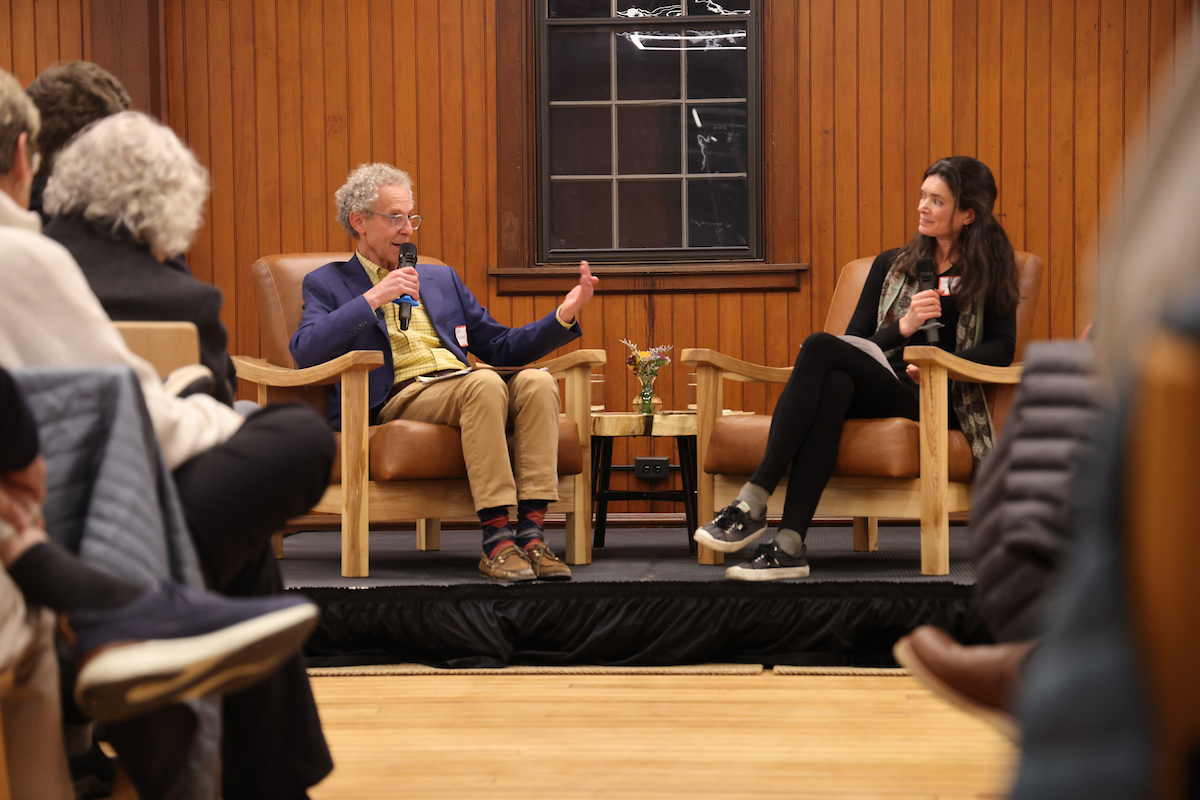
When the Coach Barn reopened in late 2025 as our center for convening and learning, we hosted the inaugural Marshall Webb Climate Action Talk with Dan Reicher, a former Department of Energy Deputy Director and Vermont resident (check out the video). Dan’s life’s work is an example of staying committed to and optimistic about climate action, even in this moment. We’re looking forward to hosting more talks in 2026!
With just over 2 years left to reach our goal, we’ll be continuing to look for inspiration, solutions, partners and community–and continuing to share our journey. Stay tuned!


