Seed to School: The Long Pie Pumpkin Project
School meals are looking different nowadays: maple syrup from the sugarhouse down the road, apples from the orchard one town over, or beef from the neighboring county. A new study shows that over the past decade, Vermont schools have increased their local purchasing by nearly 10%. Today, an average of 14% of school food budgets (that’s about $3.5 million annually) supports local farms and producers.
Getting more local food into schools seems like a reasonably straightforward problem to solve, but takes an immense amount of coordination to make happen. At the heart of this transformation, large- and small-scale, are relationships: the kind that uncover opportunities and possibilities, sometimes with neighbors just down the road.
Our Northeast Farm to School Institute centers on building whole-school, community-inclusive teams that can unearth these opportunities together to help students consider where their food comes from and to get more fresh, local food onto cafeteria trays.
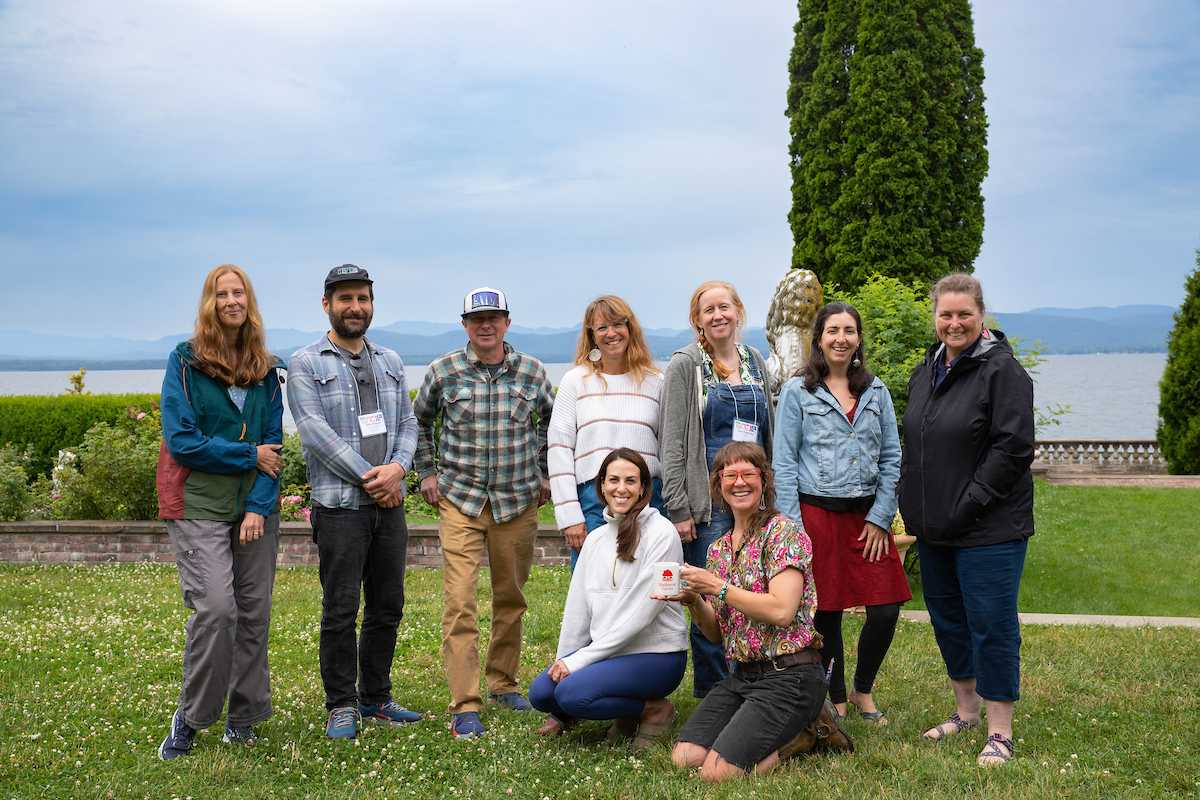
One current Northeast Farm to School Institute team, Mount Mansfield Unified Union School District, has embraced this challenge as they work toward their goal of sourcing 15% local food for their meal program. Through strong community connections, in particular with Bone Mountain Farm, School Nutrition Director Karyl Kent and her team found a way to rescue prime local squash headed for the compost and turn it into healthy baked goods for students. This winter, Karyl shared these successes with legislators during Vermont Farm to School & Early Childhood Day (she even brought along the squash muffins for sampling!).
High Mowing Organic Seeds shared the full story of the district’s partnership with Bone Mountain Farm in their 2026 seed catalog. We’re sharing that story here, with permission, as an example of the creative farm to school work happening all over the state:
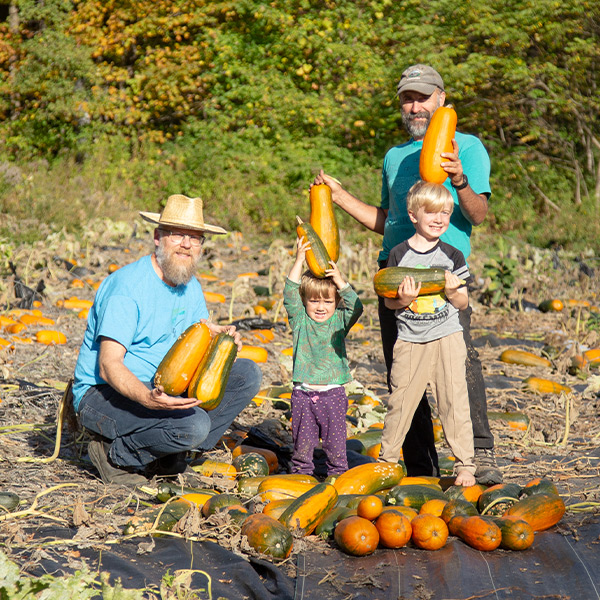
On an unseasonably warm day in mid-May, Tucker Andrews seeded four trays of Long Pie Pumpkins. The plants would have two lives: as seeds, grown for High Mowing and sold to gardeners across the country; and, as processed pumpkin for the local school district. For Tucker, co-owner of Bone Mountain Farm, who grew up in the same small community of Bolton, Vermont, the Long Pie Pumpkin Project represents a full circle journey.
On the vine, the Long Pie Pumpkin looks like an overgrown zucchini with an orange spot where it rests on the ground. In storage, the fruit ripens to bright orange. Widely grown in the Northeast until the early 1900s, the variety was nearly extinct by the 1980s. Then, a Maine grower brought some seeds to Dr. John Navazio, plant breeder and co-founder of the Organic Seed Alliance. Dr. Navazio began growing the variety and re-introduced it to the market. The Long Pie Pumpkin is once again a favorite variety for seasonal pies and sweets.
Eight schools support 2,300 kids across the Mount Mansfield Unified Union School District, says Karyl Kent, Director of School Nutrition, who is a passionate advocate for farm to school programs. “School cafeterias are known as the biggest restaurants in the country, because we feed more people every day than restaurants do, and kids eat more meals in school than at home,” she says. “It just makes sense to use as many local agricultural products as we can to feed Vermont kids in school.”
Years ago, Karyl reached out to Tucker and his farm partner, Thomas Case, to ask about collaborating. When Tucker mentioned there would be leftover pumpkin after the seed extraction, Karyl jumped at the opportunity to source organic, locally grown product for the district cafeterias. “We found a date, used a middle school kitchen, and pulled together a team to process the pumpkins—all in about two weeks.” The team processed and froze 300 pounds of pumpkin flesh to use in recipes.
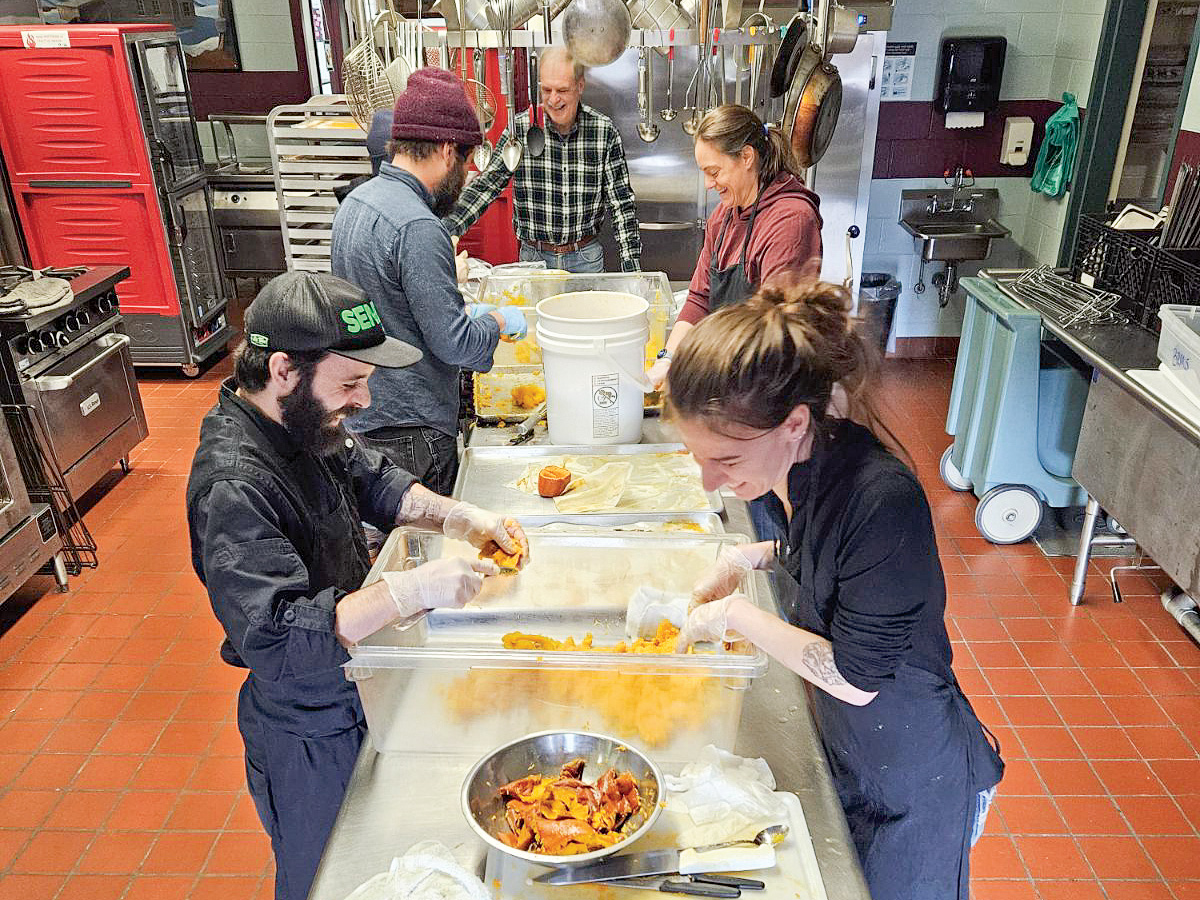
“People jumped in,” says Thomas, who also works as a produce buyer for City Market Onion River Co-op in Burlington. “The school was ready to receive it, and people were willing to show up.” Emily Tompkins, an Americorps member with the Northeast Organic Farming Association (NOFA) and a farmhand at Bone Mountain did much of the coordination. “I was sort of on both ends of the pumpkins,” she says, having planted them with Tucker and coordinated the processing.
The farm to school program was a bright light during a difficult time, says Tucker. Four months earlier, on July 11, 2024, he had woken to heavy rain and water pooling at his door. He and his wife, Kaelyn, had tucked their sons into bed and then fallen asleep watching the weather radar. A storm was intensifying, though rainfall predictions still looked precedented. But by midnight, the water was up to Tucker's knees. He woke Kaelyn and then waded across the yard to a neighboring trailer. “We’ve got to go,” Tucker called, banging on the door. The neighbor had packed her cats into a bag and was waiting for rescue. Slowly, they made their way against the current back to higher ground. “We almost didn’t make it,” Tucker says.
Tucker’s family and neighbors were all safe, but when the sun rose, they saw buried vehicles, flooded homes, and debris everywhere. Mill Brook had jumped its bank, rushing into one of the farm's vegetable fields. A day earlier, Tucker had walked rows of perfect winter squash and onions almost ready to harvest. Now, channels had been gouged out of the field, and crops and topsoil washed away.
In a different field, on higher ground, the Long Pie Pumpkins had been spared.
***
Early in 2025, the federal government cut more than $1 billion from programs for food banks, schools, and thousands of contracted growers. In Vermont, state legislators stepped in with a bill to ensure that farm to school programs continue. “Agriculture is part of our identity as Vermonters,” says Karyl. “Our state legislators are acutely aware of the need to have Vermont produce in our schools.”
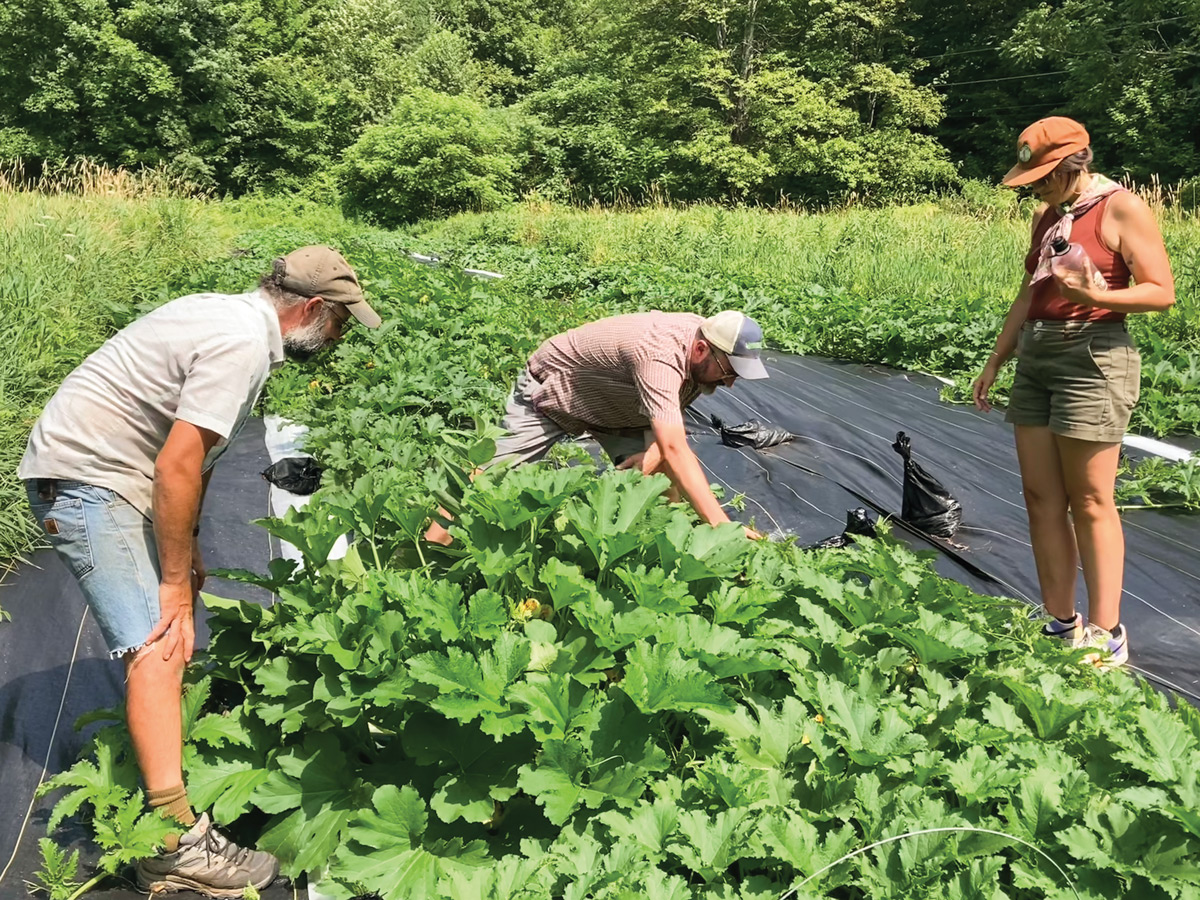
The Long Pie Pumpkin Project galvanized a new farm to school effort across the district. Now, the group is planning their second seed harvest and pumpkin processing. "Here, there are people, land, and opportunities to do this, which is not the case everywhere,” says Emily. “Maybe that’s the silver lining from all of this upset... that we come together as a community to take care of each other and the land.”
One year after the flood, Tucker walks the field for the first time in months, still trying to calculate the destruction. Enormous ditches now expose the ancient bedrock, and piles of debris lie amid cover crop that reseeded itself. Volunteer wildflowers erupt in color across the field. “I didn’t plant any of these,” says Tucker. “The seeds were just waiting, I guess.”
Up the road, Long Pie Pumpkins are setting on their vines. Fall will bring the harvest, seed extraction, and processing. Those fruits will help nourish 2,300 children through the school year. Then, it will be planting time again.
Farms and forestry operations across the state have come together to ask the legislature to establish a Farm and Forestry Operations Security Fund to ensure farmers and loggers have the financial assistance they need to recover from the impacts of extreme weather. Learn more about NOFA Vermont’s Farm Security Fund.
Partners