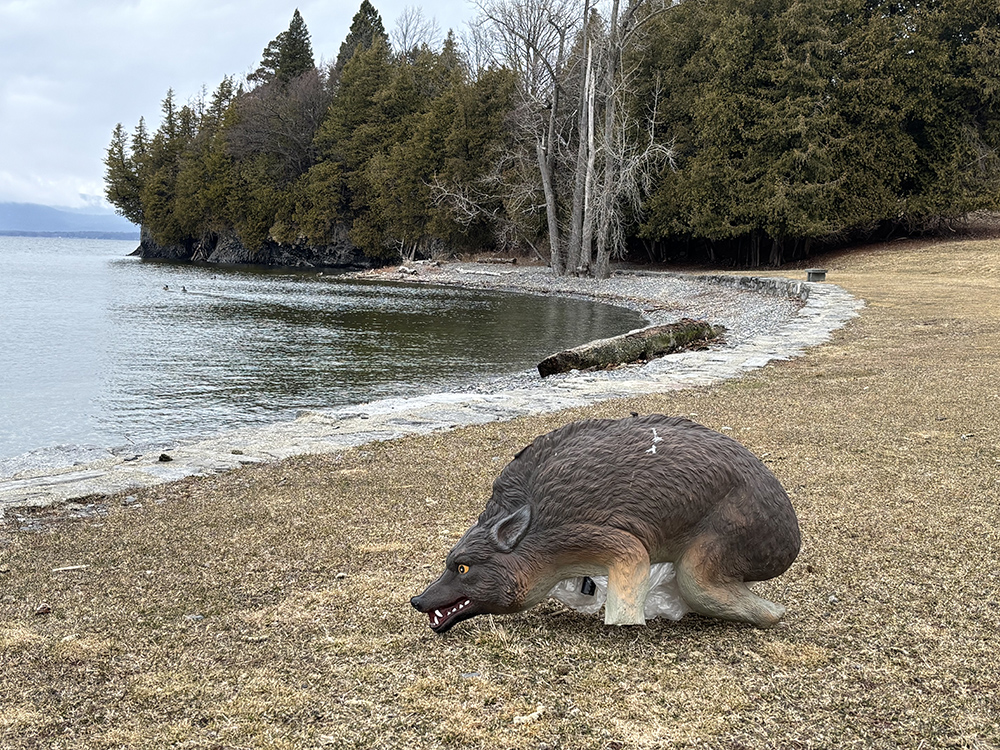
What on the Farm? Animal Decoys

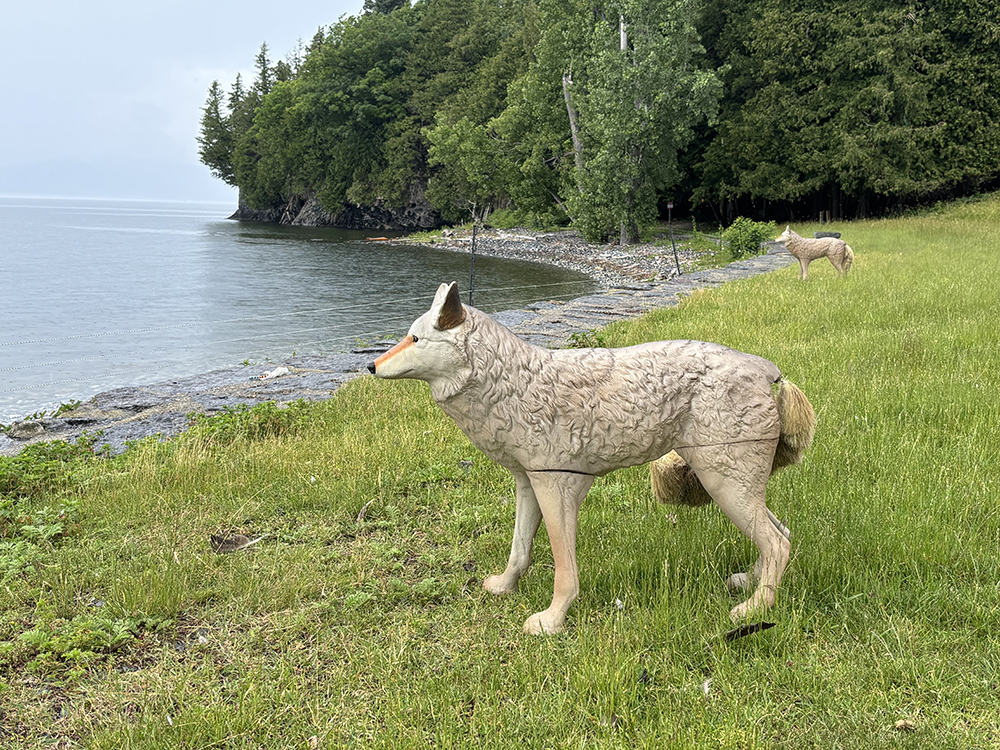
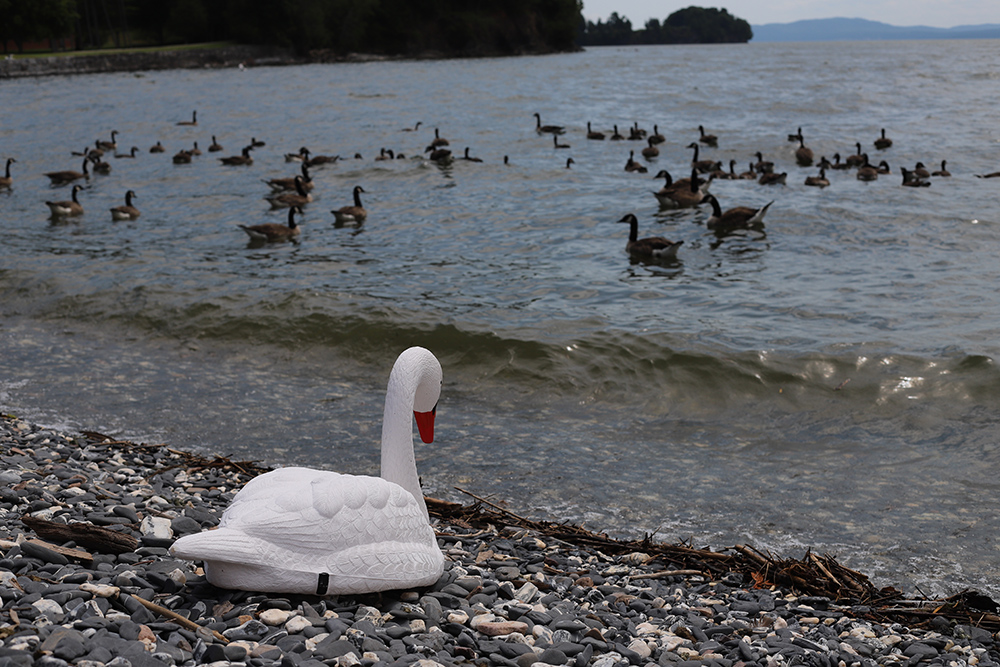
A coyote lurks in the lawn. A swan sits on the shore. But wait…
New plastic animal figures near the Coach Barn have raised eyebrows and offered photo ops for visitors. But they’re not statues or art. They’re tools to help us address a persistent problem: large flocks of Canada Geese on our lakeshore and fields.
A single goose can produce more than a pound of feces a day. In large flocks, they can significantly impair water quality and affect public health (e coli, excess nutrients, and blue-green algae blooms). And they make an awful mess! They’re beautiful, but problematic.
How’d we get here? Historically, two North American subspecies of the Giant Canada Goose (there are 11 total), migrated through Vermont, from Quebec to the mid-Atlantic. Sadly, unregulated hunting and destruction of their wetland habitat nearly drove them to extinction in the early 1900s.
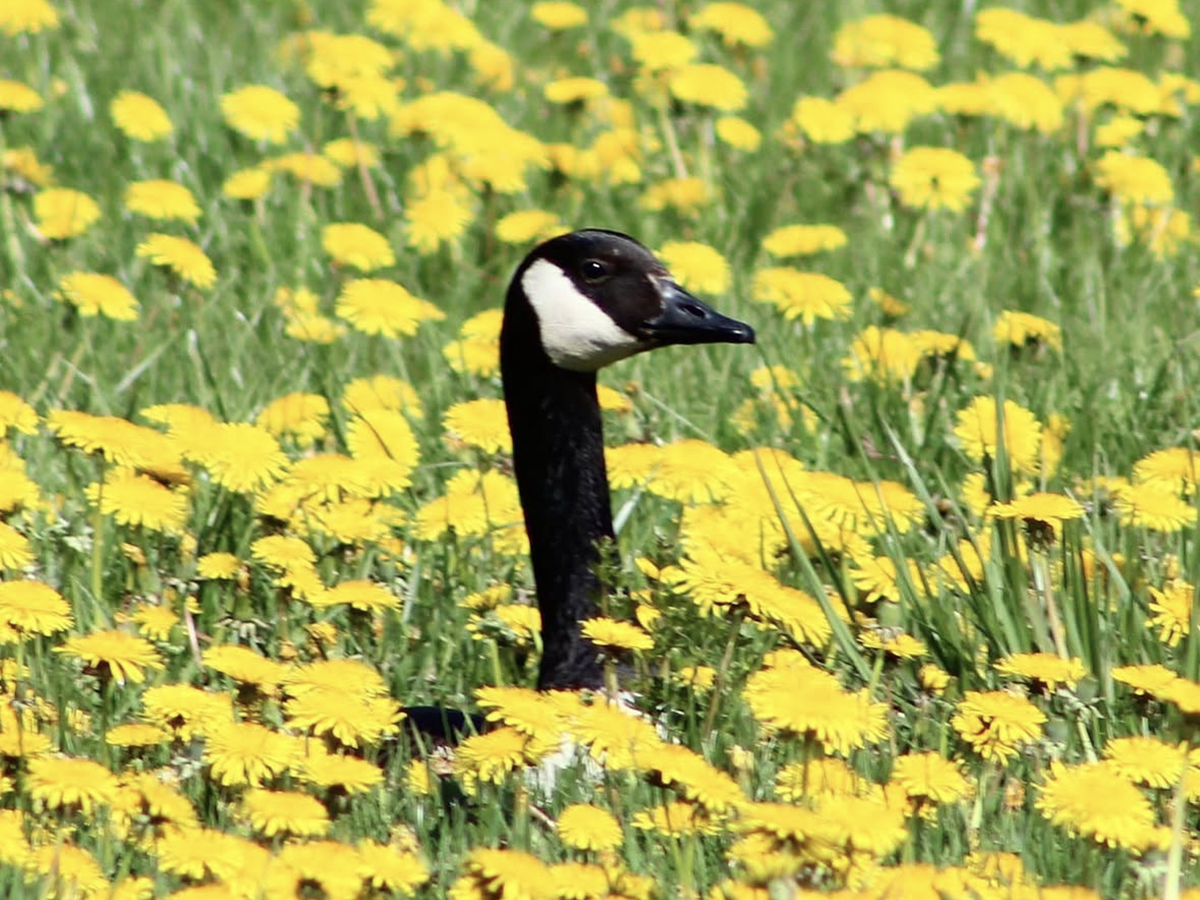
In response, a population of captive-bred geese was introduced to Vermont in 1956. The geese prospered and their numbers rapidly grew. It was hailed as a conservation success story… except the captive-bred geese never learned to migrate. They stayed put. A lot of them.
While it’s easy to now call these troublesome geese “nonnative” or “invasive,” the story is a reminder that these terms are murky at best. Our relationships with animal populations are always complex, profoundly shaped by human histories, decisions, and behaviors.
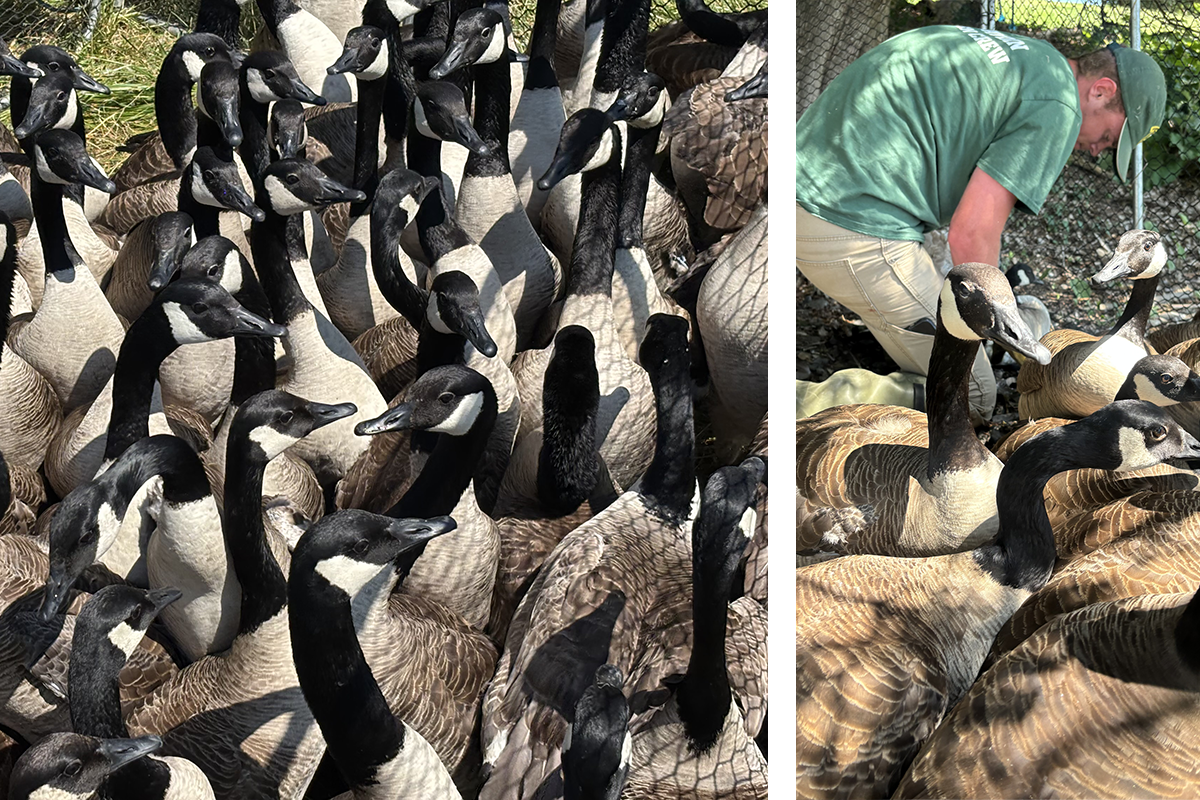
Now, to help control their numbers, VT Fish and Wildlife has instituted both an annual effort to band some of these Canada Geese to better understand their movements, and a “Resident Canada Goose Hunting Season” in September.
Here on the farm, we’re beginning our control efforts by exploring non-lethal methods to deal with the geese. These include the decoy coyotes and swans, who are natural predators/competitors with the geese.
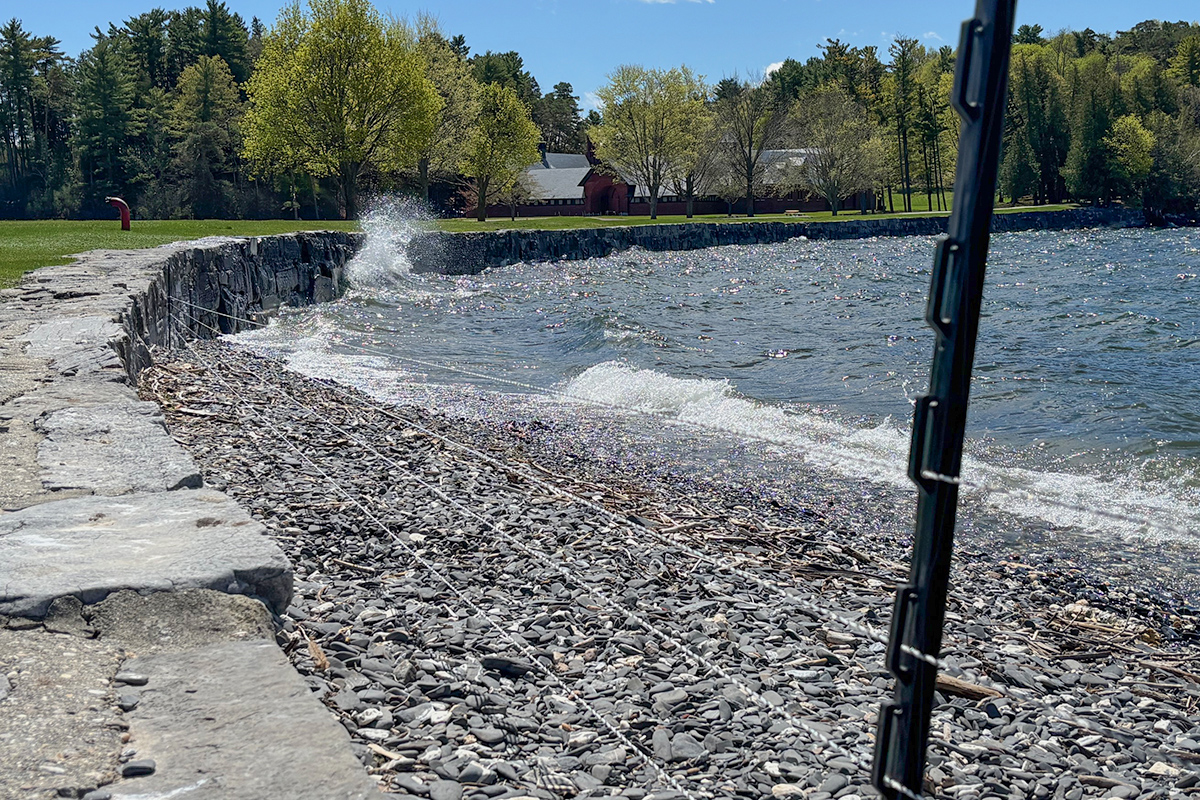
We also erected a barrier fence on the low side of the Coach Barn seawall this spring. Geese have their young in May, and molt mid-June to mid-July. During this time, to protect their goslings and themselves (geese can’t fly during their molt), they spend nights on the water and feed on shore during the day. With the fence, they won't easily be able to walk up to the land from the water.
Other control methods that we’ve either tried or may try include applying cayenne pepper on the lawns, patrolling the beaches with some of our herding dogs, and firing noisemakers that sound like a gun. The issue with most non-lethal methods is that they require consistent attention and effort. (You have to move the coyotes and swans frequently so the geese really think they’re alive!) They’re also most effective before nesting season.
We’re seeing results with the coyotes and swans, however, so we’ll stick with them for the time being. Don’t let the decoys scare you!