
Mix it Up: Make Potting Soil Activity

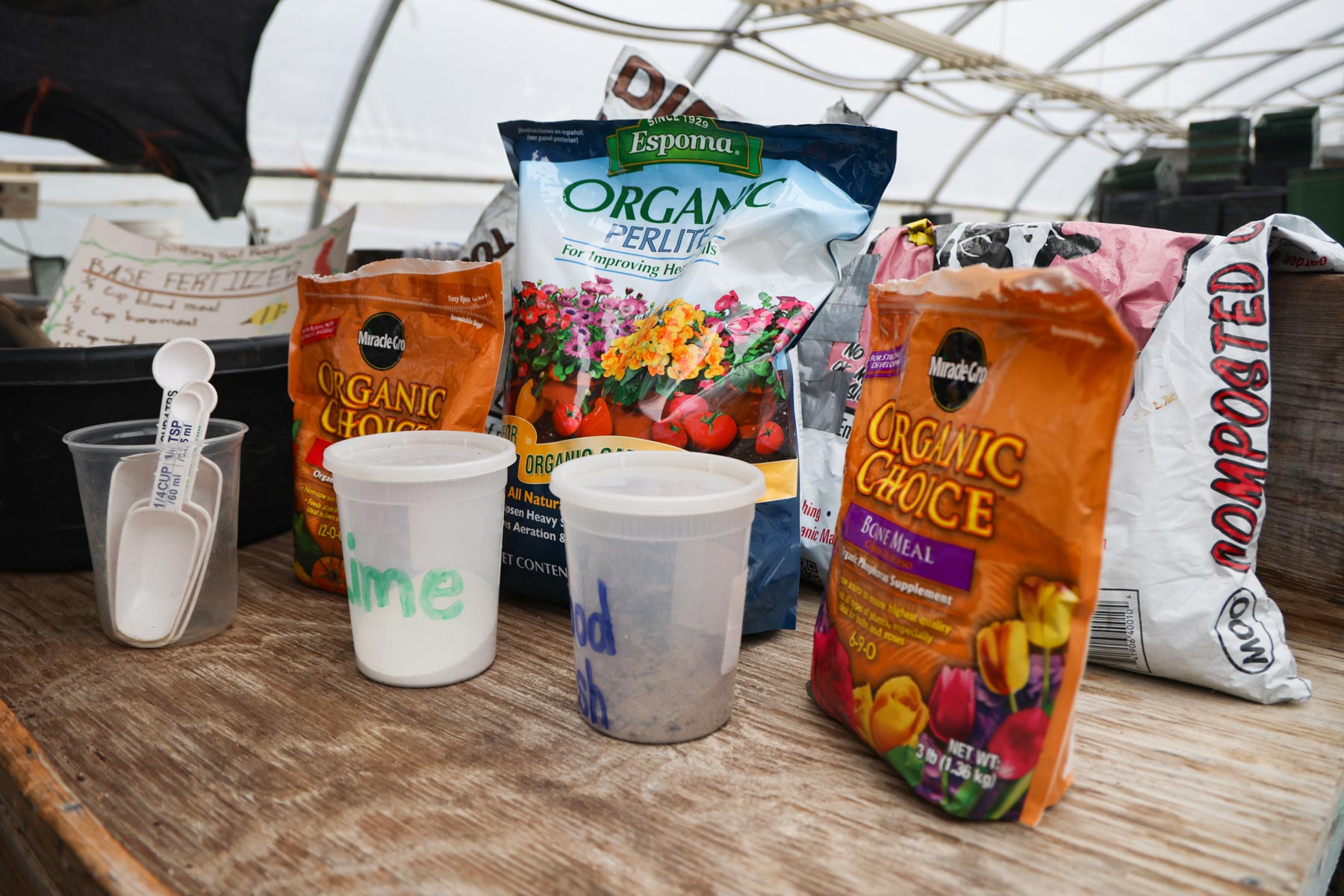
What is even in those giant bags of potting soil at the store?
“Mix It Up” is a longtime favorite activity among Shelburne Farms Educators that investigates just that question. By getting all the components of potting soil (available at your local garden center), everyone can get their hands dirty, learn about the role of each ingredient, and create an ideal foundation for growing seedlings.
“I remember being a parent volunteer and doing this activity in my kids’ classrooms. My kids remember it, too, and still know that nitrogen is what helps make the leaves green!” shares Agricultural Education Coordinator Susie Gilmore. “This is a great activity for schools with grow labs, greenhouses, or for teachers who want to start some plants on their classroom windowsill. With a tarp and a bucket, you can make the soil right on your classroom floor.”
Make some potting soil for your school garden sprouts (or for your own backyard garden) and dig deeper into what seeds need to grow.
Mix it Up: Make Potting Soil
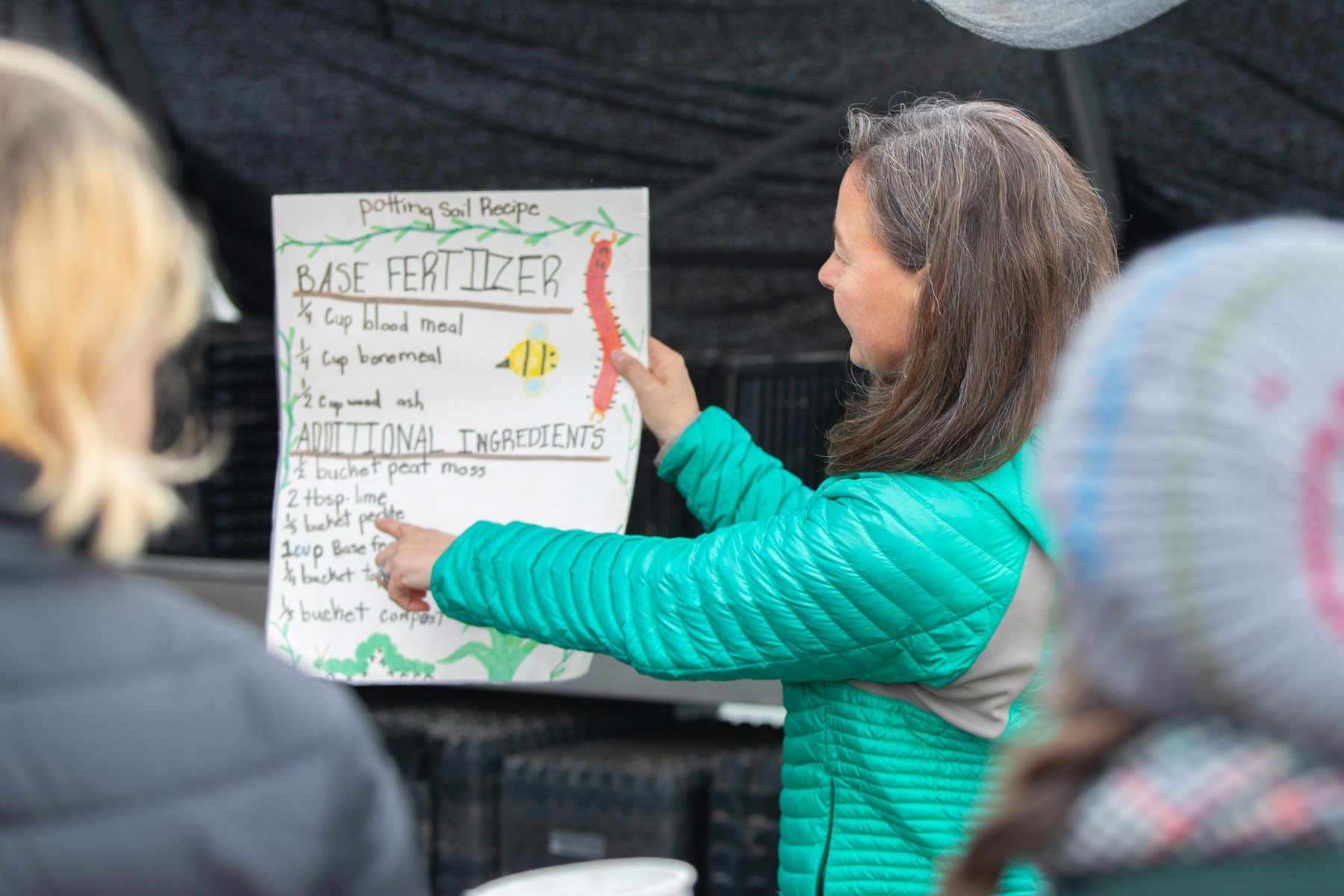
Invite students to make potting soil by following a recipe. The recipe below can be blown up onto a poster for students to read together, or handed out like a recipe card, together with the explanations of what each ingredient contributes to the soil mix. You can find the ingredients for making potting soil at your local gardening center.
Ingredients & Their Function
Nutrients and their proportions are important in soil and soil amendments, and the recipe has a ratio of nitrogen (N) to phosphorus (P) to Potassium (K) that is suitable for most general garden applications.
- Blood meal: Rich in nitrogen
- Bone meal: Rich in phosphorus and calcium
- Egg shells: Rich in calcium (optional)
- Mineral lime: Alkaline, it can help neutralize acidic soil
- Wood ash: Like lime, it can help neutralize acidic soil. Also adds calcium and potassium.
- Perlite: A naturally occurring volcanic glass that pops like popcorn when heated. It improves aeration by keeping soil loose and preventing compaction.
- Peat moss: Holds water and air; contains few nutrients (or use coconut coir, a more sustainable alternative)
Potting Soil Recipe
Use a five-gallon bucket as your measure. You’ll end up with about a bucket and a half of potting soil.
Base Fertilizer
- ¼ cup blood meal
- ¼ cup bone meal
- ¼ cup egg shells
- ½ cup wood ash
Additional Ingredients
- ½ bucket peat moss (5 gallon bucket)
- 2 Tbsp. lime
- ⅓ bucket perlite
- 1 ¼ c. Base Fertilizer (see above)
- ¼ bucket topsoil
- ⅓ bucket compost
Instructions
- If you’re indoors, spread a tarp on the ground where you can mix your recipe. Students can use trowels, shovels, or their hands for mixing.
- First, mix together ingredients for Base Fertilizer.
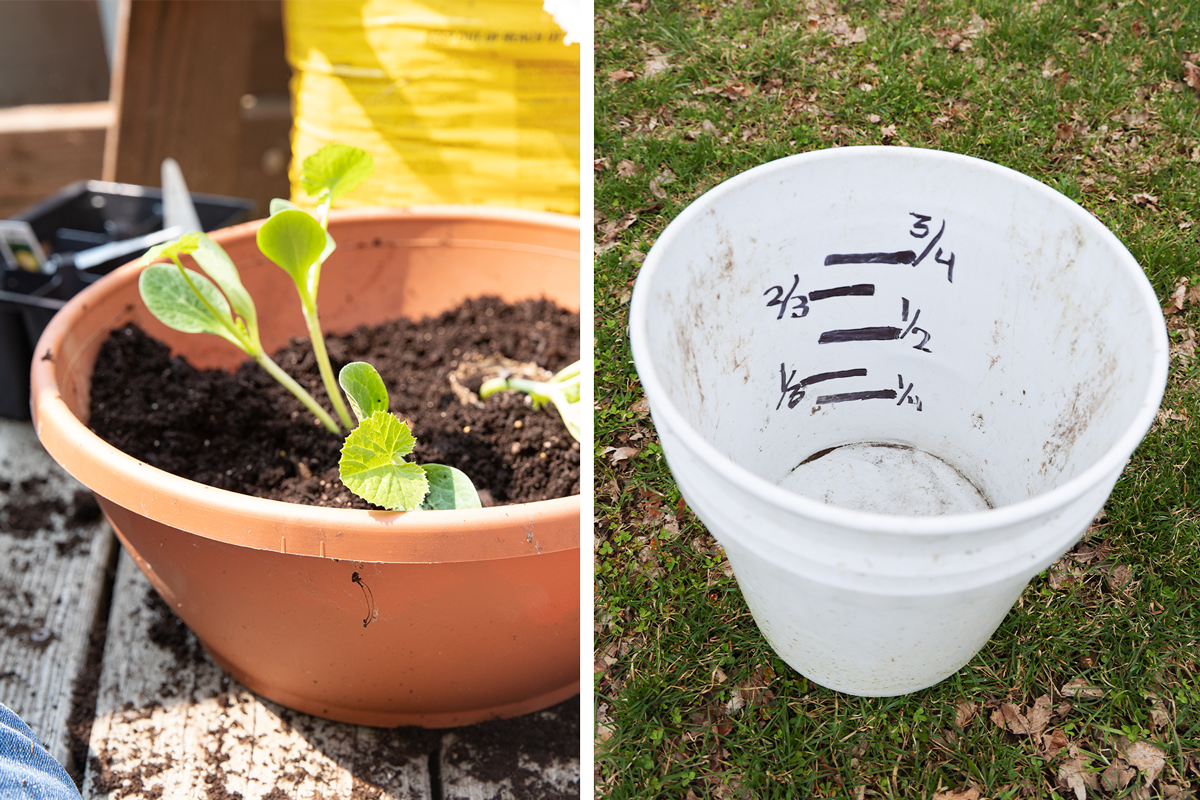
- Mix remaining ingredients together and add to Base Fertilizer. (To help students measure the correct amount of “bucket” ingredients, make lines for ¼’s and ⅓’s on the bucket).
- Add water until damp.
Now you know exactly what's in that bag!
Download the PDF of this activity.
More to Explore
Related Resources:
- The soil section in Project Seasons offers additional activities for hands-on science about soil, erosion, and compost.
- Kiss the Ground offers related soil resources
- Download NPK cards to have quick access to the role of three key plant nutrients, nitrogen, phosphorus, and potassium. Print and cut out each card. You can fold each in half to have a double-sided card. Laminate for longevity. (There are lots of variations available online, too!)
Ideas for Extending the Learning:
- Practice fractions
- Dive deeper into the functions and interactions of each ingredient (we’ve only included brief descriptions)
- Start a conversation about the ingredients themselves (Where do these ingredients come from? Are there more local or sustainable alternatives?)


