
Rebuilding Farm Barn Courtyard Walls

Reconstruction work on the Farm Barn’s courtyard walls has begun. Pardon the mess as we remove and rebuild. It will take most of the year.
The Farm Barn has been the nerve center of Shelburne Farms since 1890, and over the last decades, its courtyard walls have defined one of the nonprofit’s busiest public spaces. But those walls need significant repairs.
Over 140 years ago, masons laid a rubble stone footing for these walls, built up a rubble core interior, then mortared locally quarried blocks of redstone on each side of that core. The walls were then capped with limestone from Isle La Motte, Vermont.
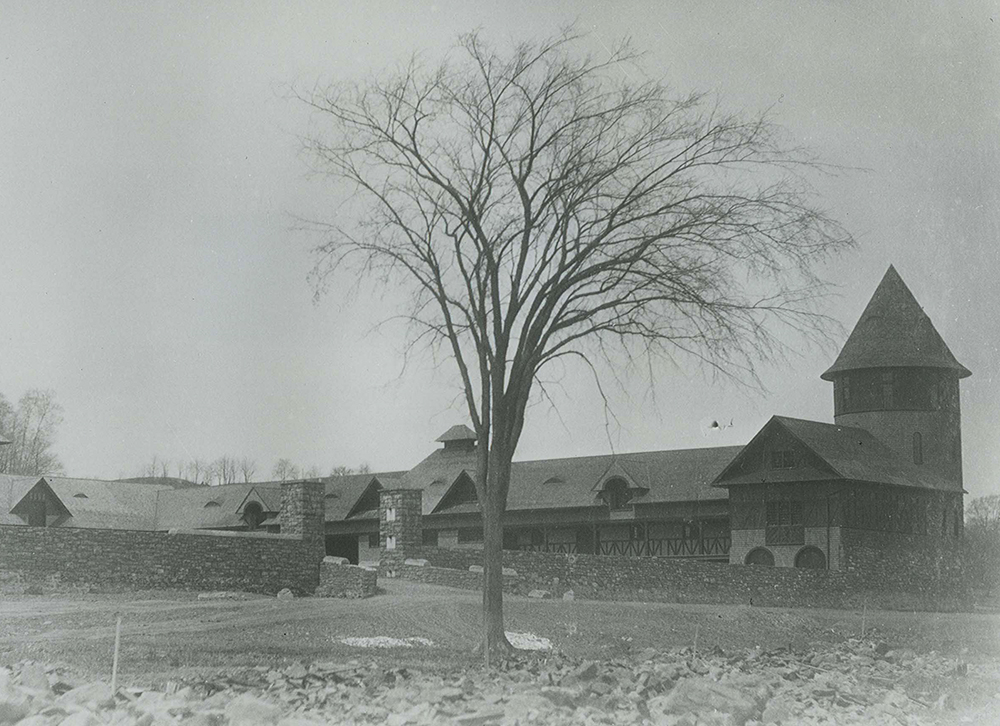
In the long years since however, water has filtered between the mortar of the caps to the core, where repeated freezing and thawing has weakened the wall. “The mortar just inside the wall is particularly failing,” points out Steve Smith of SAS Architects, manager of the project. “It's like sand.” The mortar between the redstones is also in rough shape.
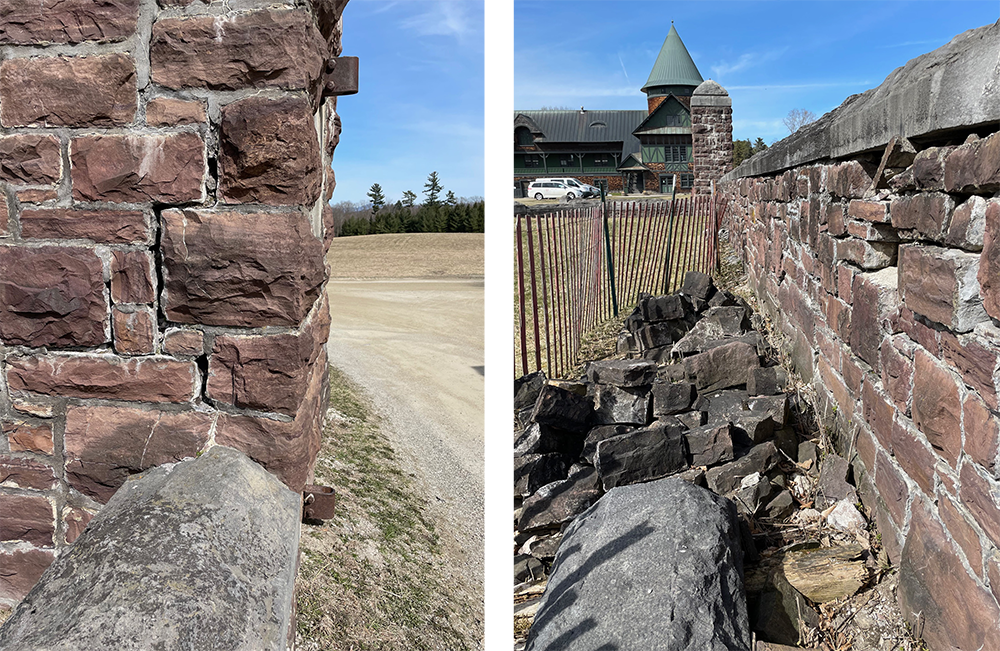
This historic rehabilitation project is being led by the masonry crew of White Falcon Solutions. In March, they brought most of the walls down to the ground (see slideshow below). The team is installing a new concrete footing, then will set and re-mortar the existing redstones around the rubble core. Finally, the capstones, carefully marked to be returned to their original locations, will be remounted with a fresh treatment of penetrating sealant to help prevent water damage in the future.
-
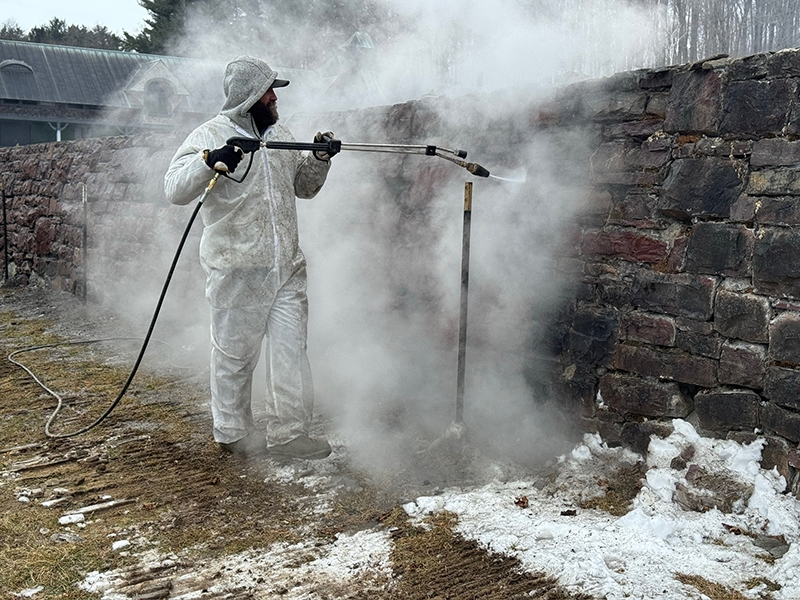
SLIDESHOW: Masons power-wash the walls to dislodge loose mortar. This makes dismantling the wall easier.
-
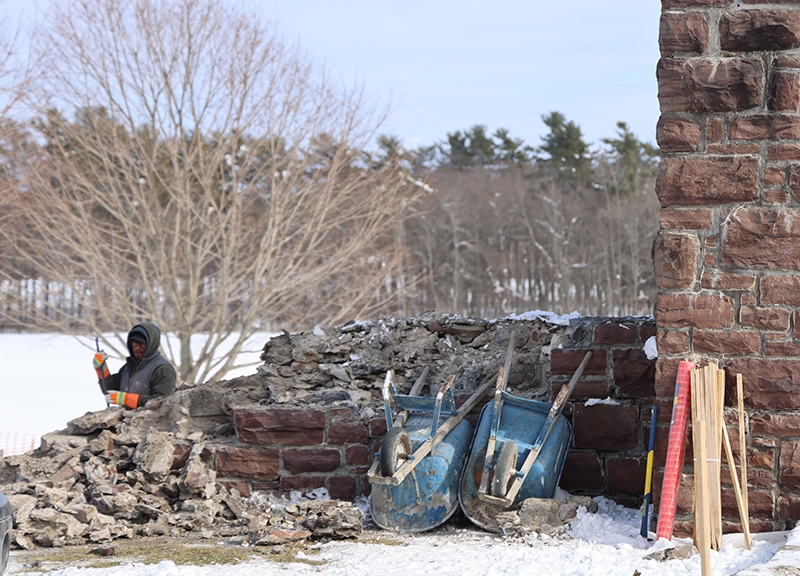
Masons with large equipment dismantle the walls, saving the redstone for reuse in the rebuild.
-
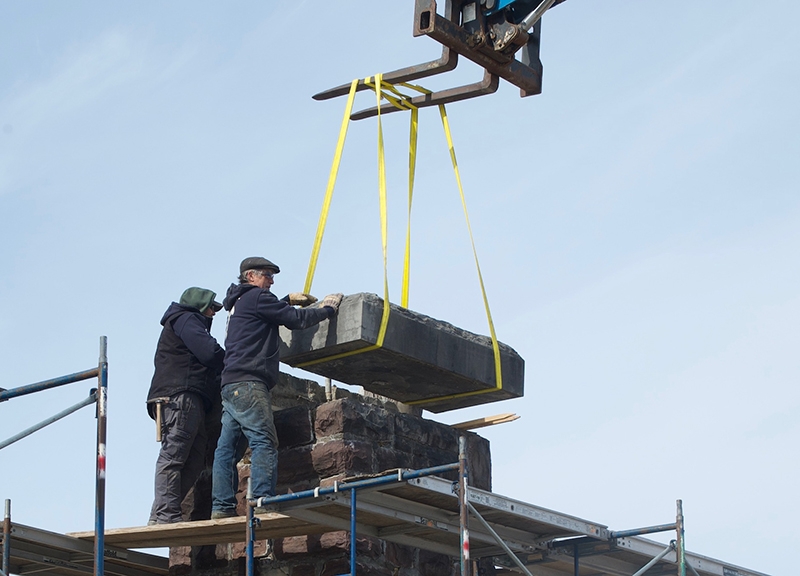
A crane removes the capstones from the entryway pillars, the last wall section to be dismantled.
-
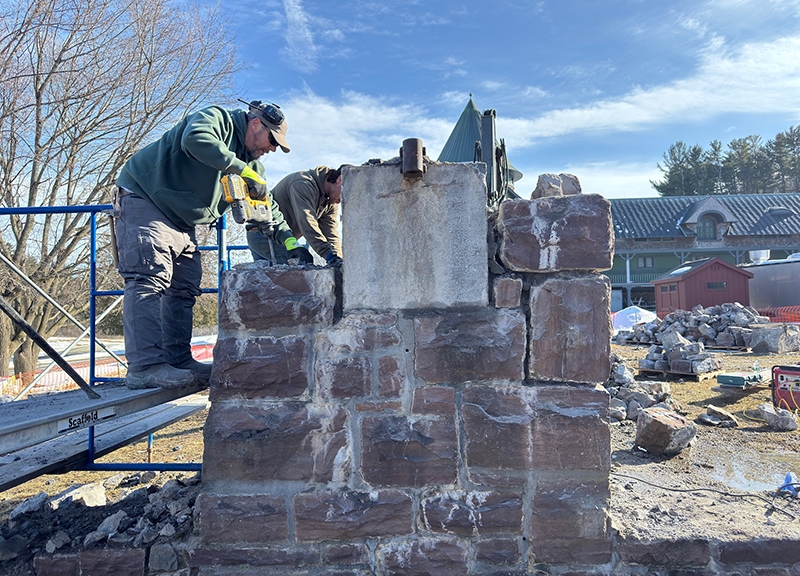
Masons carefully remove a large block of granite embedded in the entryway pillars. It originally stabilized gate hinges.
-
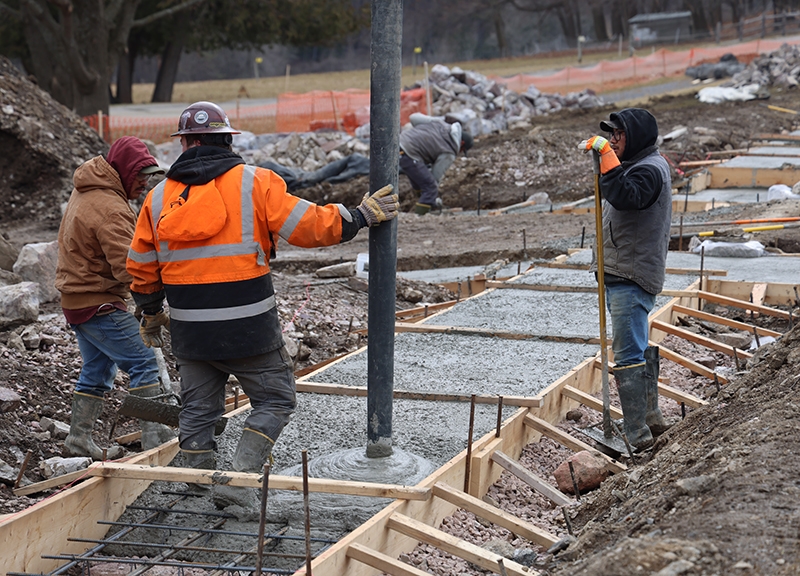
Masons pour and spread concrete into plywood frames to set the foundation for the reconstructed walls.


“The Farm Barn really is at the center of everything we do,” explains Alec Webb, President of Shelburne Farms. “Rebuilding the courtyard walls is creating a beautiful outdoor classroom and community gathering space for the future..”
To minimize disruptions to our programs and operational activities, the wall work is proceeding in phases.
Project Phases
APRIL: Rebuild South Wall (Food Cart side)
MAY-AUG: Rebuild Center Pillars & Entrance
SEPT: Rebuild North Wall (Bakery side)
OCT-NOV: Rebuild Farmyard Retaining Wall
After we close for the season, White Falcon will rebuild and install better drainage around the retaining wall near the Children’s Farmyard.
The Farm Barn is essential to Shelburne Farms as a National Historic Landmark (it is one of the original four principal buildings, all designed by Robert H. Robertson). And it is essential to the nonprofit as our educational and administrative beating heart. Within its walls and fields, people of all ages can learn about the role of farming in their lives and ponder sustainable food systems of the future.
This work is being supported by a Save America's Grant, as part of the successful Campaign for Shelburne Farms.

