
Sustainable Schools at Work: Georgia Elementary & Middle School's Gravel Wetland Project

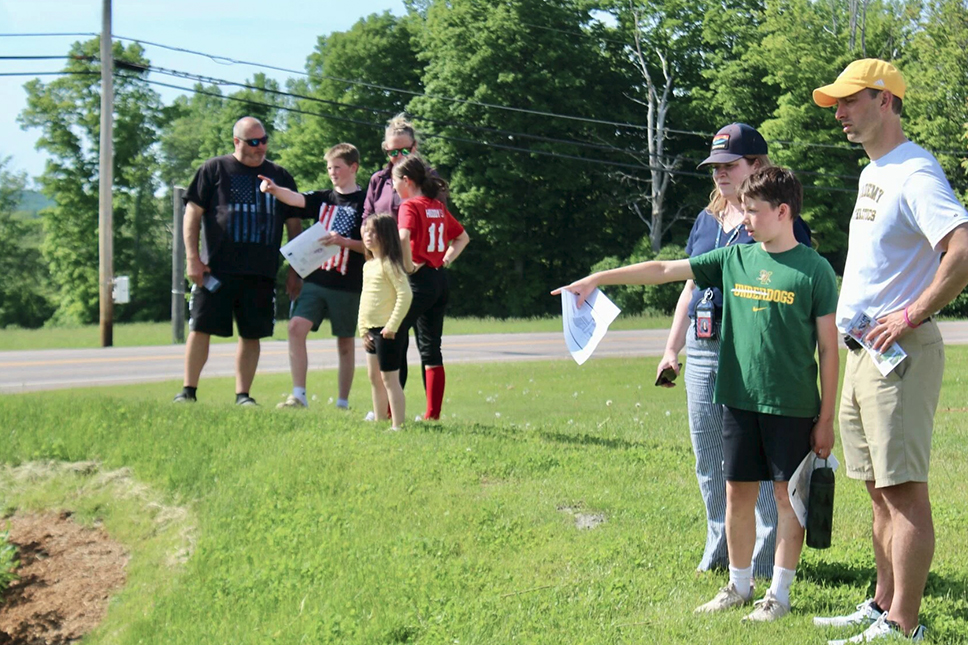
As part of the Cultivating Pathways to Sustainability program, student leaders from Georgia teamed up to teach and learn about stormwater
Last summer, a large hole appeared in front of Georgia Elementary & Middle School (GEMS) in Georgia, Vermont. The hole was the beginning of an important project on the school’s campus: a gravel wetland designed to collect and filter stormwater runoff, part of the state’s Green Schools initiative.
“GEMS has a big parking lot and a large school building, which means it generates a lot of stormwater runoff. That runoff goes into Mill River, which flows directly into Lake Champlain,” explains Dr. Karen Lehning, GEMS Director of Teaching & Learning. Gravel wetlands treat stormwater runoff underground, slowing the flow and filtering pollutants and dirt. As the big project got underway, Lehning saw a big opportunity for student leaders at GEMS to learn about water quality and teach others how our actions impact the world around us.
Students took the idea and ran with it. Over the past school year, a dedicated team of middle schoolers and teachers from GEMS worked with community partners including the Lake Champlain Committee and Lake Champlain Sea Grant to learn about stormwater, teach peers about the gravel wetland, and enhance the site with native plantings and interpretive signage. The team was part of Cultivating Pathways to Sustainability, a program offered by UP for Learning and Shelburne Farms Institute for Sustainable Schools.
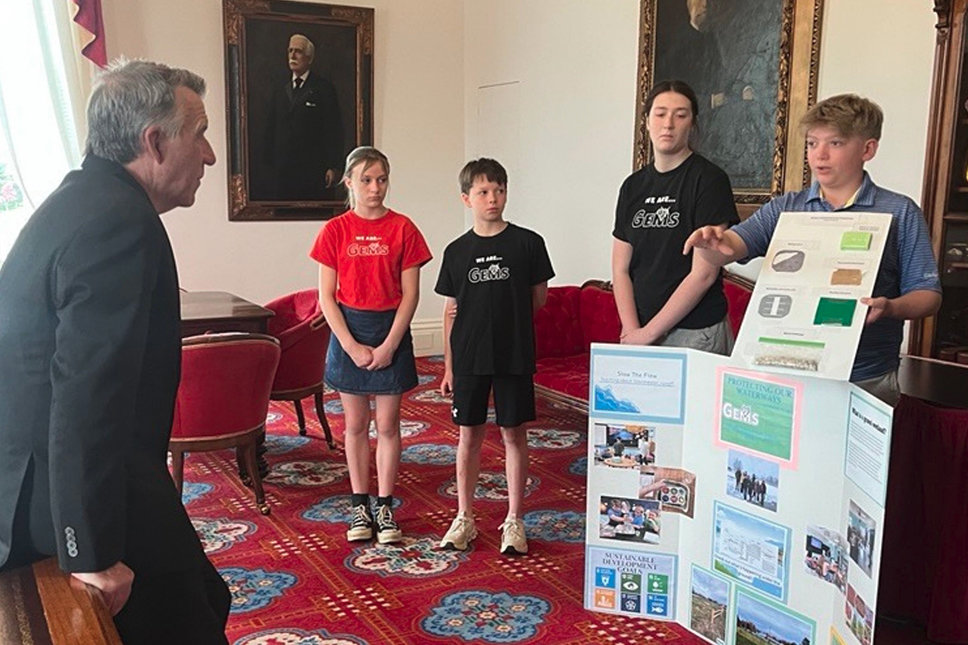
In Cultivating Pathways, youth-adult teams learn about the UN’s 17 Sustainable Development Goals and develop projects to advance sustainability in their communities. While gravel wetland construction was already underway on school grounds, Cultivating Pathways gave GEMS students the framework to connect this local project to global issues, including clean water and sanitation, climate action, life below water, and life on land. Cultivating Pathways culminated in May with a celebration of learning on the State House Lawn. The GEMS team took this one step further: they also presented their work inside the State House, to Gov. Phil Scott.
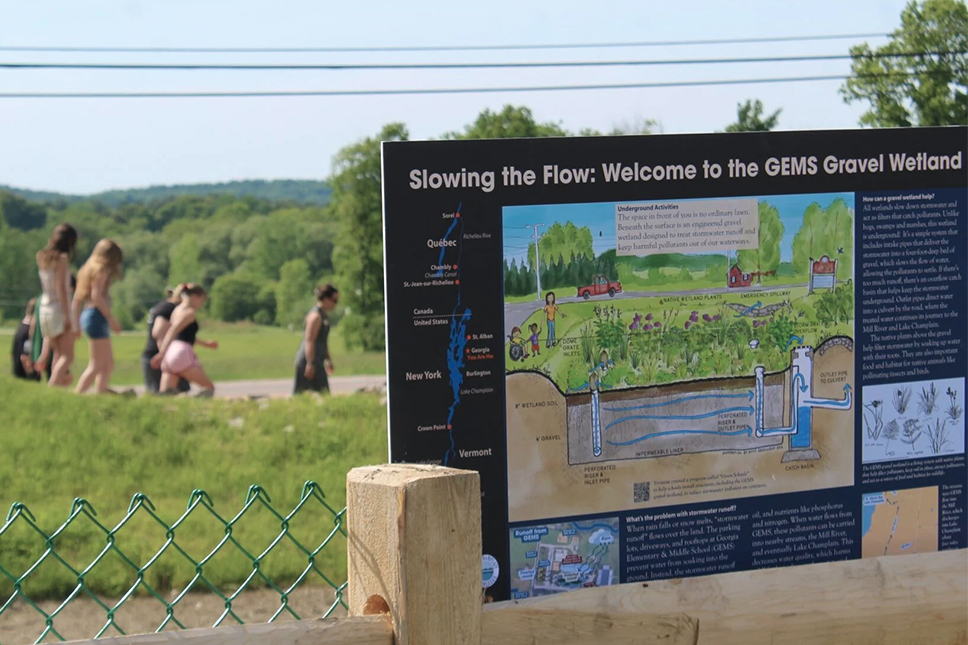
Student’s work transformed what could have been a mysterious pit into a place for learning and engagement for the school and larger community. GEMS students designed signage explaining what was happening underground and why it mattered and developed a landscaping plan that includes locally-evolved plants in their school’s colors, red and black.
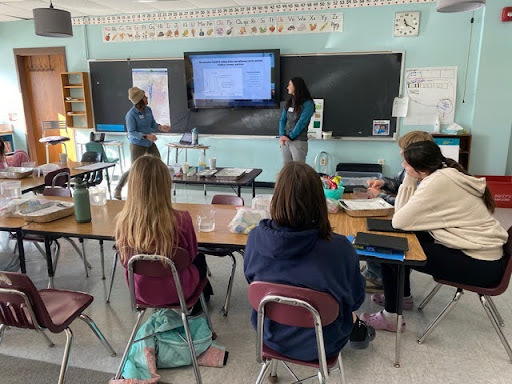
Once students learned about the science behind the gravel wetland—and how the project advances sustainability—they went into other GEMS classrooms to spread the word. As middle schooler Teo tells the St. Albans Messenger, discovering how pollutants could be carried from the school to the lake was like waking up. “I had no idea our school was having that much of an impact on how much water and bad stuff we’re putting into the lake. I’m glad we did something about it.”
Join us for Cultivating Pathways!
Registration for 2026–27 is open and free for Vermont teams.
Partners