Listen, Invite, Thank: Bringing a Middle School Garden Back to Life

Four years ago, when sixth-grade teacher Maisie Anrod began working at Hunt Middle School in Burlington’s New North End, the school garden had gone quiet, its once tidy beds untended.
If you’ve been a farm to school coordinator you may know the scene. “It was alive, but overgrown, and teachers weren’t coming out with their students,” Maisie remembers. “Our district Food Educators, Sarah Heusner and Jen Trapani, and I were questioning all the work: why care for the space if it isn’t being used? I thought, we should care for this space so that it gets used.”
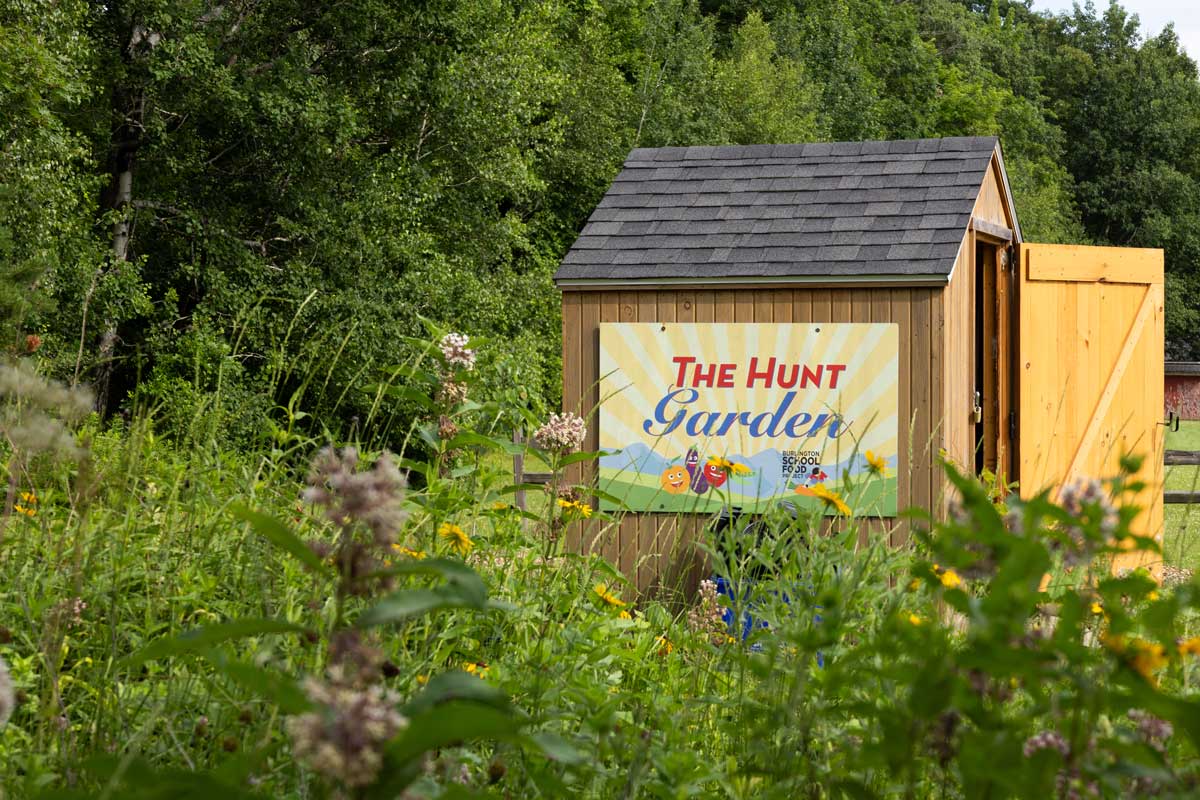
That mindset change began a second life for the garden. Now, just past the running track, hugged by picnic tables, is a well-tended garden brimming with zinnias, basil, and dino kale. During the summer, volunteers show up weekly for planting, weeding, and harvesting (and Maisie’s baked treats). And when school is in session, the garden is a busy outdoor classroom and a source of special ingredients for the cafeteria.
“Social studies teachers come out and do mapping activities, English teachers are connecting the garden to their food systems unit, and the cafeteria highlights harvests on the lunch line.”
So how did the garden go from overlooked to embraced? Here are some tips from Maisie:
Ask: What are Your Community’s Dreams?
One of the most important steps to reinvigorating the school garden was listening to the community and setting a vision that was truly reflective of the community. Maisie did this mainly through a simple, ten-question Google survey for students, teachers, families, and community members to really dig into “What is this garden for?”:
- What do we want to grow within our students and ourselves?
- How would you like to use the space?
- How would you like to be involved?
- What do you need to be able to engage with the garden?
- When you close your eyes, what do you dream for this space? What do you smell, hear, taste, and feel?
- What do we care about?
- Why do we care about our kids gardening?
- What do we need to be able to do this work?
- When should we garden together?
- What are our collective values?
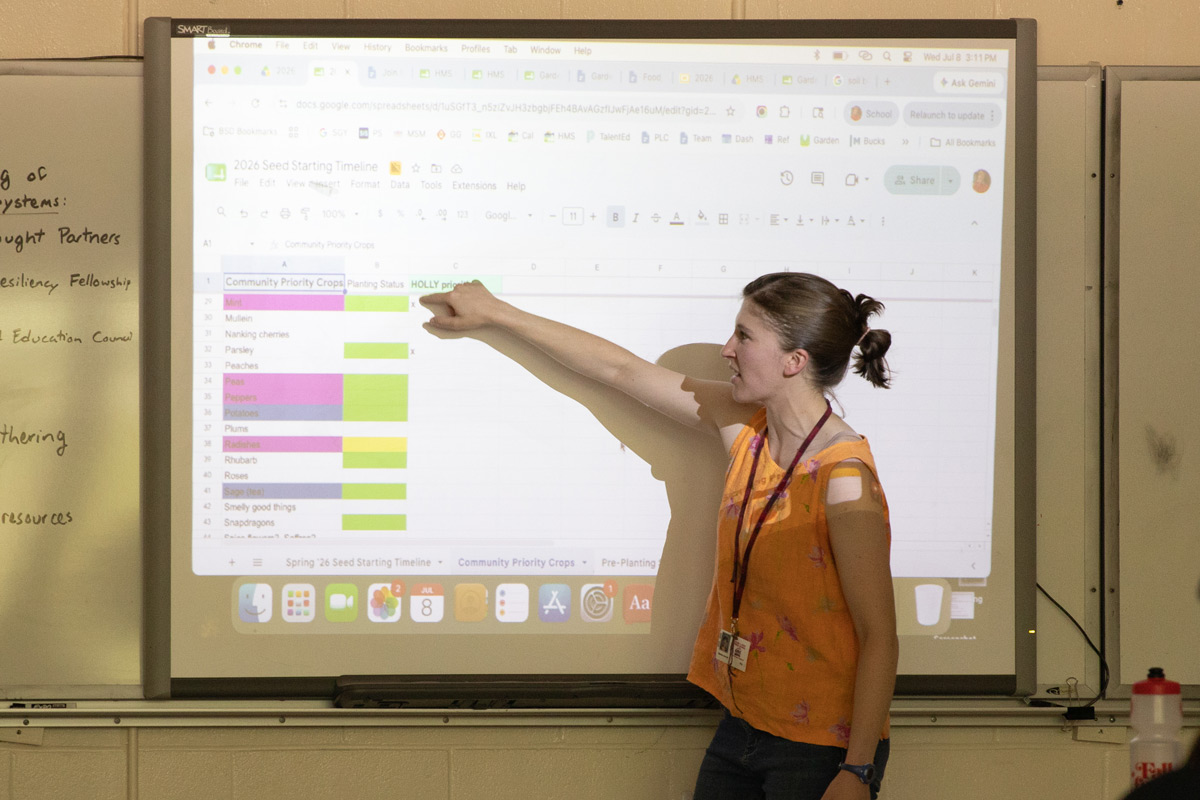
“That dreaming piece, that imagining of what could be, is really important. Especially in public school. Because, as teachers, we so often worry about funding or other barriers. So inviting the community to dream really allows you to figure out what people are hoping for, and more often than not you can figure out ways to get there.”
Four big community values emerged from the answers: connection and belonging; student empowerment; agency, mentorship, and skill building; and care and social emotional development. “The earlier on you can do that work, the more likely you are to be successful. It allowed me and the volunteers to direct our energy in ways that are more productive than ‘let's have a garden, because I like gardening,’ which is easy to do, but it doesn't meet that criteria for connection.”
Surveys can offer really practical, boots-on-the-ground feedback, too, like a crop list. When Maisie asked the students, staff, and community, there was no lack of ideas. “I created a huge, color-coded spreadsheet! My goal is to grow every crop that was mentioned more than once. There are like 50, but I think we can do it!” Wishlist plants included cucamelons, ground cherries, and lemon basil. “By far the most popular answer was strawberries. I also got some tropical fruit requests from middle schoolers. I wish I could grow mangoes, too, but maybe paw paws at some point, which kind of taste like mangoes.”
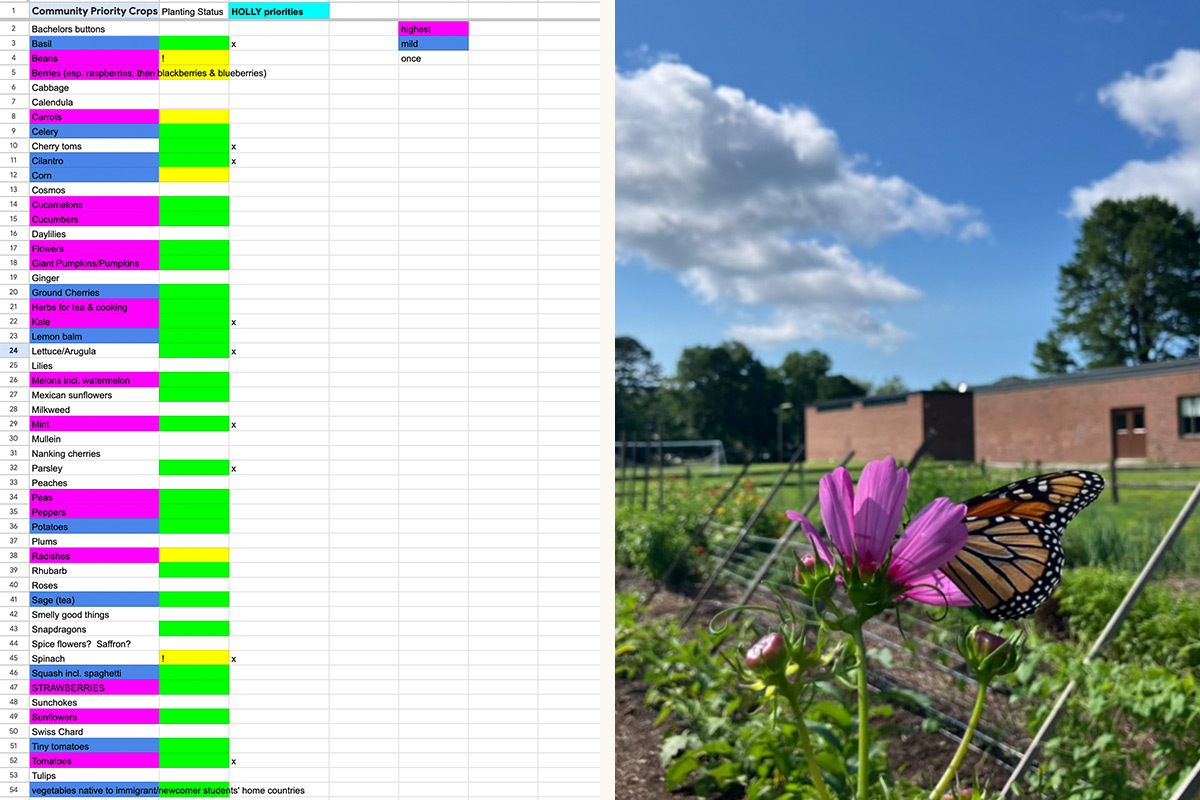
Since using local foods in school meals was part of the community’s vision, Maisie sought the school nutrition team’s input, too. “I asked Holly, our amazing food service director, to tell me which crops on our list could be used in the cafeteria, and those became high priority. Some cafeterias have very restrictive guidelines on what they can use, but our cafeteria has been really willing to wash and use whatever we have.”
Getting the Word Out to Invite People In
Now you know what you want out of your garden, but how do you get people there?
For volunteers, Maisie has created a simple, but effective, newsletter. The system: first, she has a Google form for people to submit just their name and email address (“The fewer questions, the more likely you are to get people to answer.”). She gets updated when new responses come in, the form feeds into a spreadsheet, and she updates a Google contacts group periodically (or, you could just bcc email everyone).
“I'm not a techie person, so the newsletter is a few sections: like weekly update, now harvesting, tasks, and celebrations, because I think that joy piece is really important.”
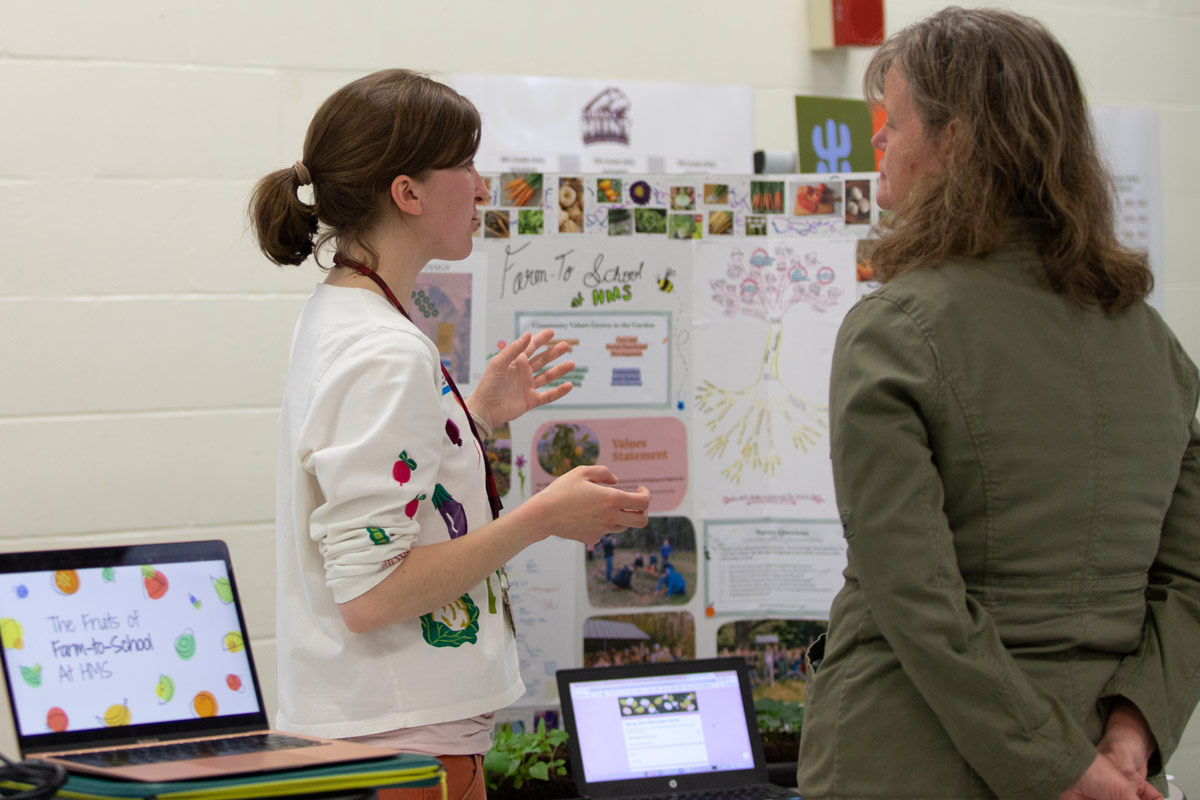
She’ll also create short garden updates and event blurbs for the school newsletter a few times a year, and share the same information at family nights, through Front Porch Forum, and with friends. A short one-pager about the garden is also handy, highlighting ways to get involved and a QR code or web address to the newsletter sign-up form. “And I always make it clear that no gardening experience is needed.”
“The community has been really amazing: both the school community and the broader community. I have volunteers who are retired but live near the school. I have volunteers who are my friends who heard about it from me at Run Club.” By keeping the message simple (Come! Join! No experience needed!) and pointing everyone to one place for updates (the newsletter), Maisie can keep everyone in the loop and feeling welcomed to participate.
Offer Support & Express Gratitude
“Figuring out how you can offer things from the garden as a gift has been key—whether it's a resource, fresh strawberries, or flowers. There are always barriers to participation, and the lower we can make those, the better.”
Once your community shows up, the work shifts to supporting and appreciating their effort.
Support can start by figuring out how to make it as easy as possible for others to participate. Maisie surveyed her volunteer groups about garden hours. “I got a whole bunch of times, and I picked the most popular answers for our routine volunteer garden hours. And it changes year to year based on people's availability.” This summer: Wednesdays 5–6:00PM and Sundays 9:30–11:00AM. You have to offer times that work for the people who want to help, and find ways to say thank you. For Maisie, that looks a little different depending on who she's thanking.
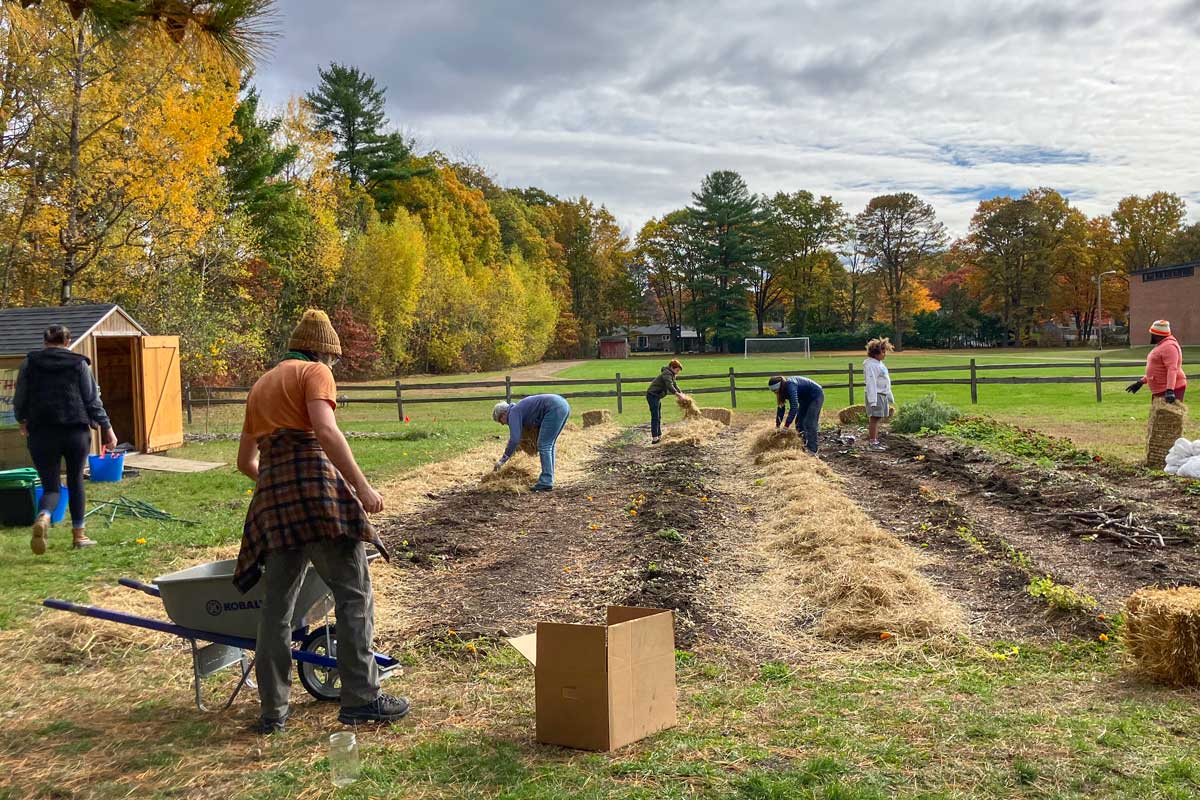
“Sometimes I'll bring baked goods, but volunteers can always bring home whatever we're harvesting. I think everybody who helps make this space possible should share in its bounty. And I often celebrate a volunteer in the newsletter because the people who are helping care for the space deserve to be celebrated.”
For her fellow educators, support and gratitude looks a little different. “School staff are often asked to do just one more thing, and that leads to burnout. I don't want the garden to be one more thing. I want it to be a gift.” Maisie received permission from the school principal to use a schoolwide 20-minute advisory period as her daily prep time for farm to school work. She uses the time to coordinate with food service staff, maintain connection with local organizations, apply for grants, support to teachers event plan, and more. “If a colleague expressed interest, that’s when I can go to them and ask, ‘Hey, how can I support you?’ And we’ll figure out what the resource barriers are.” Maisie offers up freshly picked fruit and vegetable snacks during staff meetings, and extra classroom-grown seedlings for home gardens.
Integration and gratitude need to show up in the cafeteria, too. “A lot of school nutrition teams are really underappreciated, not specifically at my school, but in general. They work so hard and they have so many guidelines to adhere to—just make sure to thank your food service staff.”
Communication is key. Rather than surprising the food service director with a harvest, Maisie checks in first to make a plan. "It’s not just, 'Here you go! Aren't you happy ten kids brought this kale to you?!' That small shift makes room for the cafeteria staff to actually plan around what the garden can offer, rather than absorbing one more unexpected task. "Asking politely, and asking how I can make their lives easier, has gone a long way," she says.
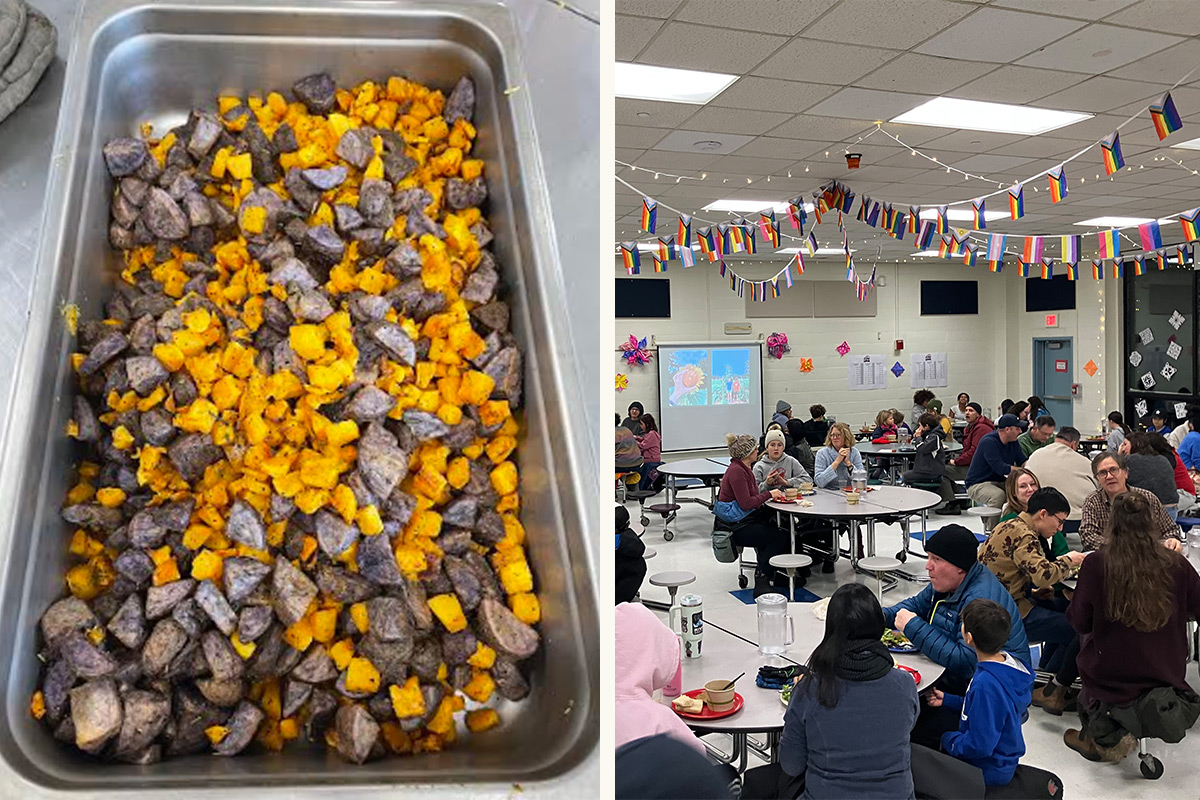
That same respect shows up in how Maisie shares the credit. "It takes two seconds, but taking a photo of the dish that they made goes a long way.” When the cafeteria turned garden-grown purple potatoes into a roasted dish on the lunch line, Maisie snapped a photo and sent a staff-wide email: "Now in the cafeteria! Roasted potatoes from our garden!" with the nutrition team cc'd. "Seeing that it's appreciated, and then having staff reply back, 'Wow, so amazing!' — it just cultivates respect for what they do. That often isn't present culturally in school cafeterias." She sends a version of this "coming to a salad bar near you!" email blast whenever garden produce makes it onto a lunch line, pairing it with a photo of the dish. "I just think that the work that they do is so valuable. School food has come so far from when I was in school. They work so hard to bring our kids fresh and healthy food."
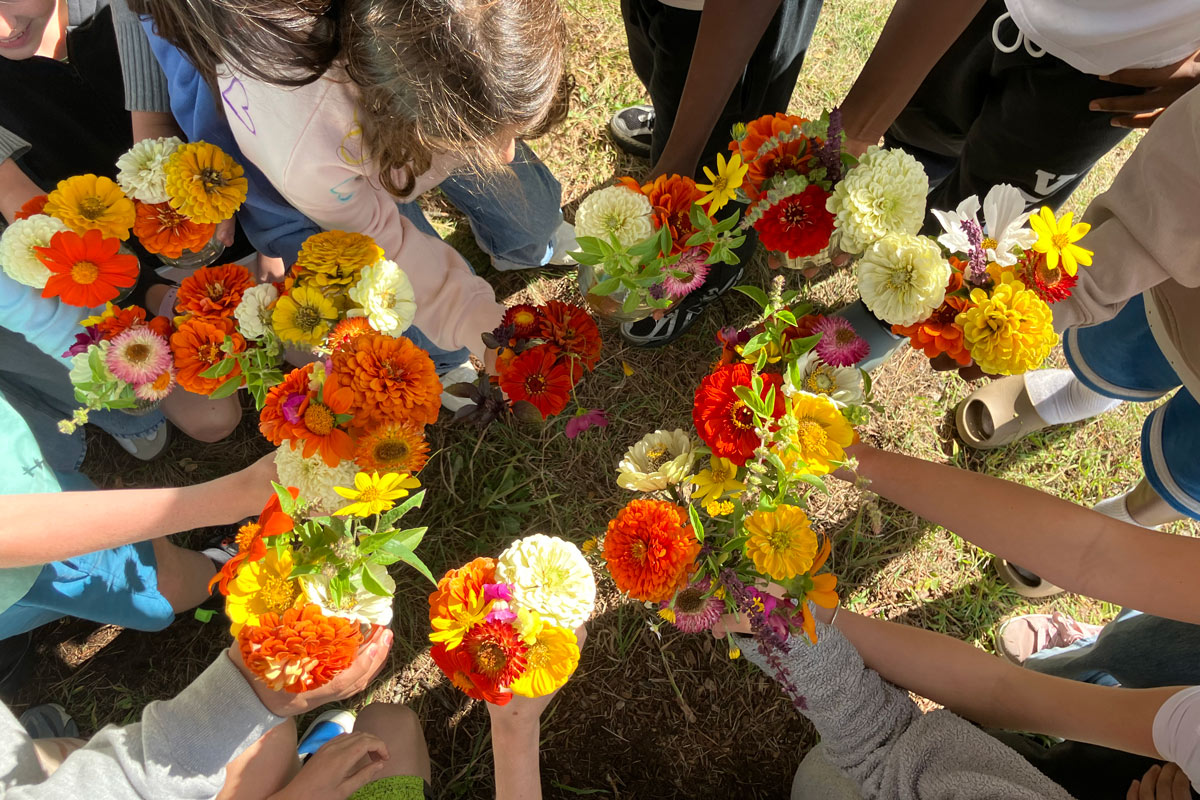
A favorite activity of Maisie’s extends gratitude throughout the entire school. Each September, once her sixth graders have settled into the first few weeks of school, they head out to the lush garden to cut bouquets for someone who helped them get started that year: a teacher, custodian, paraeducator, or nutrition staff member. "It's a way to say thank you," Maisie says. "And it's not supposed to be garden advertising, but I think having a bouquet of flowers from the garden in your classroom is just like a reminder of the garden.”
All the successes trace back to Maisie's first step: asking what the community needed, and letting those answers become what everyone dreamed it could be.
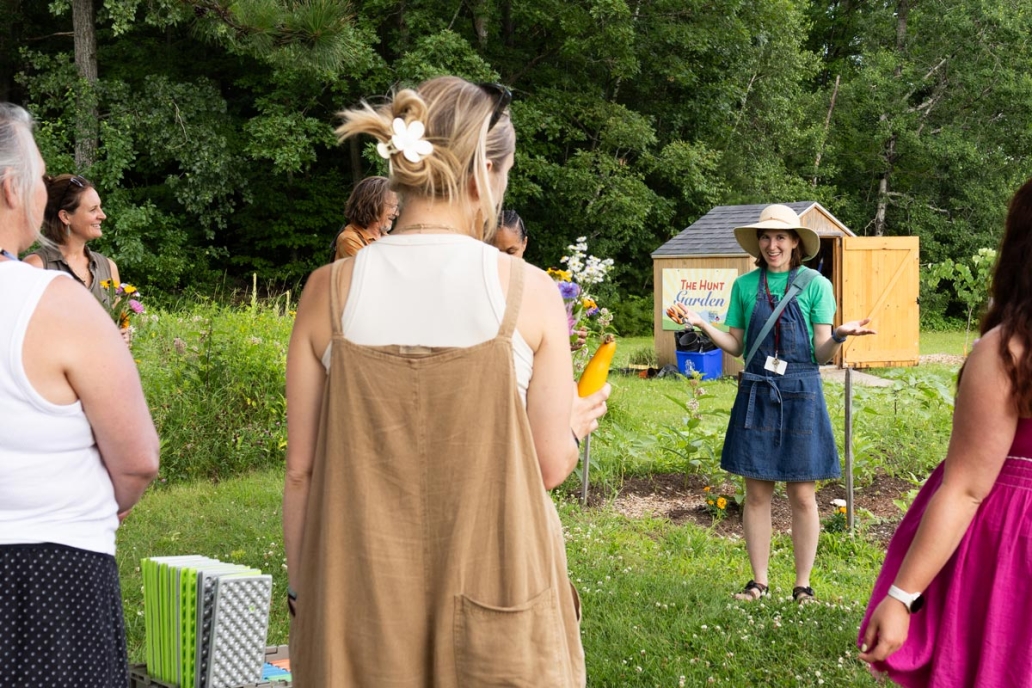
Maisie is an alumna of our professional learning programs, including the Climate Resiliency Fellowship, the Northeast Farm to School Institute, and the Education for Sustainability Leadership Academy. She was also a Postgraduate Education Fellow.
Partners