Inside the Program Changing How Kids See Food

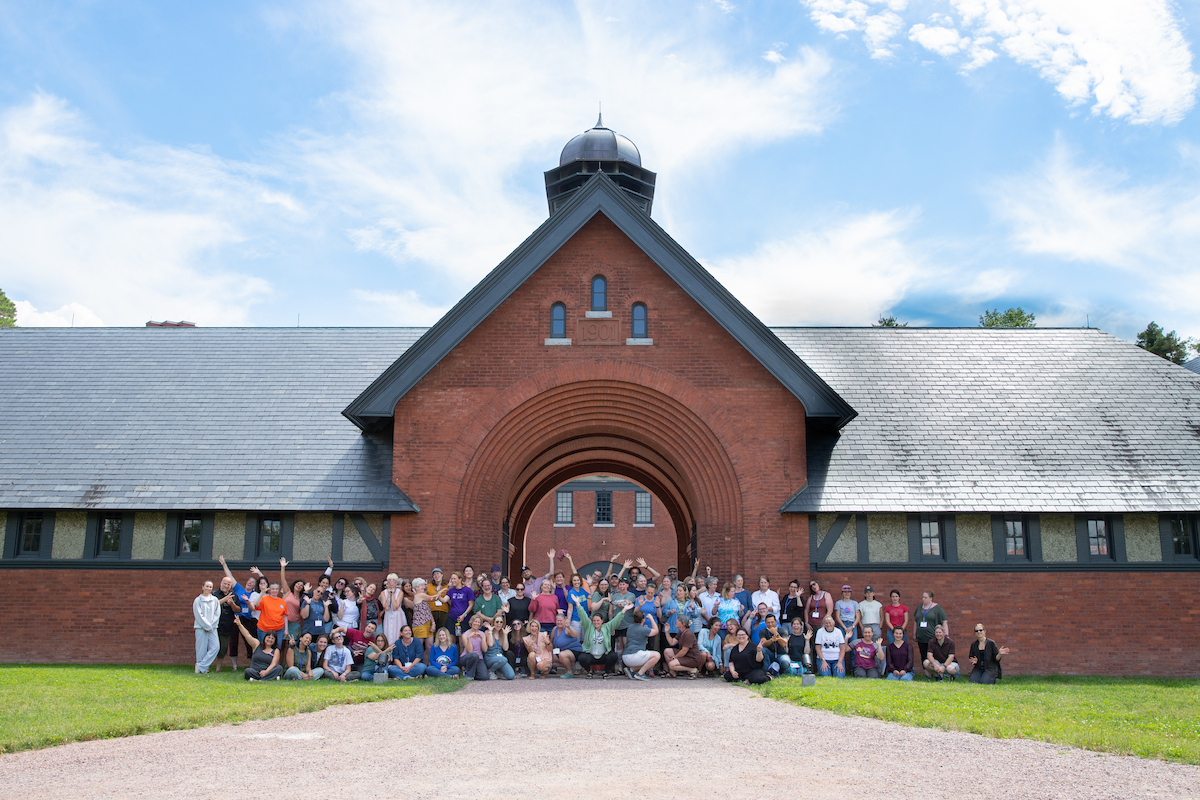
Every summer, new teams walk through the arches of the Coach Barn and into a retreat that will help reshape their school food systems.
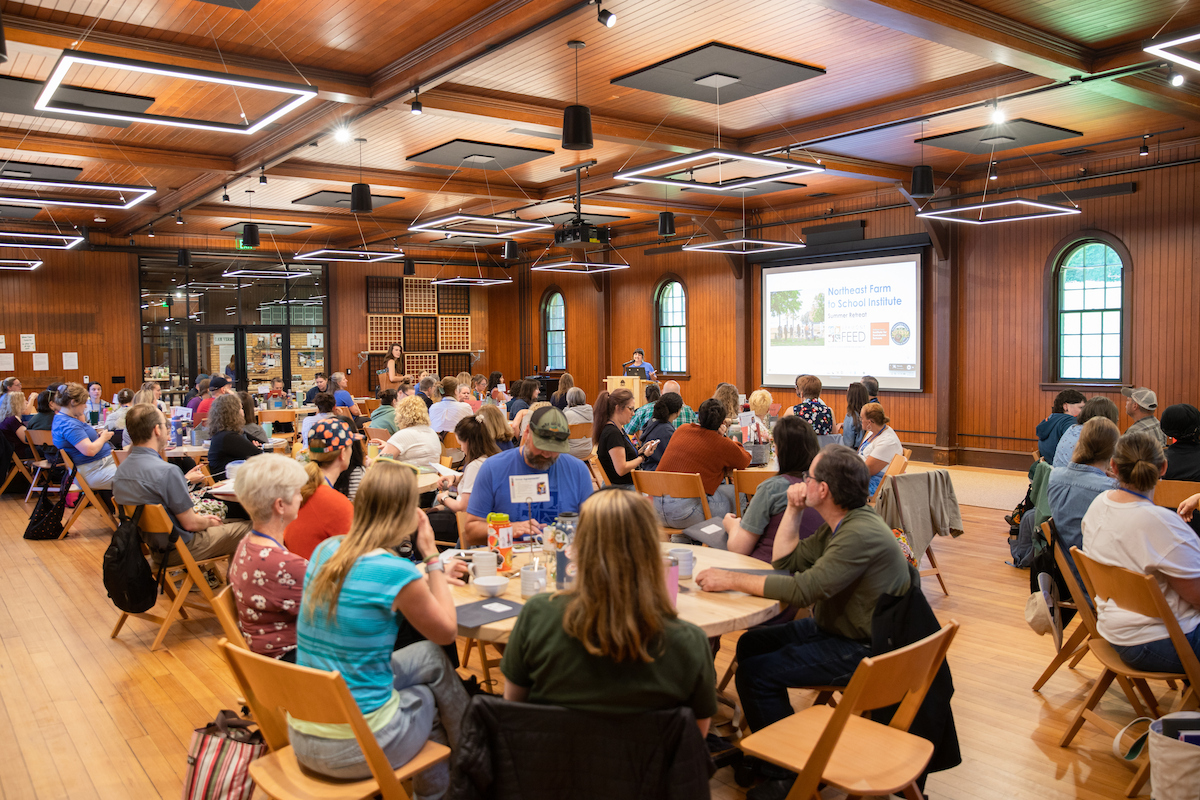
Last month, over 70 educators, school nutrition staff, school administrators, and community partners gathered at Shelburne Farms with a vision: to change their school food systems and connect their students with where their food comes from. They turned those visions into concrete plans during the kickoff summer retreat of our 26th annual Northeast Farm to School Institute, which Shelburne Farms offers in partnership with NOFA-VT.
As the participants settled into their seats in the Coach Barn, program co-leads Courtney Mulcahy and Kayla Strom welcomed the group. “A few minutes ago, many of us were thinking about traffic, inboxes, summer school programs, food orders, grant reports, budgets, gardens, or the dozens of responsibilities waiting for us back home,” Kayla acknowledged. “But now we're here. And for the next three days, we get to step into something different.”
“We don't invite individuals to the Institute,” Courtney reminded everyone. “We invite teams because no single person can carry a thriving farm to school program on their own. The strength and longevity of this work depends on diverse voices, shared ownership, and people who are willing to build something together over time.”
A guiding theme of the retreat: ‘Small is good, small is all’ from adrienne maree brown’s Emergent Strategy. “Farm to school can start with a single classroom, a single garden bed, a single lunch tray,” Courtney acknowledged, and she encouraged participants to “never underestimate what your team can shift in your school and community through small, consistent effort.” Those efforts are the pieces that make up each team’s Action Plan, the main work of the participants throughout the three days here at Shelburne Farms and what will guide them through the next school year.
After those three days of planning, hands-on workshops, networking, and dreaming, teams return home with a roadmap for their vision and a coach to support them throughout the year. And they’ll be part of an ever-growing network of alumni of the Northeast Farm to School Institute representing over 200 schools, districts, and early childhood programs.
“As I was looking through photos of our Institute from over a decade ago, I was struck by the image of the group gathered under the Coach Barn archways,” Kayla reflected as the welcoming remarks drew to a close. “Every year, teams walk through those arches and into this space. And every year, they leave with new relationships, new ideas, and a renewed sense of possibility for what farm to school can look like in their communities. Today, you're joining that story.”
In the Words of One Participant
Before the retreat, we weren't a team. Some folks didn't know each other's names. Now we are a team and bonded—that is huge. We learned each other's interests, hopes, and dreams for our program. Folks who have had some rocky collaborations in the past have built more trust.
Here’s a peek into that magical three-day retreat that will lead to so many incredible farm to school moments throughout the Northeast:
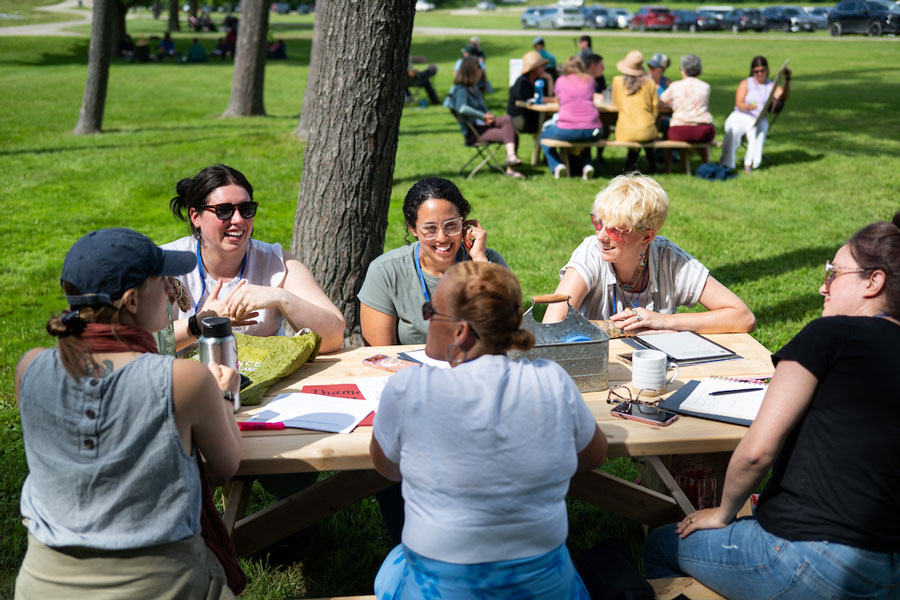
Team Time
“The Action Plan moves participants from their shared values, their why, to the how,” explains Courtney. Central to the Institute model, action planning allows teams to create and implement a farm to school strategy to shift school culture. Teams are paired with an experienced coach from their region who helps tailor that plan to their needs and put it to work throughout the school year. Teams have lots of work time, giving them the opportunity to connect and think through how they will bring their farm to school values to life in their community. “Lasting change rarely happens because one passionate person works harder,” Kayla adds. “It happens when a team shares ownership of a vision and takes small, intentional steps toward it.”
Workshops for All Team Roles
Each Institute team is made up of members in diverse roles: nutrition staff, teachers, administrators, and community partners, just to name a few. Tailored workshops offered participants the opportunity to dig more deeply into their areas of expertise and network with peers.
-
 Andy Duback
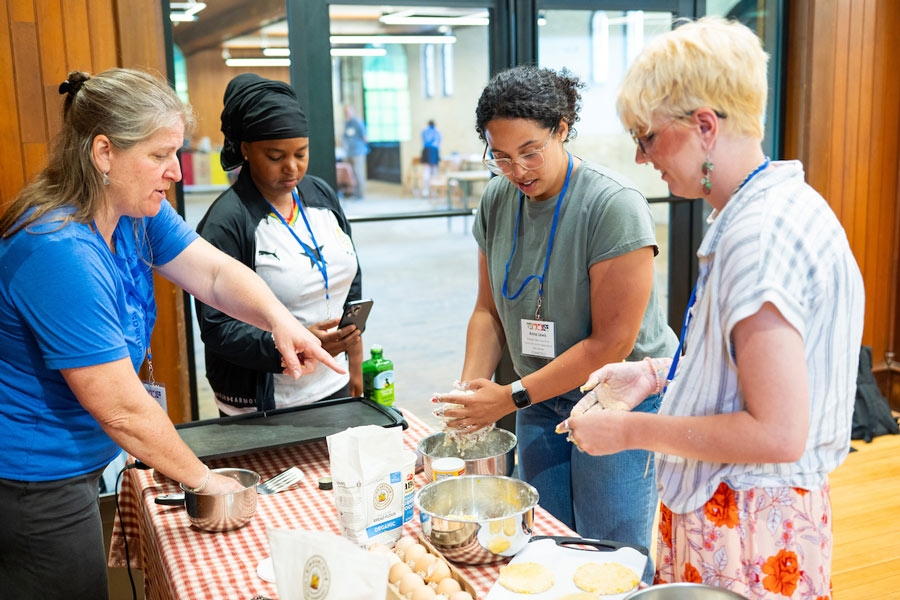
No kitchen? No problem! Teams discovered creative and inexpensive ways to get cooking with students. Sometimes all you need is one good piece of equipment and the willingness to get a little messy.
-
 Holly Brough
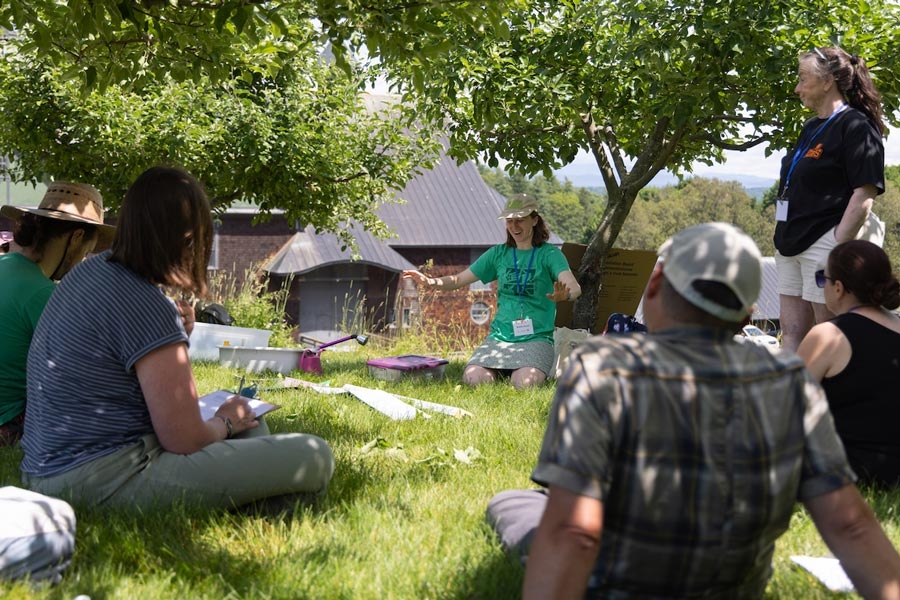
Middle School Teacher Maisie Anrod and Garden Educator Cedar Schiewetz dug into all things school garden with an enthusiastic group: common pitfalls, useful tools to have on hand, supply lists, garden mapmaking, and more.
-
 Andy Duback
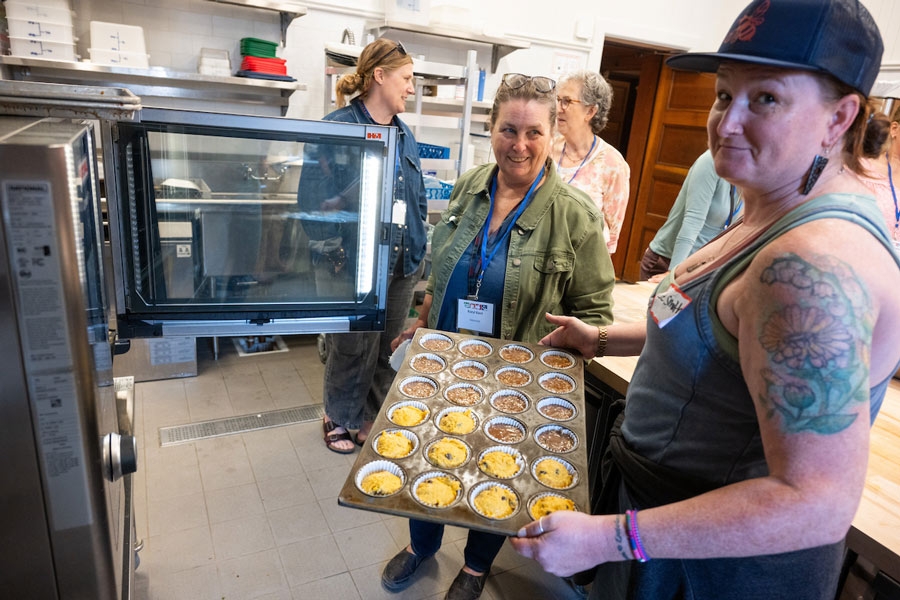
While cooking up inspirational school breakfast recipes, school nutrition champs from Mount Mansfield Unified Union School District (VT) and Krin’s Bakery shared how they launched ‘maple oaties,’ breakfast rounds for school meal programs.
-
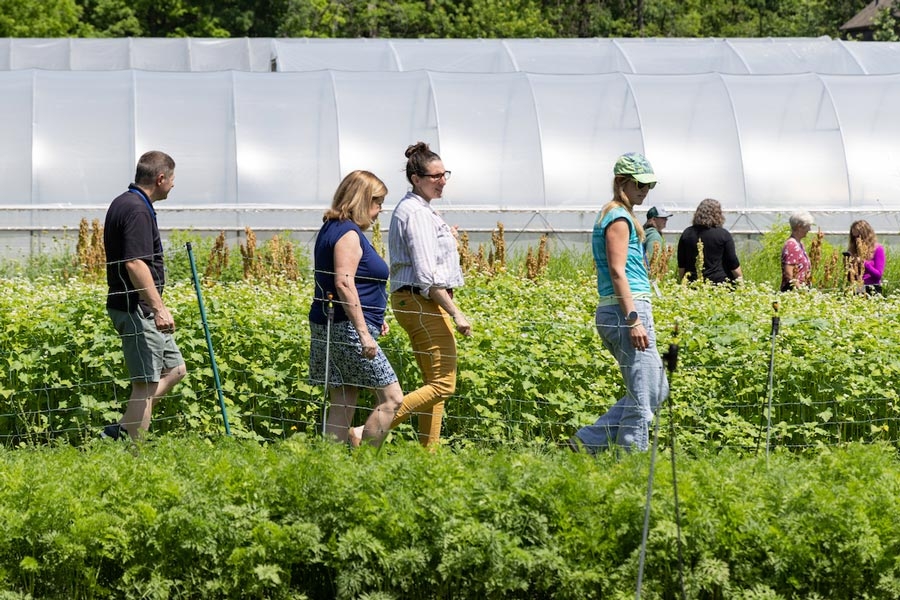 Holly Brough
Early educators got hands-on in our organic Market Garden to build personalized plans to better use the school garden with early learners.
-
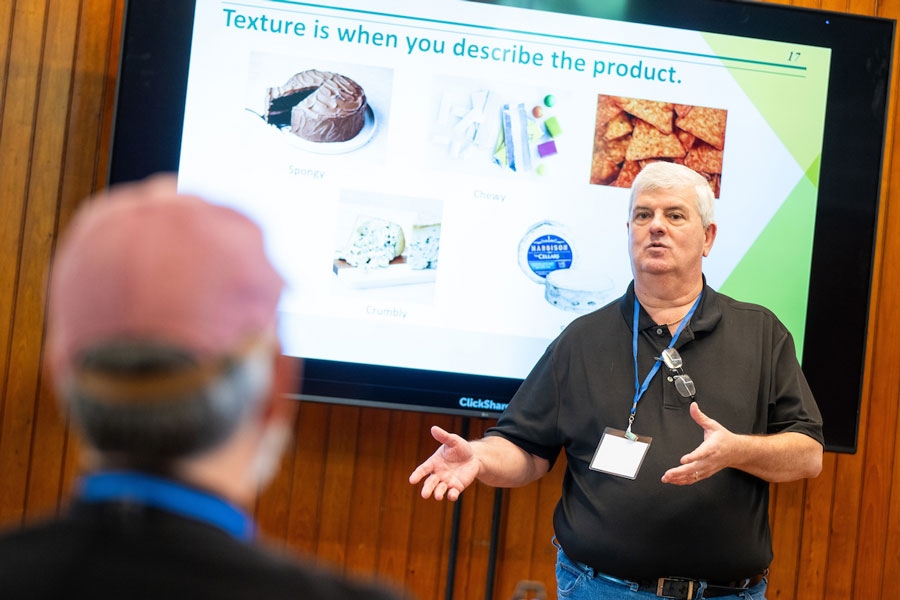 Andy Duback
Roy Desrochers of UVM Extension led a crash course in the basics of Descriptive Sensory Analysis to assess the sensory quality of food, a way to deeply explore the sense of taste with students.
-
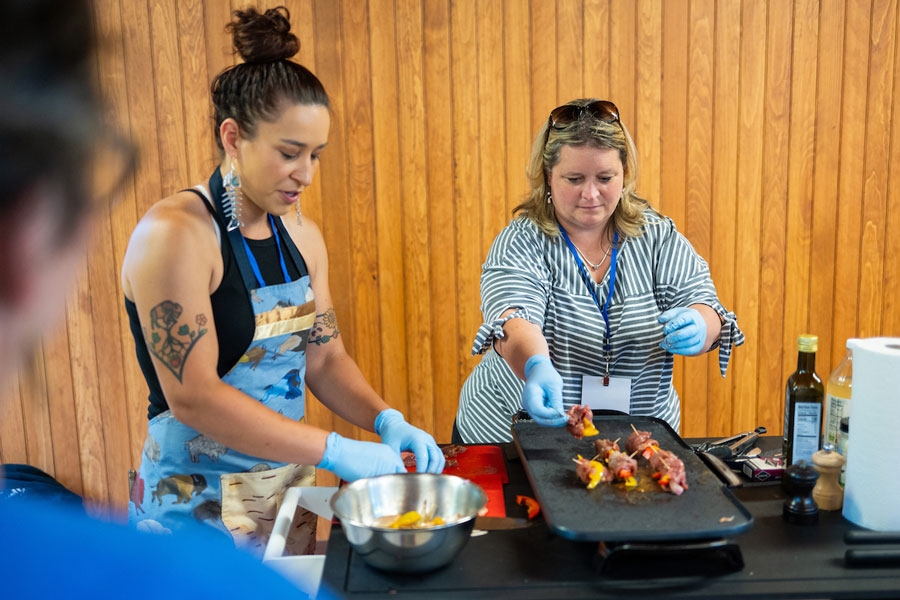 Andy Duback
Many Native North American foods have been removed from our diets through intentional colonial efforts. Mariah Gladstone, founder of Indigikitchen, discussed how farm to school help revitalize these important foods.
-
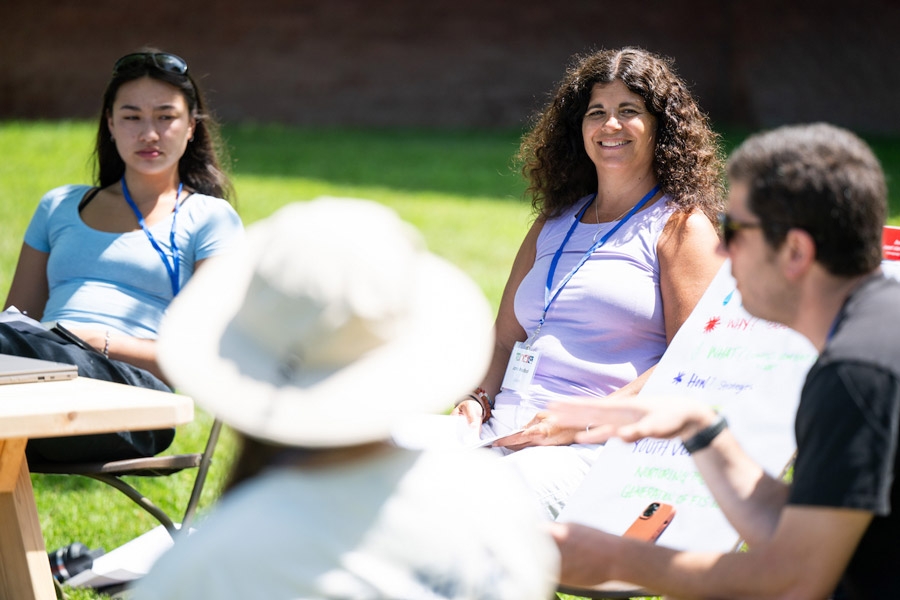 Andy Duback
A youth/adult-led workshop offered strategies for engaging youth in farm to school leadership, and inspiration for bringing that work home.
-
 Andy Duback
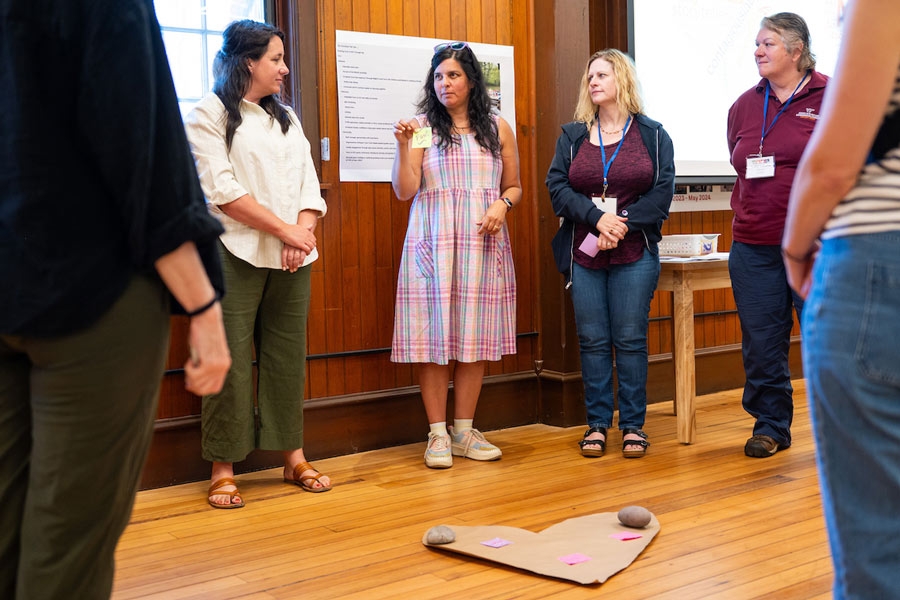
Educators Aziza Malik and Kate Mettina of Champlain Elementary (VT) shared a sneak peek of their new Celebrating Our Roots Toolkit and invited participants to weave identity, food traditions, and sensory memories into uplifting stories.


Breaking Bread Together
Meals highlighting nutritious, locally grown foods are central to the retreat experience. The menu was inspired by recipes from New School Cuisine, our cookbook created by school nutrition professionals for school nutrition professionals. Chef Jackie Major and the Shelburne Farms culinary team incorporated seasonal vegetables from our Market Garden and other nearby farmers and producers.
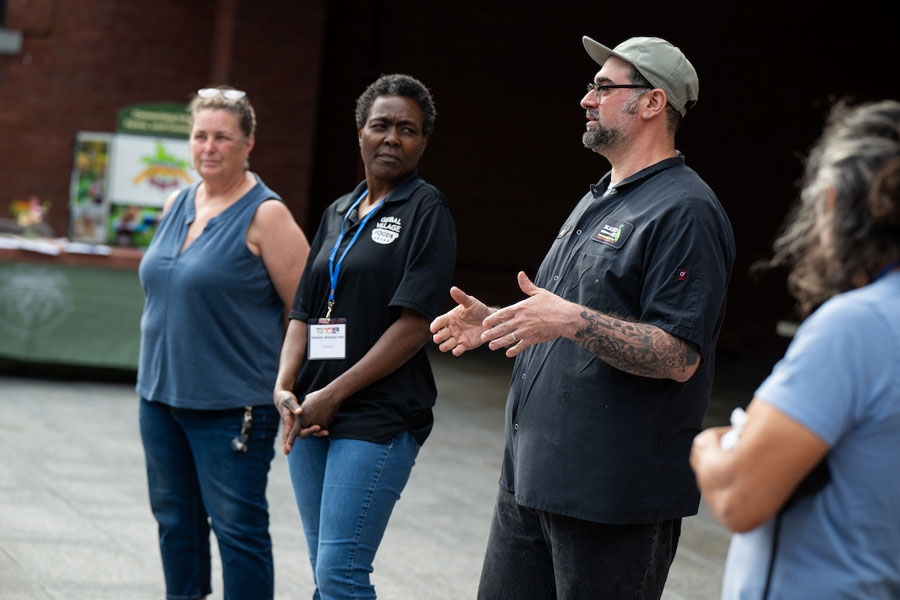
Community partners and school nutrition professionals dedicated to getting nutritious, local foods into school meals—despite the incredibly complex hurdles to make that happen—also showed up to feed, support, and inspire the teams: Global Village Foods Co-Founder Damaris Hall, Moon & Stars Founder Nando Jaramillo, Mount Mansfield Unified Union School District’s School Nutrition Specialist Karyl Kent, and Mount Abraham Unified School District Co-Directors of School Nutrition Paul Fucello and Erika Revell.
-
 Sarah Webb
Global Village Foods Co-Founder Damaris Hall taught participants how to make samosas, which were also served as part of that evening’s dinner menu.
-
 Andy Duback
Community partners and school nutrition professionals dedicated to getting nutritious, local foods into school meals showed up to feed, support, and inspire teams.
-
 Sarah Webb
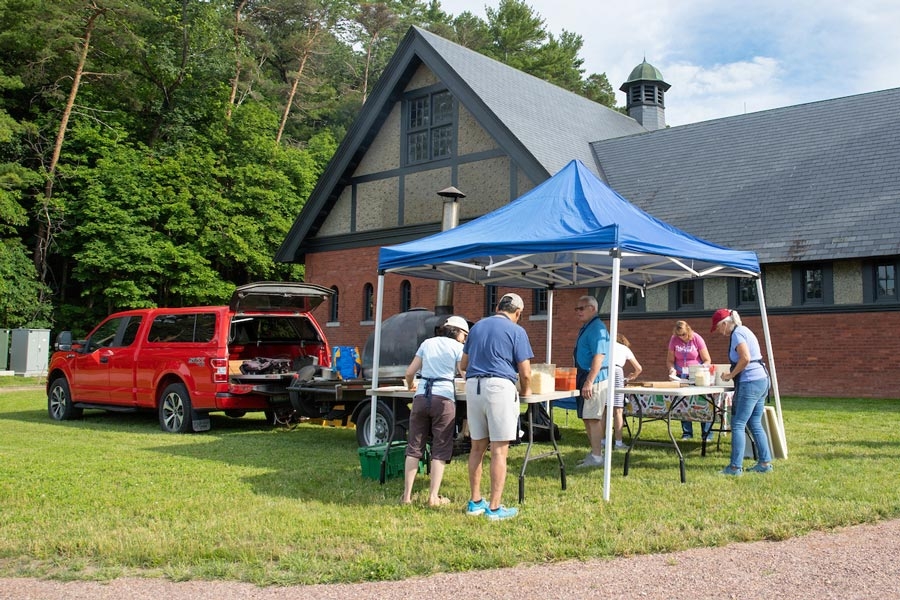
The incredible volunteer crew behind the NOFA-VT mobile wood-fired pizza oven served up delicious bites.
-
 Sarah Webb
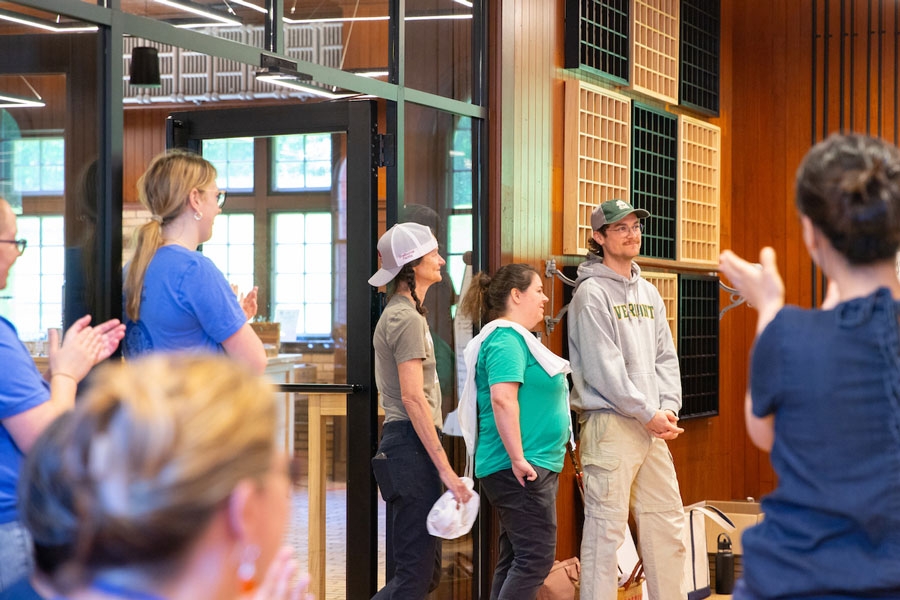
The Farm Functions Culinary and Events Teams get a standing ovation in appreciation for their incredible cooking and hospitality.


Hands-on Food Systems Field Trips
A working farm campus is a great place for participants to explore and consider new ways to connect their students with food systems. Here are some ways participants were introduced to Shelburne Farms and the local community and the topics they delved into:
-
 Andy Duback
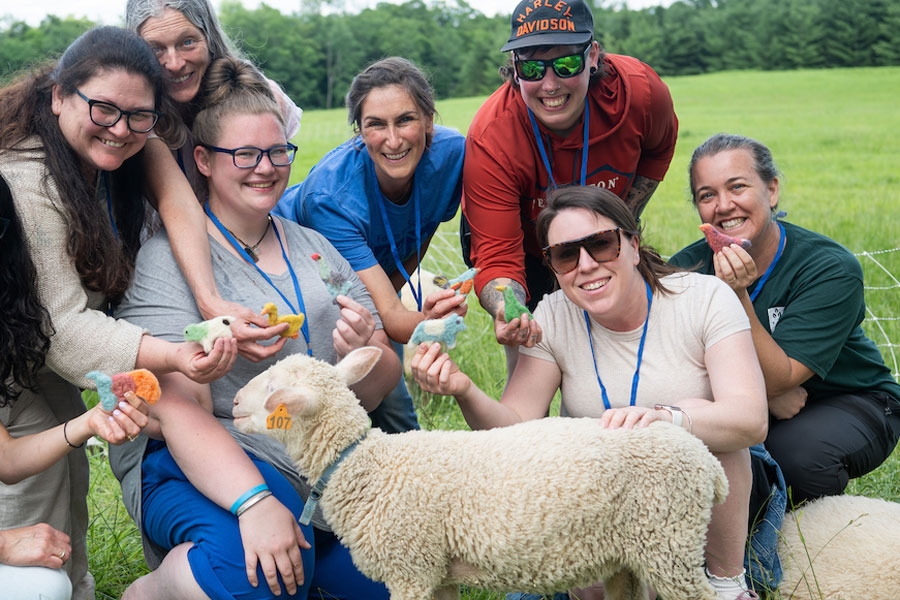
Participants cuddled up in a sheep pasture to needle felt and learn about grazing animals and strategies for connecting with farmers in their communities.
-
 Sarah Webb
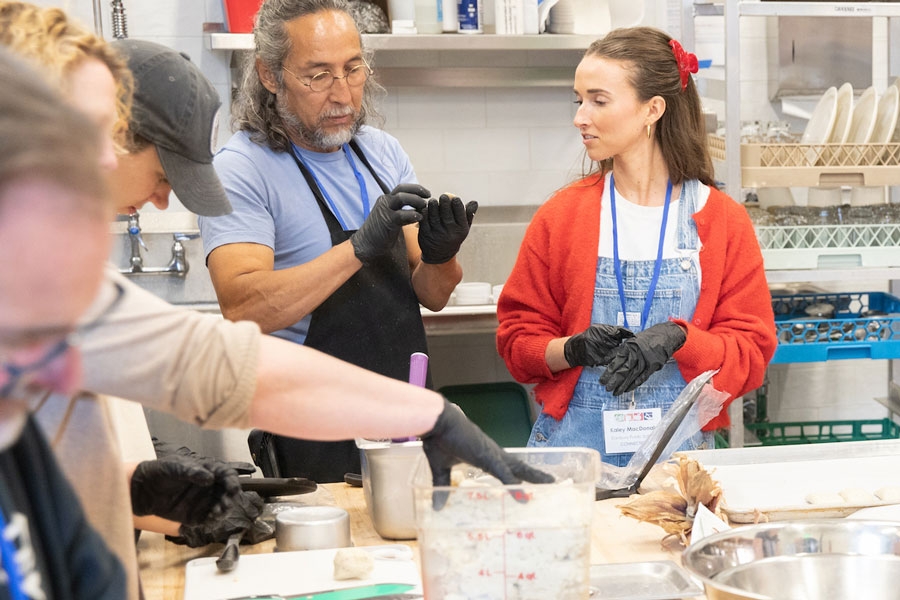
Vermont food entrepreneurs Damaris Hall and Nando Jaramillo showcased samosa- and empanada-making while discussing ways to incorporate culturally relevant foods into meal programs and local food procurement pathways.
-
 Sarah Webb
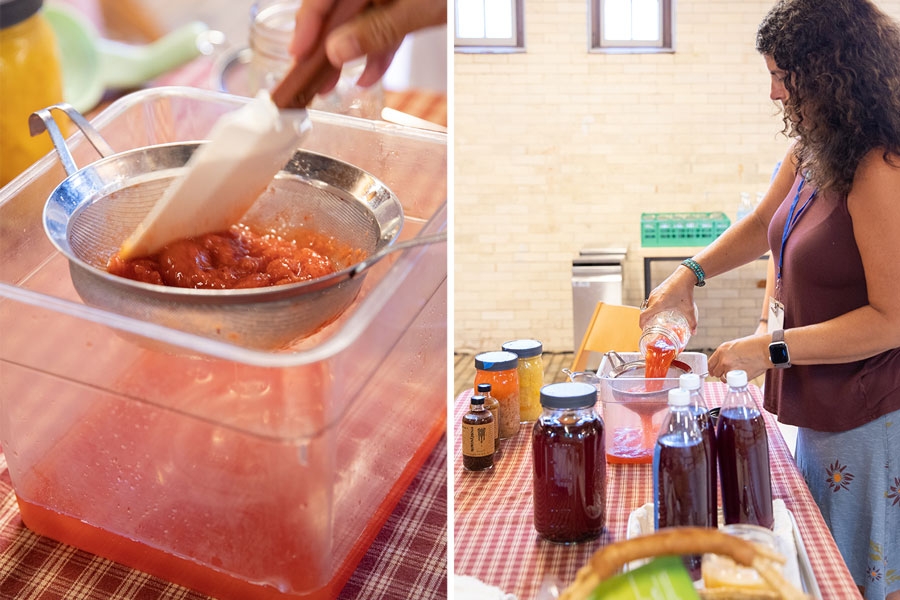
Educators were introduced to simple, new ways to taste fruit and herbs from the garden through three preservation techniques: shrubs, lacto-fermentation, and herbal simple syrups.
-
 Andy Duback
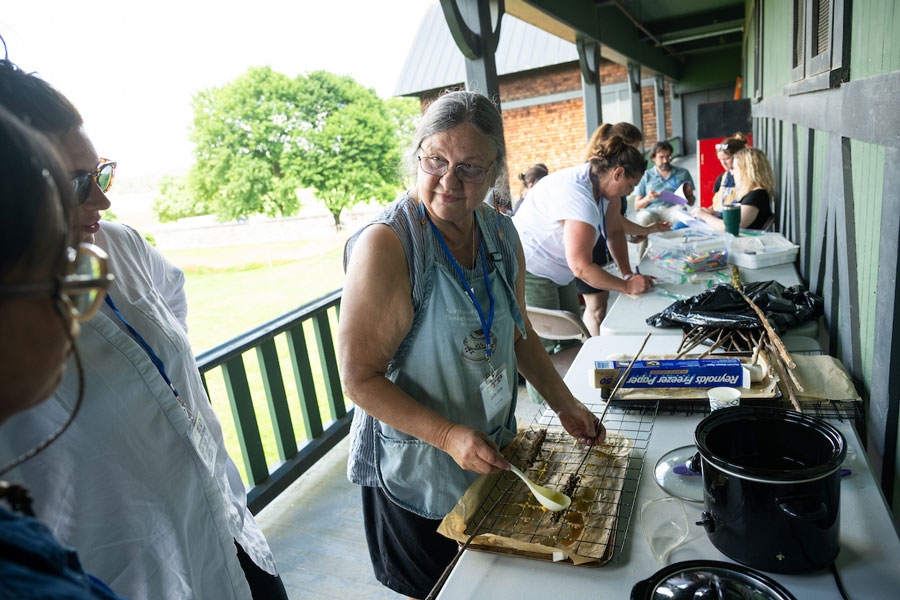
Wabanaki Scholar & Educator Judy Dow shared traditional knowledge of the Three Sisters garden and how to adapt it for a schoolyard. Here, they're making torches made from mullein and beeswax.
-
 Holly Brough
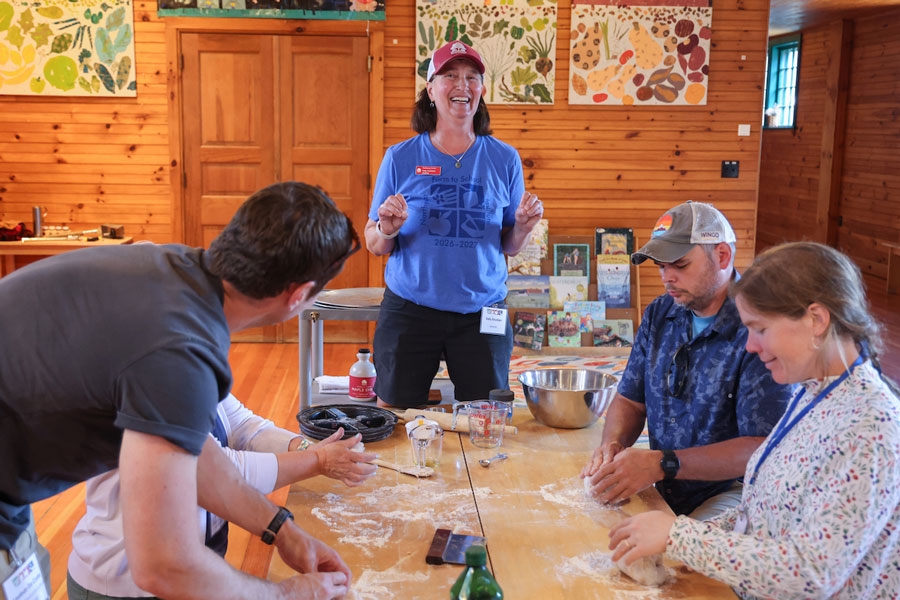
Farm-fresh pizza from garden to plate! A group used the education garden and kitchen to prepare a meal and try kid-friendly activities to explore the ingredients.
-
 Andrea Estey
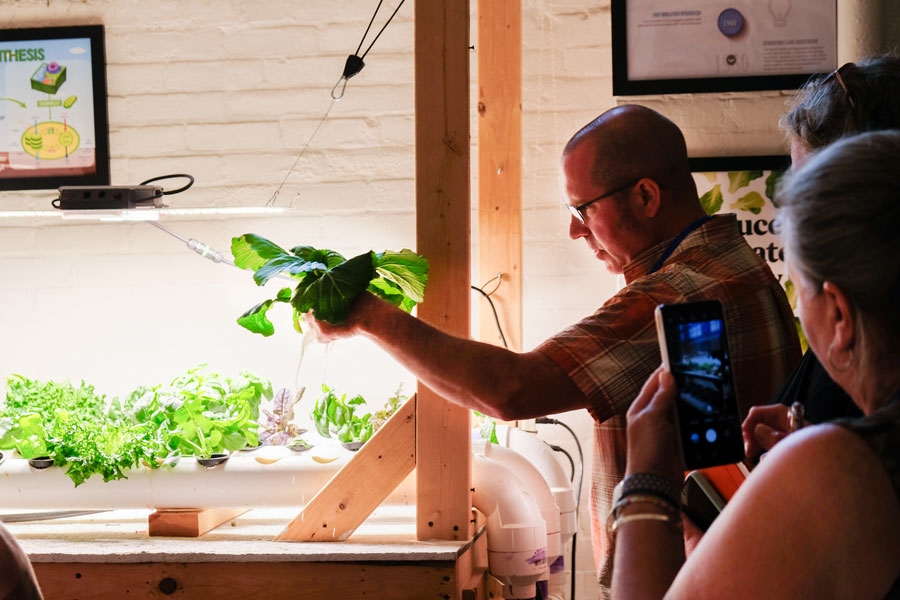
Eric Schoembs, Design & Technology Teacher at Edmunds Middle School, welcomed a group to his classroom, where he is growing food year-round in a hydroponic system and integrating the technology into curricula.
-
 Andy Duback
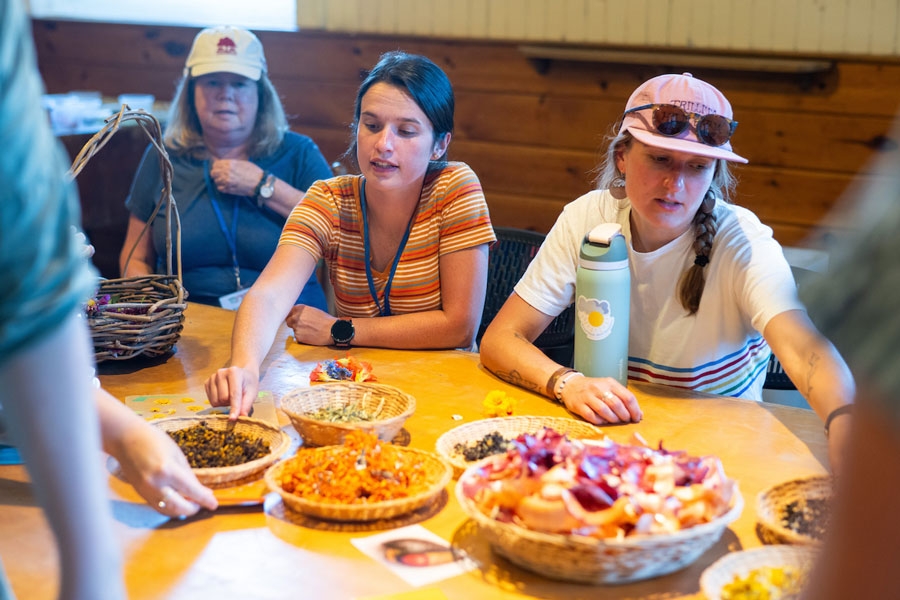
Teams dipped their toes into the world of natural dyeing! They discovered common dye plants and ways to connect the art form to STEM learning.
-
 Sarah Webb
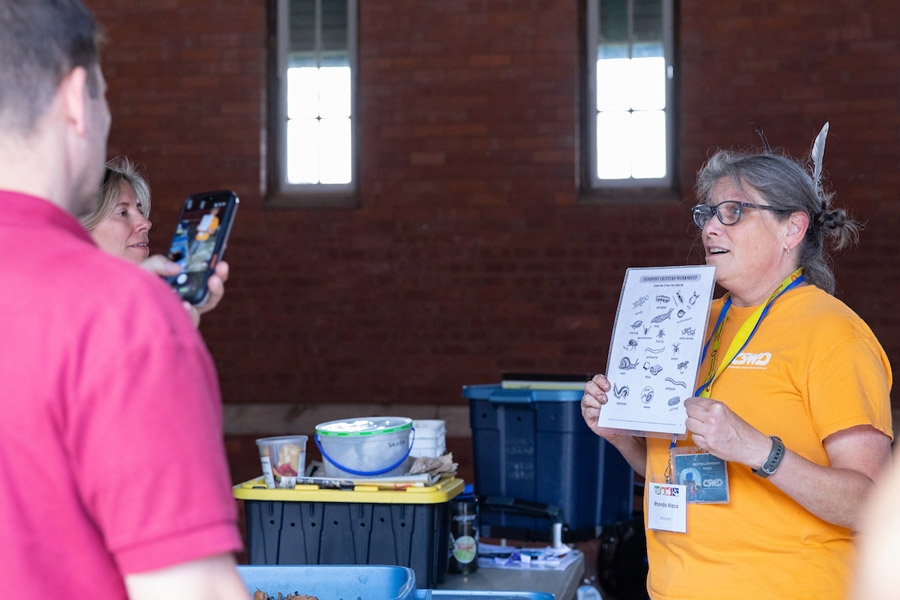
Educator Kayla Henry and “Recycle Rhonda” of Chittenden Solid Waste District led an exploration of waste reduction as a meaningful part of school culture and learning, including strategies like vermiculture, composting, and recycling.
-
 Betsy Rosenbluth
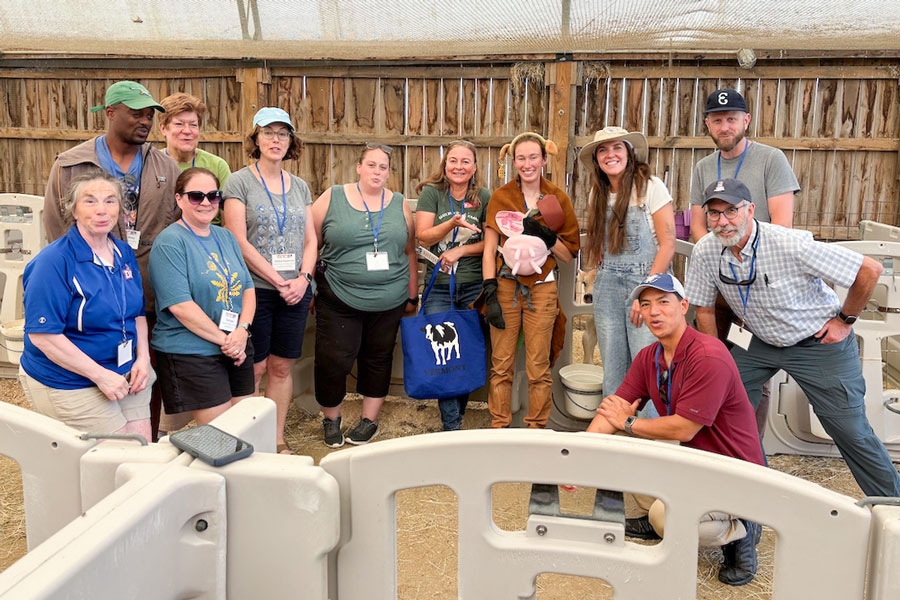
Participants took a wagon ride to the dairy barn to meet our award-winning Brown Swiss herd and see how our educators and dairy team share their love of cows and dairy-based agriculture through field trips and family programs.


Networking & Feedback
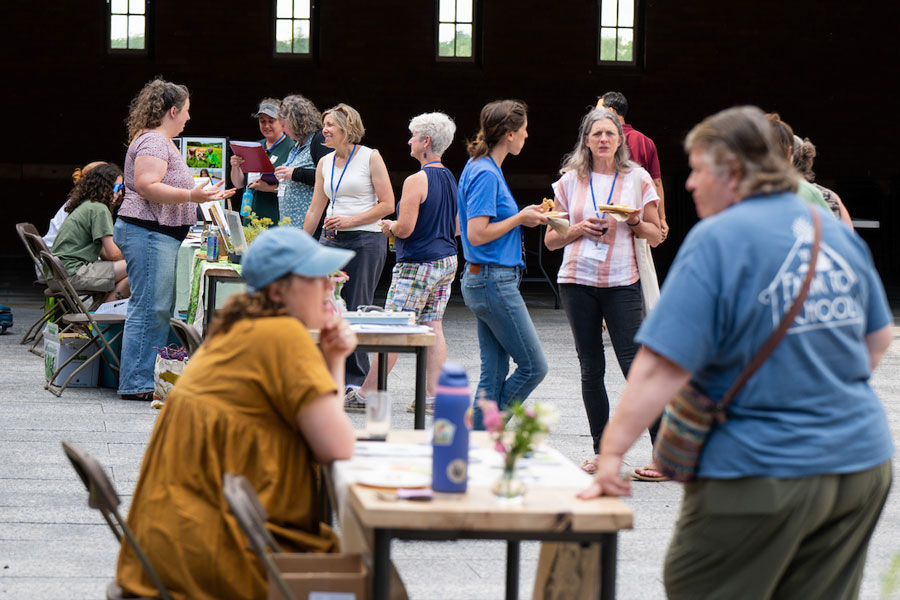
The shared time in retreat allows participants to build valuable connections with experienced practitioners, other teams, and like-minded community partners who can provide support, resources, and inspiration.
“One of my favorite lines of Emergent Strategy is ‘there is a conversation in the room that only these people at this moment can have. Find it,’” Courtney shared as she set the tone for the three days together. “I love it because it’s like a little treasure hunt! Some of the most important learning happens in line for a meal or on a walk down to the lake.”
Keynote Speaker Mariah Gladstone
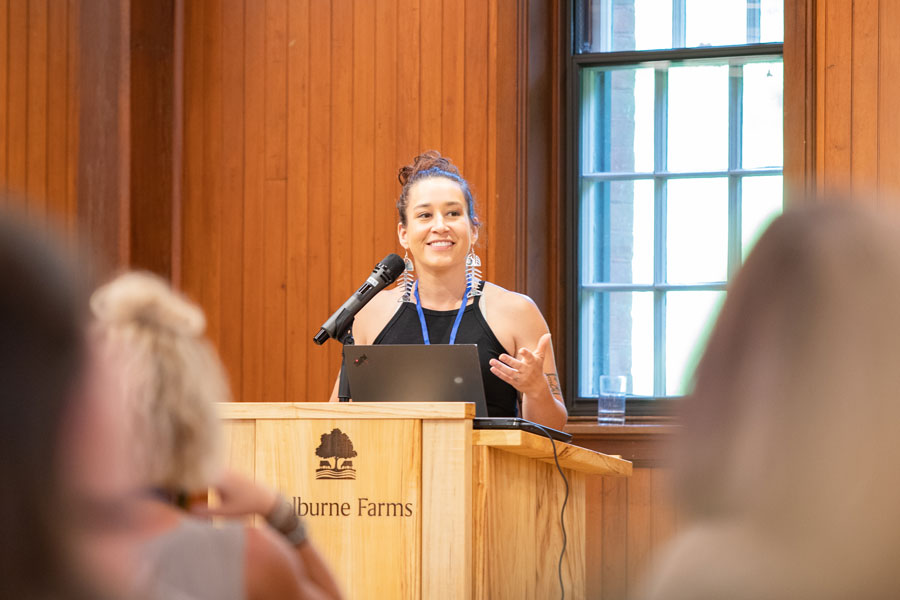
Keynote speaker Mariah Gladstone grounded the Institute in the history and revitalization of Indigenous food systems, explaining that "there was so much intentional work done to disconnect people from our Indigenous food systems." Reconnecting to them, she said, must be just as intentional. She traced this through stories of buffalo restoration, Indigenous plant breeding, traditional corn processing, native root vegetables, and Blackfeet prairie burning practices. Her toolkit with the Montana Partnership to End Childhood Hunger, Native Foods in Montana School Meal Programs, helps food service directors bring more Native foods into school meals.
Adaptation Program Expands Impact
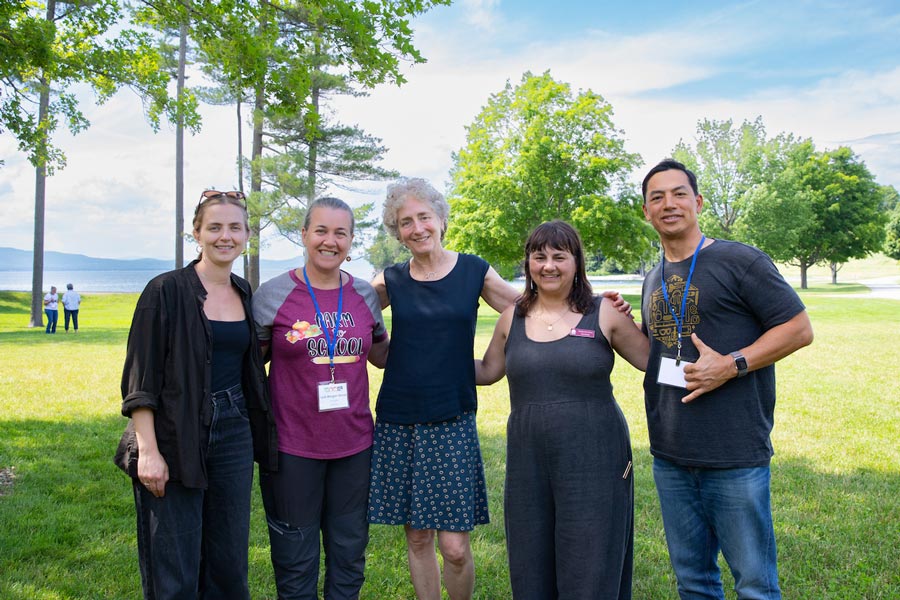
To ensure farm to school’s transformative benefits reach communities across the country, Shelburne Farms developed a Farm to School Institute Adaptation Program to support states in launching their own Institutes. Representatives from teams in Hawaii, Ohio, South Carolina, and Virginia joined the retreat to experience the Institute firsthand. Throughout the year, we’ll also support these groups in adapting this Vermont-born model for their states. We have supported 26 states in launching or planning for their own Institutes; in 2026, 17 states are currently running 14 Institutes.
Vermont Leaders Show Their Support
Vermont leaders and delegates joined the Institute to share how the state has worked as a whole to achieve the many farm to school successes over the years, and what we’re doing now to expand and strengthen food access and literacy for even more Vermonters. “[The Northeast Farm to School Institute] is really at the nexus of hunger, nutrition, food access issues, and education issues anywhere in the region,” shared James McNerny, Outreach Representative of U.S. Senator Peter Welch (D-VT). “The opportunity that you all have to come learn from a lot of the thought leaders who have a proven track record is just really special.”
What’s Next?
Teams will be putting their Action Plans to work with the support of their coach throughout the coming school year. And, they’ll reconnect as a full group throughout the year for virtual workshops and check-ins with Courtney and our farm to school team, Vermont FEED. “We always ask teams to share their wins and challenges as a way for them to really see how far they’ve come and to learn from and celebrate each other,” Courtney describes of the year ahead. “Because that's what this is, really. This is not a training or a conference. It's the beginning of a year of growing together through our shared farm to school work.”
Build Your Farm to School Team!
2027–28 Institute applications will open in early 2027.
Partners