
The Pickle Party: How One School Brings a Community Together

Glass jars clutched to their chests, elementary students edge through the cafeteria doors, a little nervous to be back after the summer months away. Their parents are a few steps behind.
“You’re so tall! Look how long your hair is!”
Schenectady City School District’s Farm to School Project Manager, Rebekka Henriksen, is there to welcome them inside. It’s a few days before school starts, and she hasn’t seen some of her students since June. Students, parents, and the surrounding community are here for a Schenectady farm to school tradition: the pickle party.
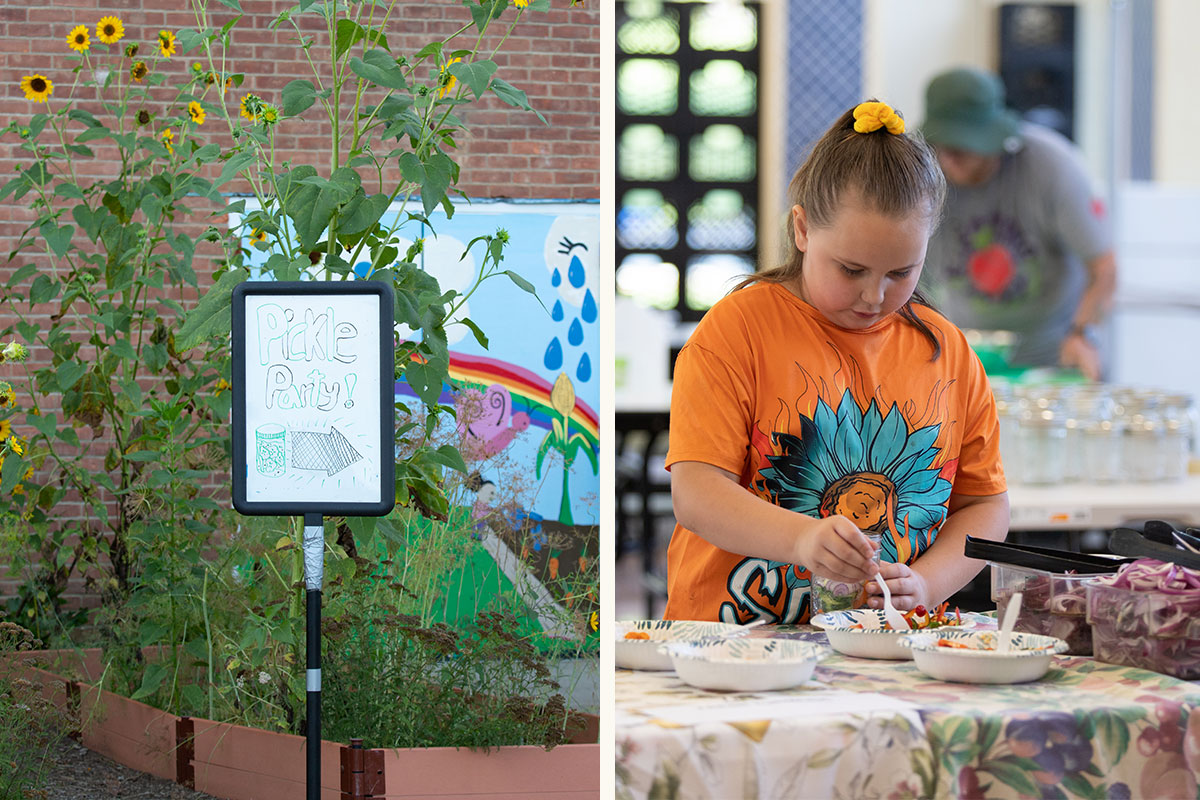
In its fifth year, the party is a way to kick off the school year, enjoy the summer school garden harvests, and familiarize new kindergarteners and their families with the building. “It's a nice way to welcome them into the school and introduce them to the farm to school program,” says Rebekka.
Farm to school programming in Schenectady is all about community, and it takes a lot of people to pull off this gathering.
Months of prep work go into the celebration: growing ingredients, harvesting, washing, cutting, and processing. Rebekka has four paid high school interns who work alongside her throughout the summer and are crucial not only to the pickle party but also to maintaining the fourteen school gardens across the city.
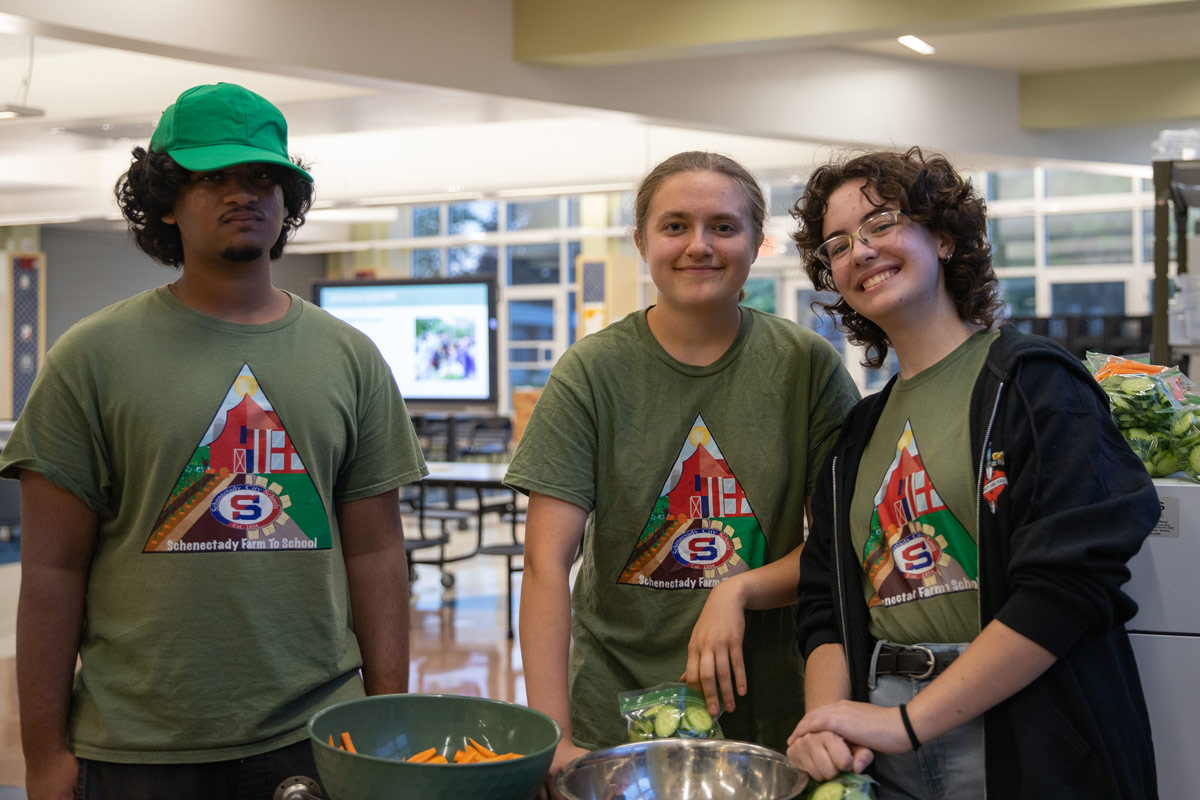
“This year, the farm to school interns were doing a lot of work to start our new one-acre—and growing!—food forest and expanded garden at the elementary school,” Rebekka explains. But their learning isn’t limited to the garden. “They assist me during our four-week summer enrichment program and they help me with field trips.” Interns also have the opportunity to join local food council meetings and educator programs, such as the New York State Farm to School Institute retreat. “I want them to get that professional experience.” Rebekka notes that most interns have gone into teaching, agriculture, or horticulture careers.
Adriana, who graduated in the spring, is a third-year intern. “We do a lot of work on the gardens here: weeding, watering, planting, and maintaining everything. But we also get to work with the younger students in the summer programs. We have four units: seed, soil, pollination, and harvest. I think that’s my favorite part. I love working with kids.”
But as the summer winds down, all energy is focused on the pickle party. Perhaps the most important crop to contend with? Dill.
“Dill is a very aggressive propagator,” Rebekka warns. “So I joke that I have become a dill farmer because it’s just everywhere in our gardens!” Fortunately, the leaves, seeds, and even stems are all great pickling ingredients.
Bowls and bowls of dried dill seed adorn the pickling station. “We picked ALL this dill seed for the pickle party,” Adriana laughs. “It took weeks!”
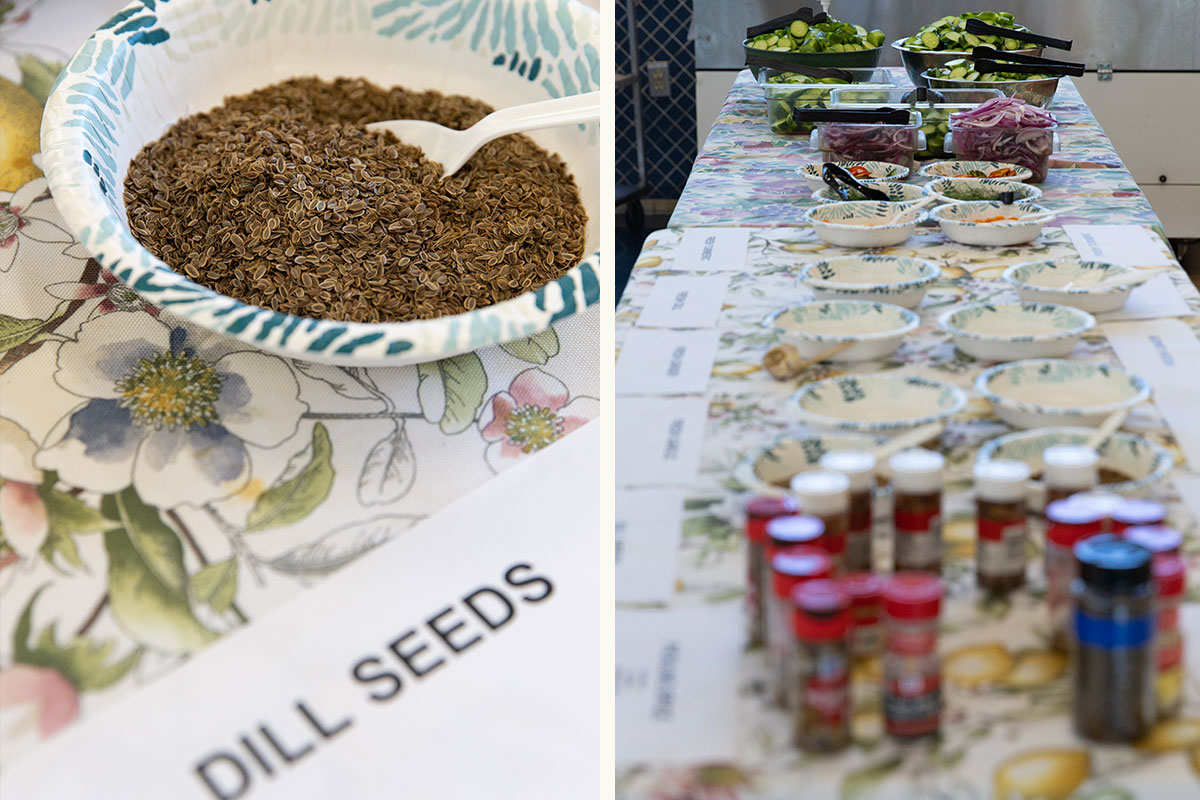
“For me, it's really important that we have ingredients that students grew. I can't always count on a cucumber crop or a carrot crop that's going to be sufficient for the event, but I can always count on having dill and garlic,” says Rebekka. Additional produce is brought in from local farms. “And I always get farmers involved, too, and include some information about them at the event.” This year, the program partnered with Schenectady Urban Farms, a longtime partner of Rebekka’s that is also supporting the creation of the food forest and expanded gardens, and Star Route Farm, which supplied the carrots and cucumbers.
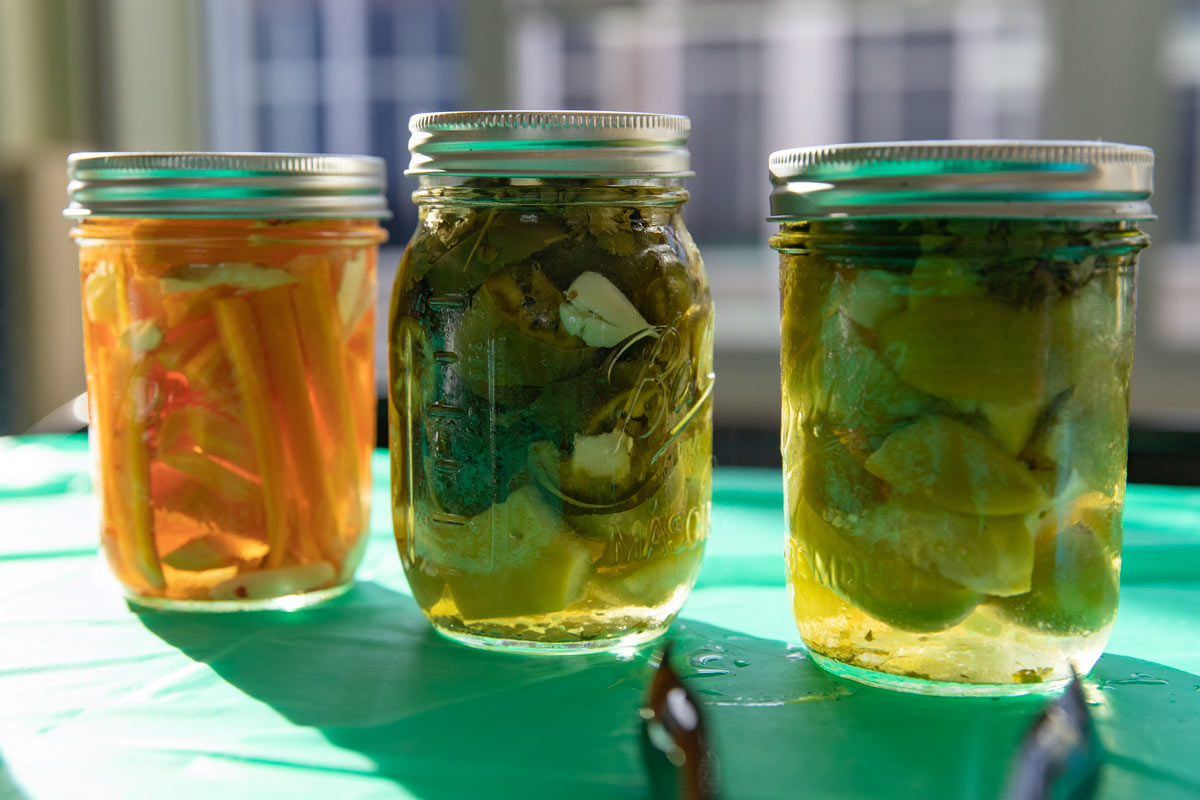
As people continue to arrive, music plays in the background. A Schenectady Food Council volunteer offers samples of fermented foods, like sauerkraut and kimchi, giving everyone a preview of the flavors that will develop in their own kitchens over the next few days. Even the quick pickles being made today, which steep in vinegar-based brine in the refrigerator for a few days, will develop tangy notes, though they won’t be quite as “funky” as a vegetable that undergoes a true fermentation process.
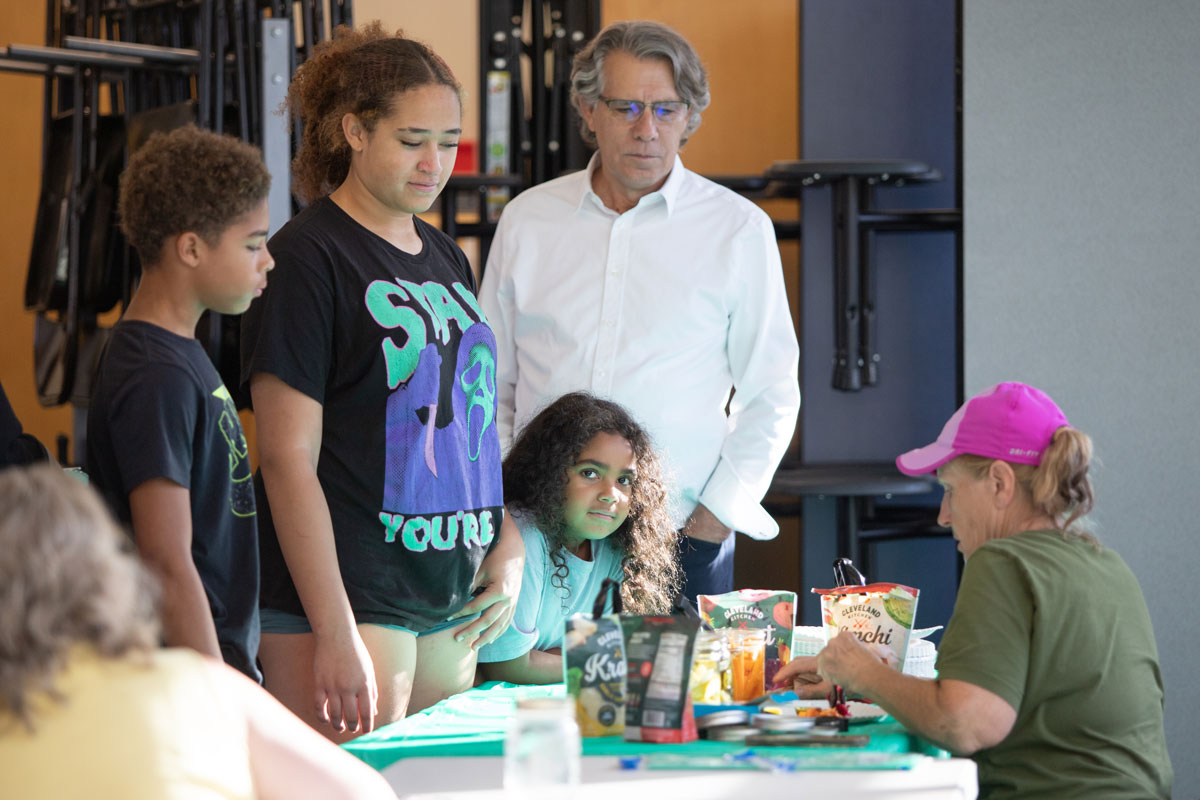
“Quick pickles are ready to eat in three days,” Rebekka instructs the group. “But you need to keep them in the fridge. A week will give you a stronger flavor, which is what I prefer.”
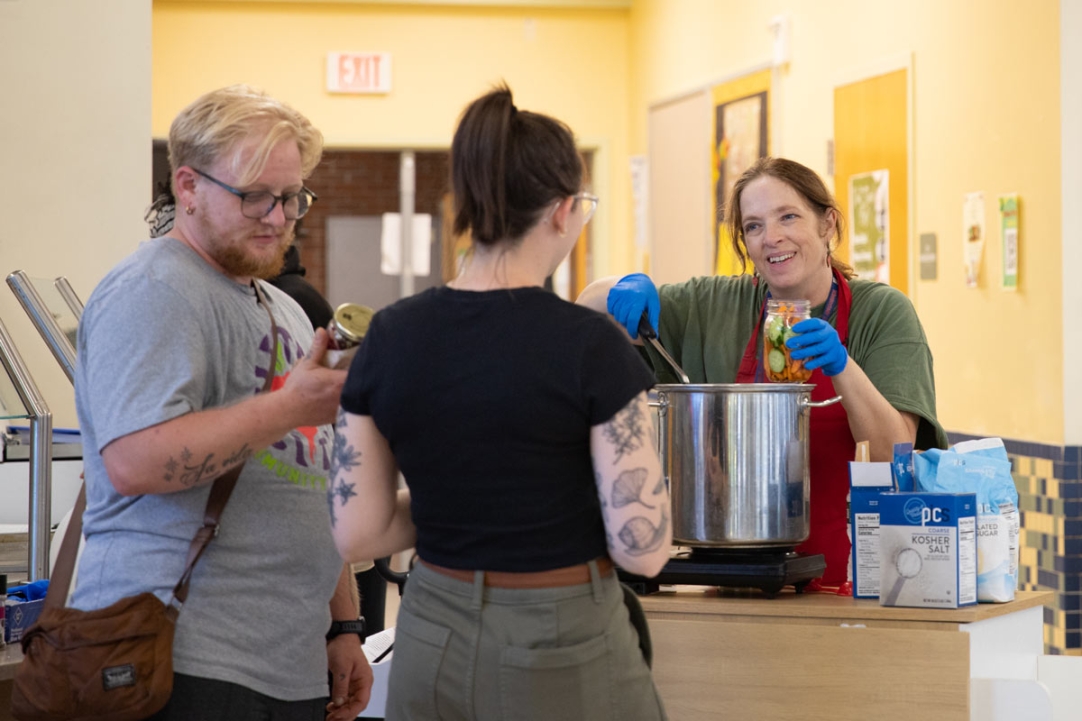
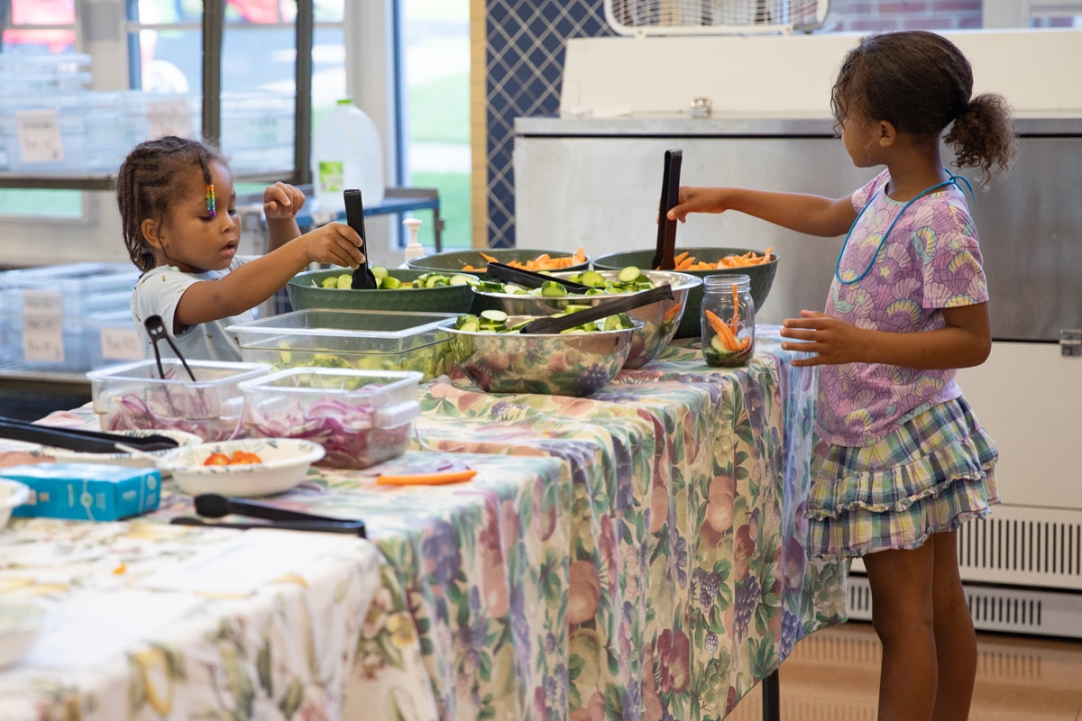
Families make their way to the pickling table, filling glass jars with the veggies, spices, and herbs of their choosing. Once the jars are packed with ingredients, they’re brought over to Rebekka at the brine station, where a hot plate heats a large stainless steel pot bubbling with vinegar, water, salt, and sugar. She ladles the brine into the jars, which are then left to cool before being sealed with a lid so they can be brought home safely. If they make it that far.
“I’ve never seen my son eat so many pickles,” shares one parent, amazed. “He’s already opened his jar, eaten everything in it, and then started dunking a whole cucumber in the brine to eat more!”
-
 Sarah Webb
Rebekka manages the brine station, where a hot plate heats a large stainless steel pot bubbling with vinegar, water, salt, and sugar.
-
 Sarah Webb
Students fill their jars with vegetables, spices, and herbs.
-
 Sarah Webb
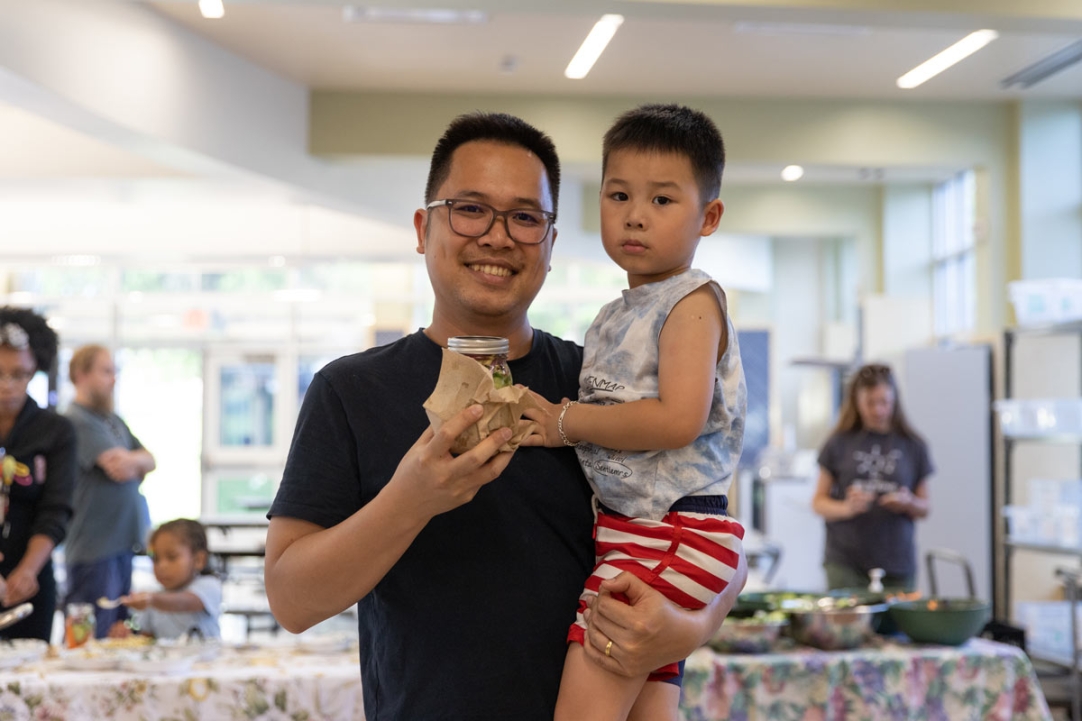
A happy pickle party family.


In between waves of pickling, attendees can tour the school gardens, the interns as their guides. A row of raised beds lines the walkway to the school entrance, each with a colorful laminated sign to describe the kinds of plants growing inside. In one, 10-foot native sunflowers sway in the breeze. “These are sunchokes,” points out John, an intern leading a tour. “They’re a native sunflower that pollinators love. They grow edible roots, too.”
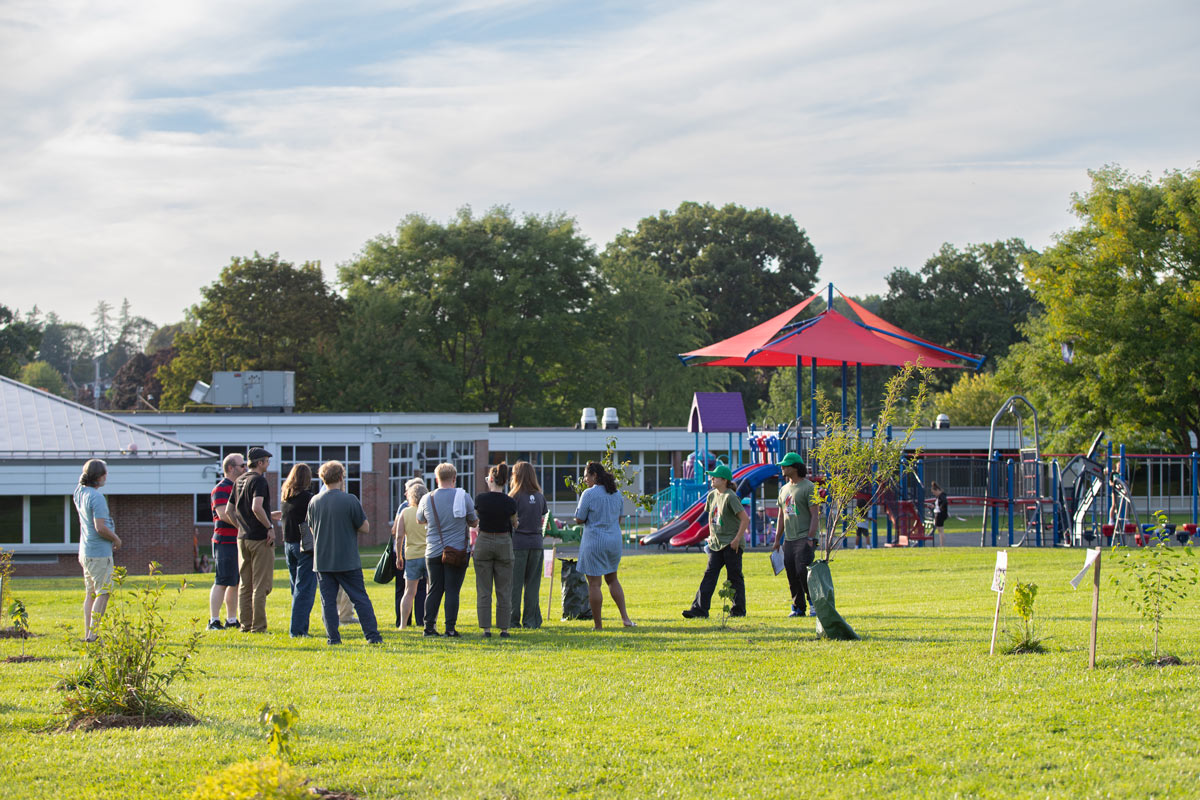
Behind the school lies an expanse of lawn dotted with small, newly planted shrubs and saplings. It’s the beginning of the school’s food forest, which mimics a forest ecosystem for medicinal and food crops. Trees, mid-story plants, and smaller edibles include red and black currant, elderberry, nanking cherry, hazelnuts, New Jersey tea, chokeberry, mulberry, persimmon, beach plum, pawpaw, and some perennials for tea-making.
John leads the group over to a patch of flowers, now brown and crunchy. “This bee balm has gone to seed. You can all come over, collect some seeds from the plants, and sprinkle them nearby to help the plant establish itself further into the beds next year.”
Further afield, a new bed for potatoes, brassicas, and asparagus is the start to the agricultural expansion. Over time, Rebekka and her community partners will essentially be turning the entire lawned area into growing spaces.
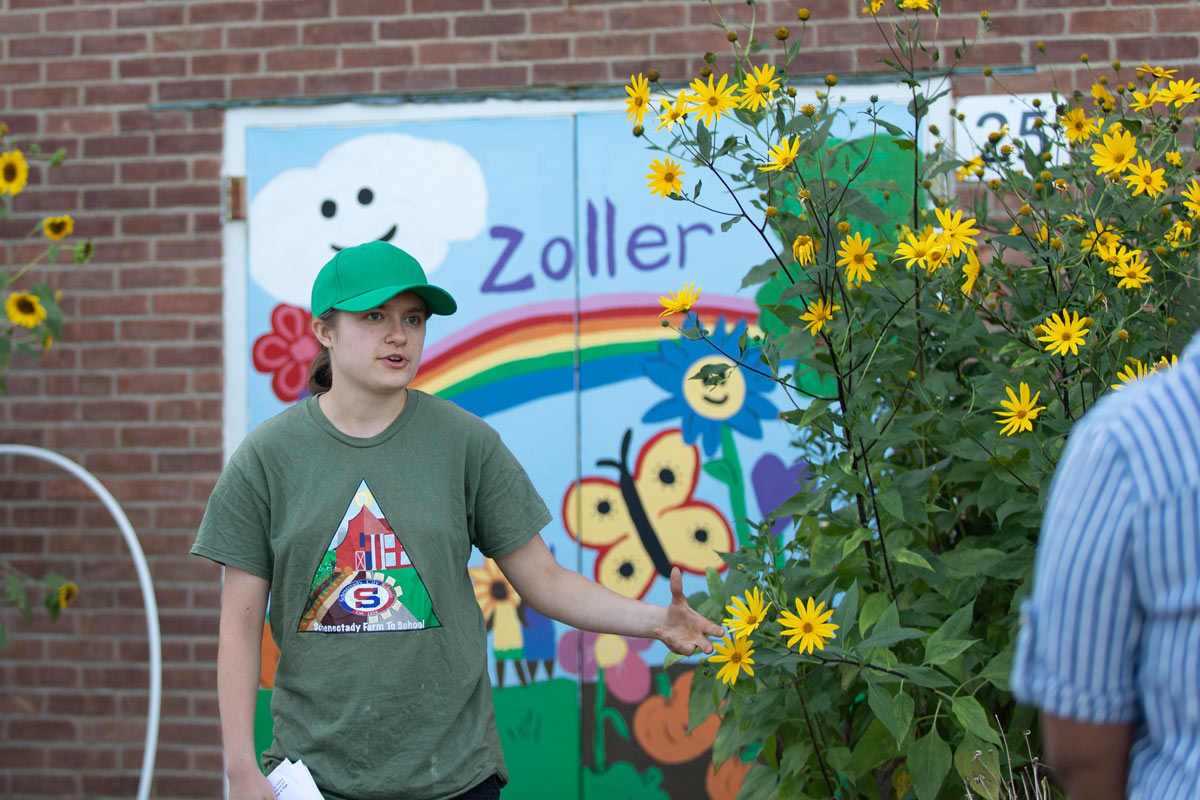
“At most of our campuses, our gardens are open spaces. They're not enclosed. They're not gated,” explains Rebekka. “They're really community spaces, and I love it when community members walk by and say, ‘The garden is looking good,’ or, ‘Can I taste that? When's that going to be ready?’ Or they tell me about the vegetables they grew back in Guyana or Yemen.” The farm to school spaces are all opportunities for creating and deepening relationships.
“I have amazing community partners. I have ten-year relationships with a lot of these folks, and I could never have done my program without them. I'm always inviting them in and collaborating.” Partners help her offer a full calendar of events throughout the school year: harvest parties, a pumpkin smash, a maple sugaring festival, and more. Rebekka is even recreating a mini pickle party for one of the program’s collaborators, Greenmarket, the local farmers’ market.
“We're a small city. We're 70,000 people, but we have 10,000 students in our district. So over 10% of our population is a school-age student in our district. So collaboration helps my partners too, because if they want to have an impact, they can reach so many people through the district.”
These types of partnerships are a key component of the district’s overall community school model, in which the school is seen as the center of the community, and schools offer extended resources for families, such as clothing closets, laundry facilities, food pantries, parenting workshops, health clinics, haircuts, and more.
“We believe schools don't succeed unless the community around them is strong, and the community isn't strong unless our schools succeed,” says Rebekka. There's a dedicated coordinator who works closely with community partners to help families get the services they need, so the school becomes a “one-stop shop.”
“Students are ready to learn, and the community benefits, too.”
All these supports set students up for success, and farm to school has one additional superpower for the schools: kids love it, and they do not want to miss their turn to get in the garden, cook, and go on farm field trips.
School districts across the country are struggling with decreasing student attendance, but the hands-on learning that farm to school offers keeps kids coming, day after day. “I've had students say to their teachers, ‘Oh, farm to school is this week? Okay, I'm gonna be here!’ They want to do cider pressing or make dumplings and tortillas.”
Rebekka’s partnerships with local farms support food systems education and bring more fresh, nutritious foods into the cafeteria. “Better nutrition helps our students learn. And if kids know they're going to have a really tasty lunch with fresh ingredients, they're more likely to come to school to eat it. I feel that farm to school is such a positive for learning. At the heart of it all, our schools’ main objective is student success, and farm to school is not an extra. This is not an add-on. This is really integral to that mission.”
Back in the cafeteria, music plays, brine bubbles, and families chat, catching up after the summer. School doesn’t start for a few more days, but farm to school is already doing what it does best: bringing people together.
🌱 Rebekka Henriksen is an alum of our Northeast Farm to School Institute & Farm to School Leadership Academy
“What’s been most valuable for me is just to be able to connect to colleagues, because this work can feel kind of lonely. We’re working on systems change, and these are big, slow-moving, bureaucratic systems: farming systems, food systems, and public education systems. It can be exhausting, and sometimes you’re the only person in the building or the district doing this work. So to be able to connect with folks from around the country who are doing the same work and share ideas, and challenges is incredible. You’re like, ‘Oh yeah, it’s not just me!’”


